
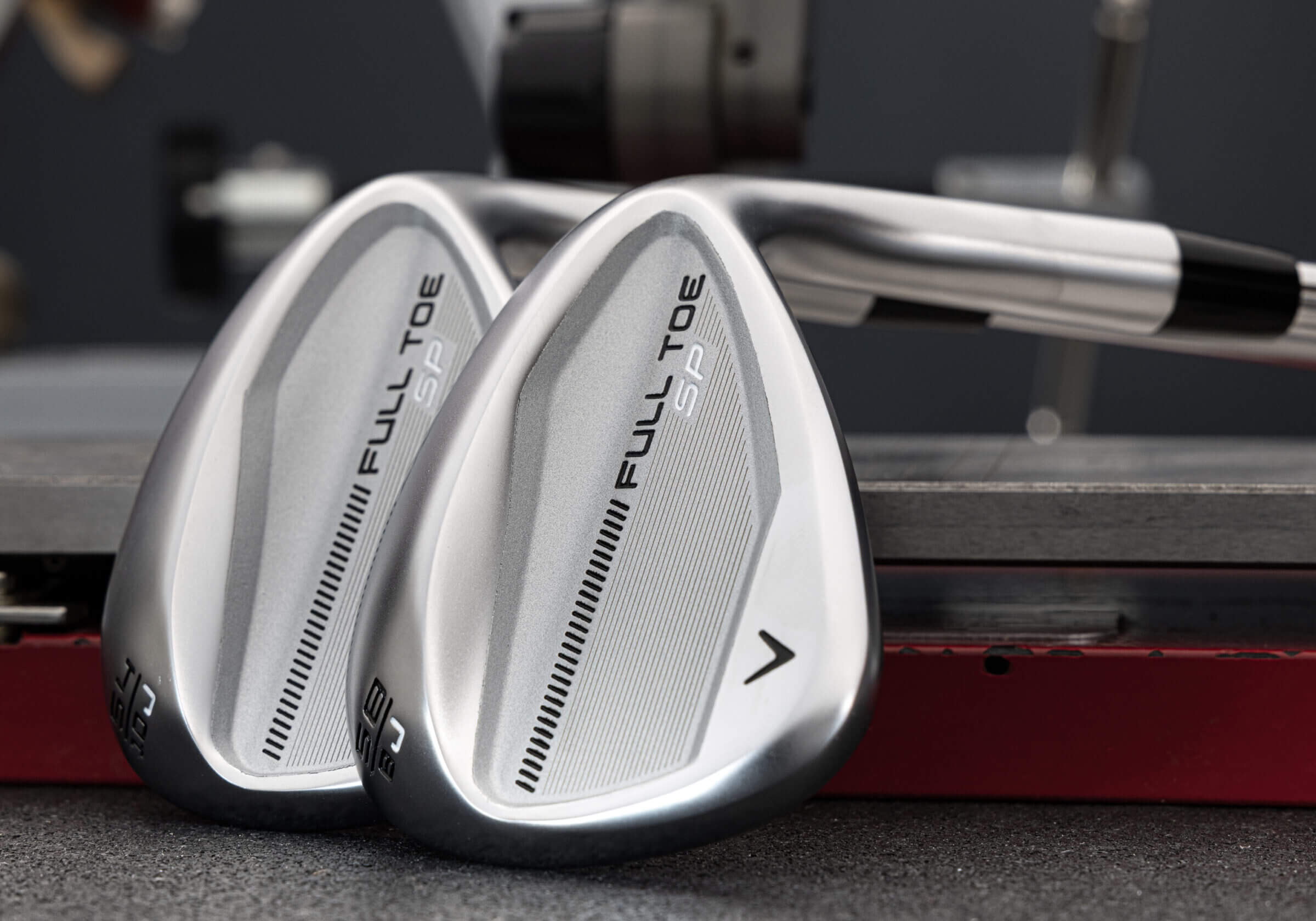
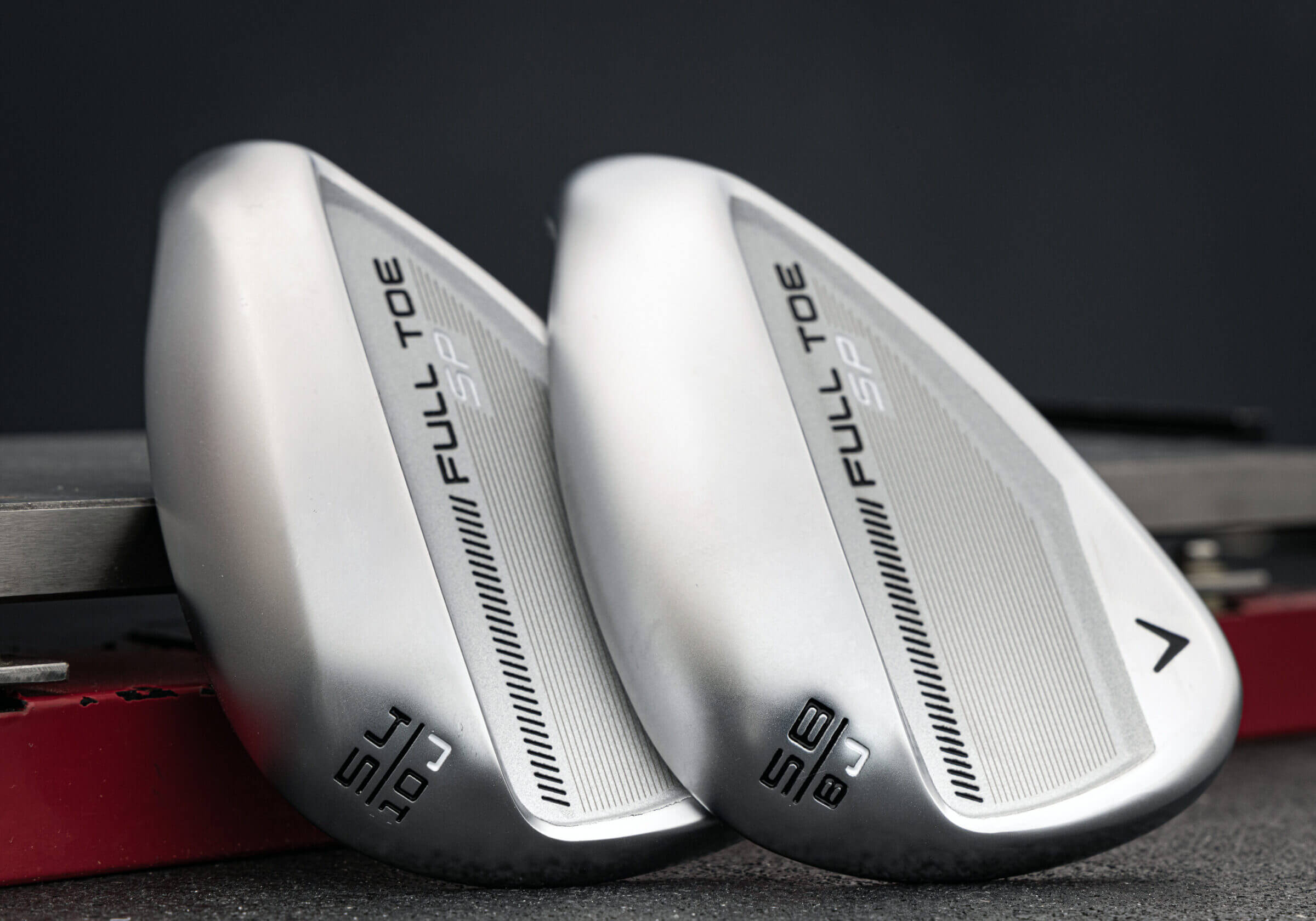
Callaway is bringing back offset, the tall toe and the full-face grooves, wrapped around the largest spin pocket and the highest CG the company has ever put in a wedge. Full Toe SP reaches retail Sept. 4 at $199.99.
It’s not that full-face (and big-toe) wedges went away but I feel like it was radio silence for a bit. That’s changed in a hurry. TaylorMade’s Hi-Toe 5 goes to retail Sept. 3. Cleveland offers full-face grooves on the ADAPT grind in the RTZ line. And on Sept. 4, one day later and at the same $199.99, Callaway will put the Full Toe SP on shelves.
If you’ve been waiting for this corner of the wedge market to get interesting again, it happened all at once.
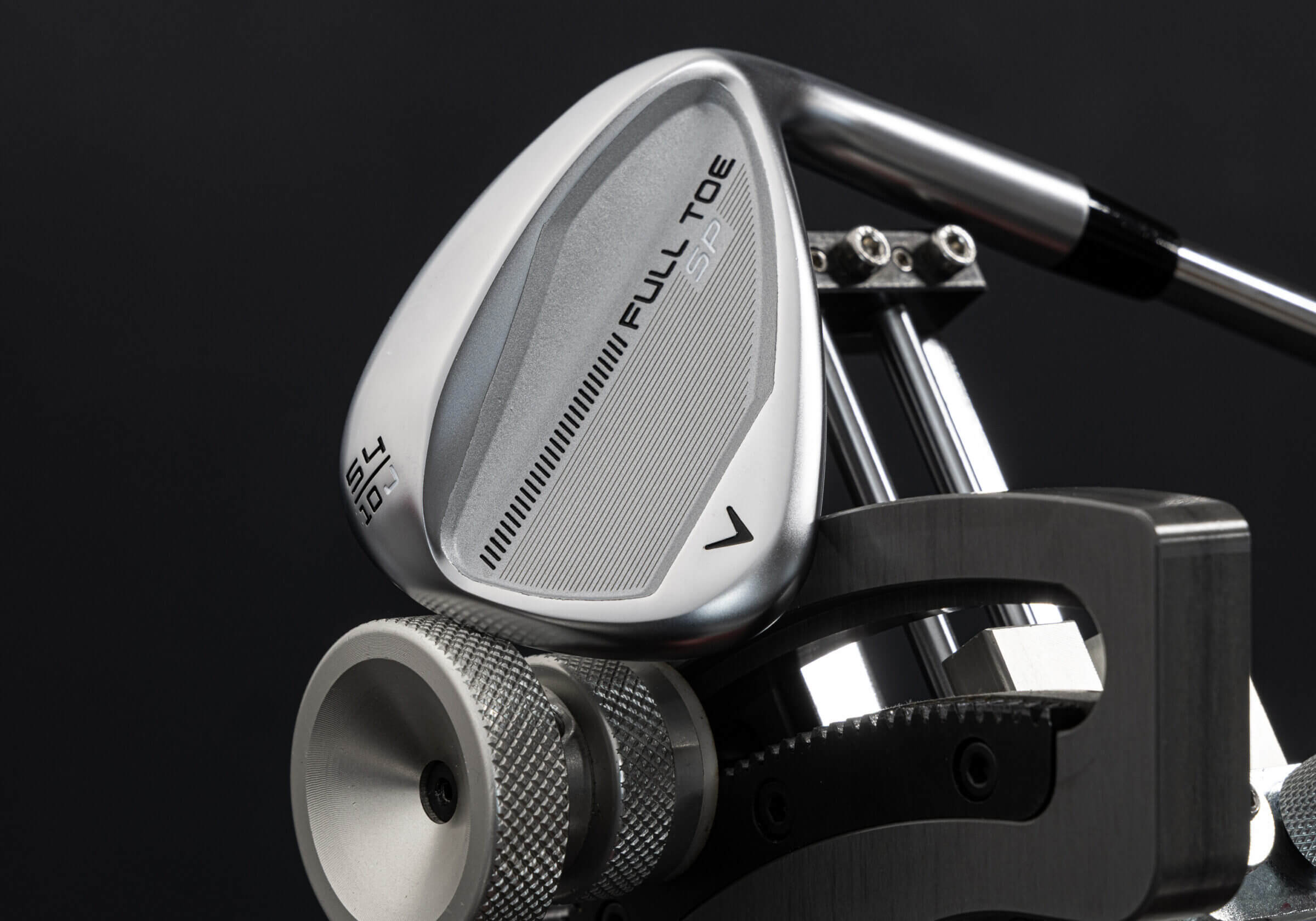
Where Callaway’s Full Toe shape came from
The cynic will say that all of this tall toe chicanery (that’s a fun word) started with the original PING Eye2 wedge.
There’s undoubtedly some truth in that but Callaway’s exploration of the category began in 2015 with the release of the Mack Daddy PM Grind. Roger Cleveland (yup, that Cleveland) designed it with heavy input from, in the words of Callaway VP of Global Equipment Strategy Jacob Davidson, “a left-handed professional golfer.” The wedge was called the PM Grind. For a growing number of reasons, Callaway has placed some distance between itself and the name behind the initials.
Anyhoo … (cringe face emoji)

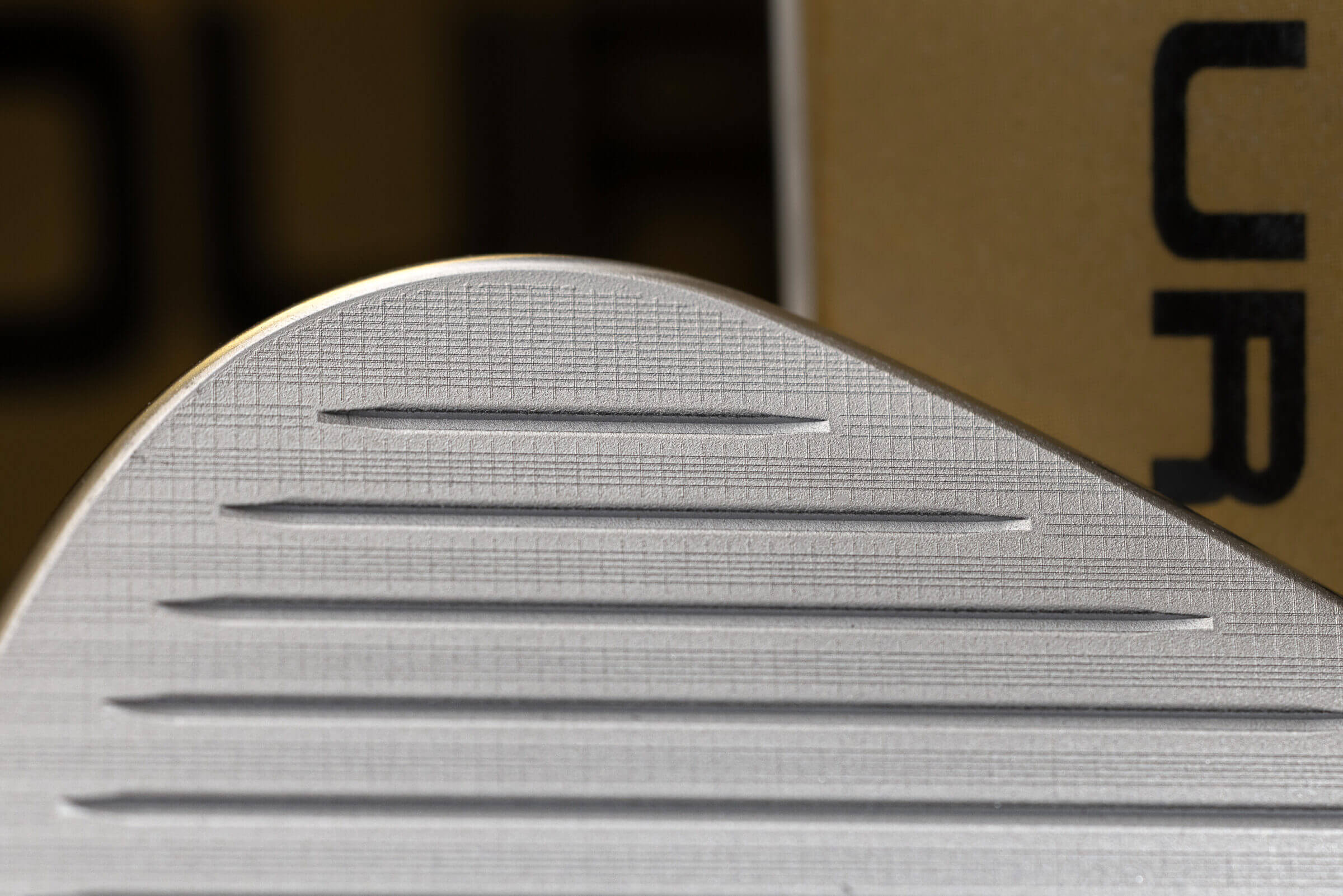
The PM Grind had a tall toe and score lines that ran all the way to the edge of the face, roughly 39 percent more groove area than anything else Callaway was making at the time. It also turned into a cult club. Callaway says there are still people in its own building playing the original.
Another PM Grind arrived in 2019. FWIW, I still have one. I tend to hold on to 64-degree wedges because … reasons. For example, I make bad decisions.
In 2021, Callaway’s full toe shape got absorbed into the Jaws family as the Jaws Full Toe. Softer, more mainstream, less weird, and, maybe, less fun.
“When we tried to make it part of the family, it lost a little bit of its point of view,” Davidson says. “So now we’re making a standalone franchise and kind of embracing it.”
That’s a good bit of the story here. It’s not so much that Callaway built another full-face wedge but that after five years, the company has stopped apologizing for it being weird.
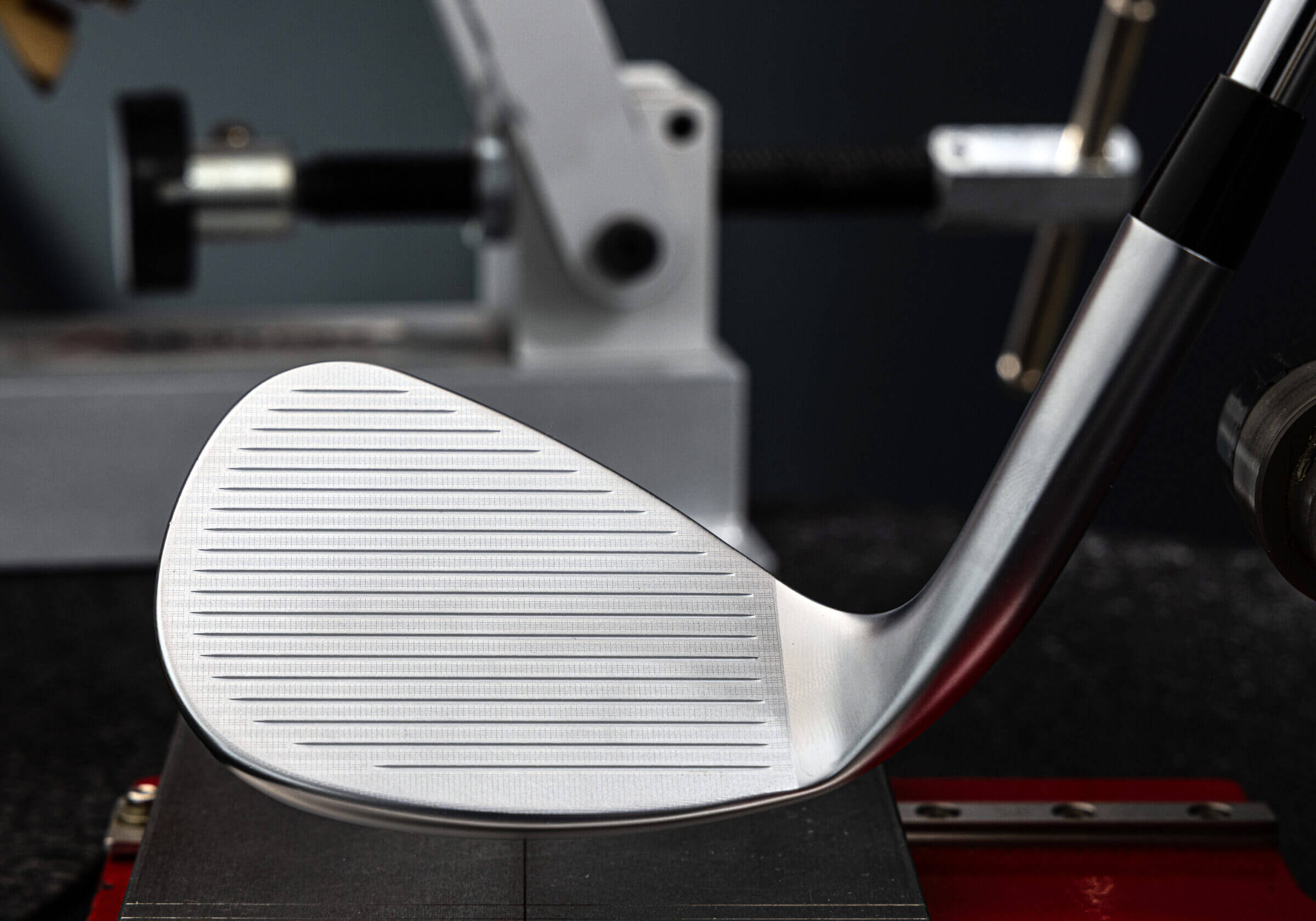
What the tall toe actually does
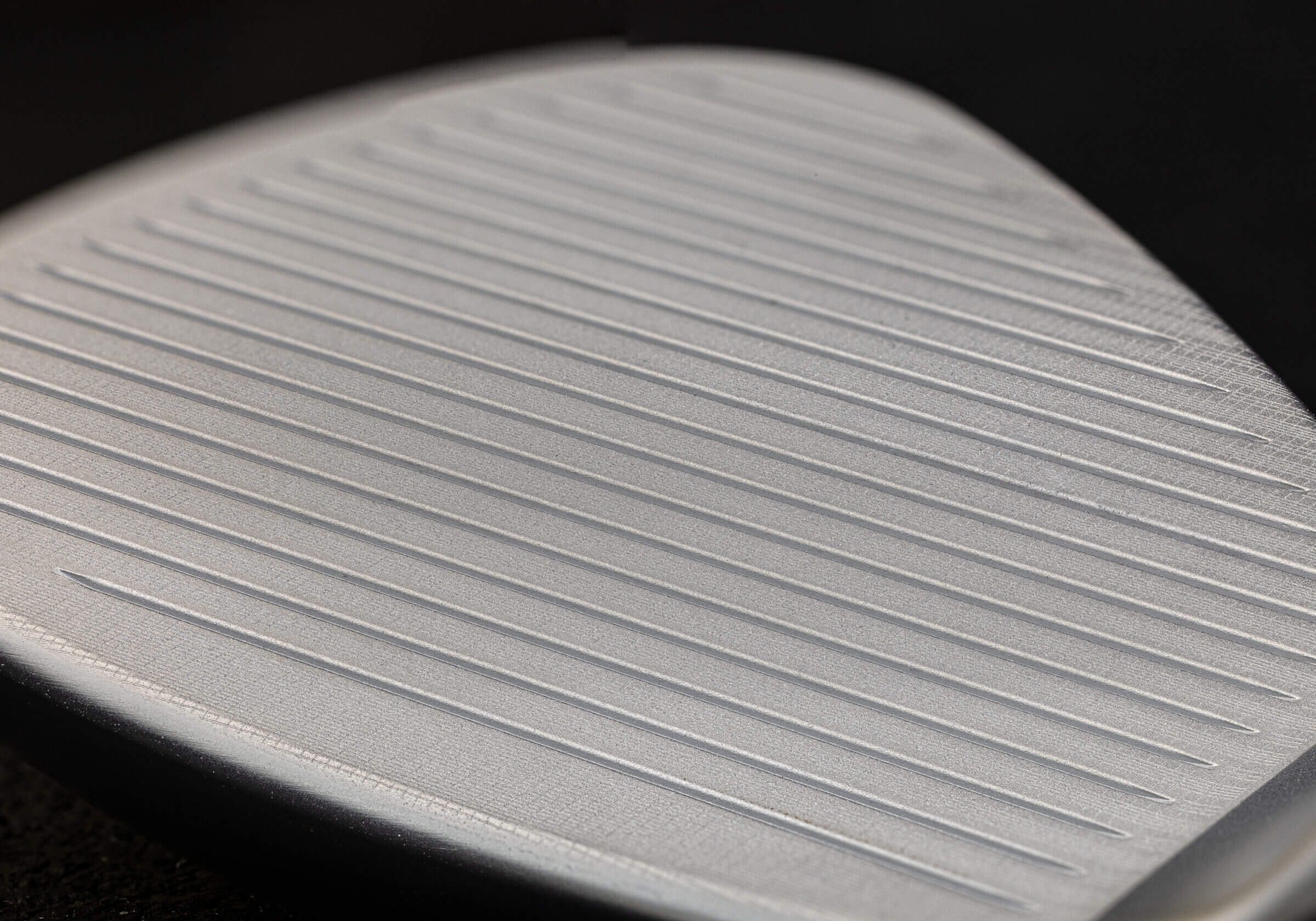
The argument for a high-toe wedge starts with where you hit the ball. Around the green, where a lot of us hit the ball with open faces, not every shot gets struck on the center of the face. Those strategically opened faces move the contact point up and toward the toe. If you’re really trying to be clever, you’re often moving past the point where grooves end on a conventional wedge.
Brian Herr, Callaway’s R&D manager for wedges, has run the experiment.
“We’ve done robot testing with grass, and the loss in spin out on the toe when there are no grooves is tremendous. It’s almost not even spinning. It’s a knuckleball.”
The Full Toe SP answers that with score lines running heel-to-toe for 44 percent more groove area than Callaway’s conventionally shaped wedges, carrying the same Spin Gen 2.0 treatment as Opus SP with a 17-degree groove angle and tighter pitch spacing to get more groove edge on the ball.
There are obvious limits. You actually have to be missing out there for the extra coverage to matter. From a clean lie with a square face, you’re hitting the middle of the face like everybody else and the grooves near the toe are along for the ride. It’s insurance on the shots where the lie and your technique conspire against you. It’s not free spin on the ones you already hit well.
That said, there are golfers who simply prefer the look of full-face grooves. It’s also true that plenty of golfers hate that same look. You do you.
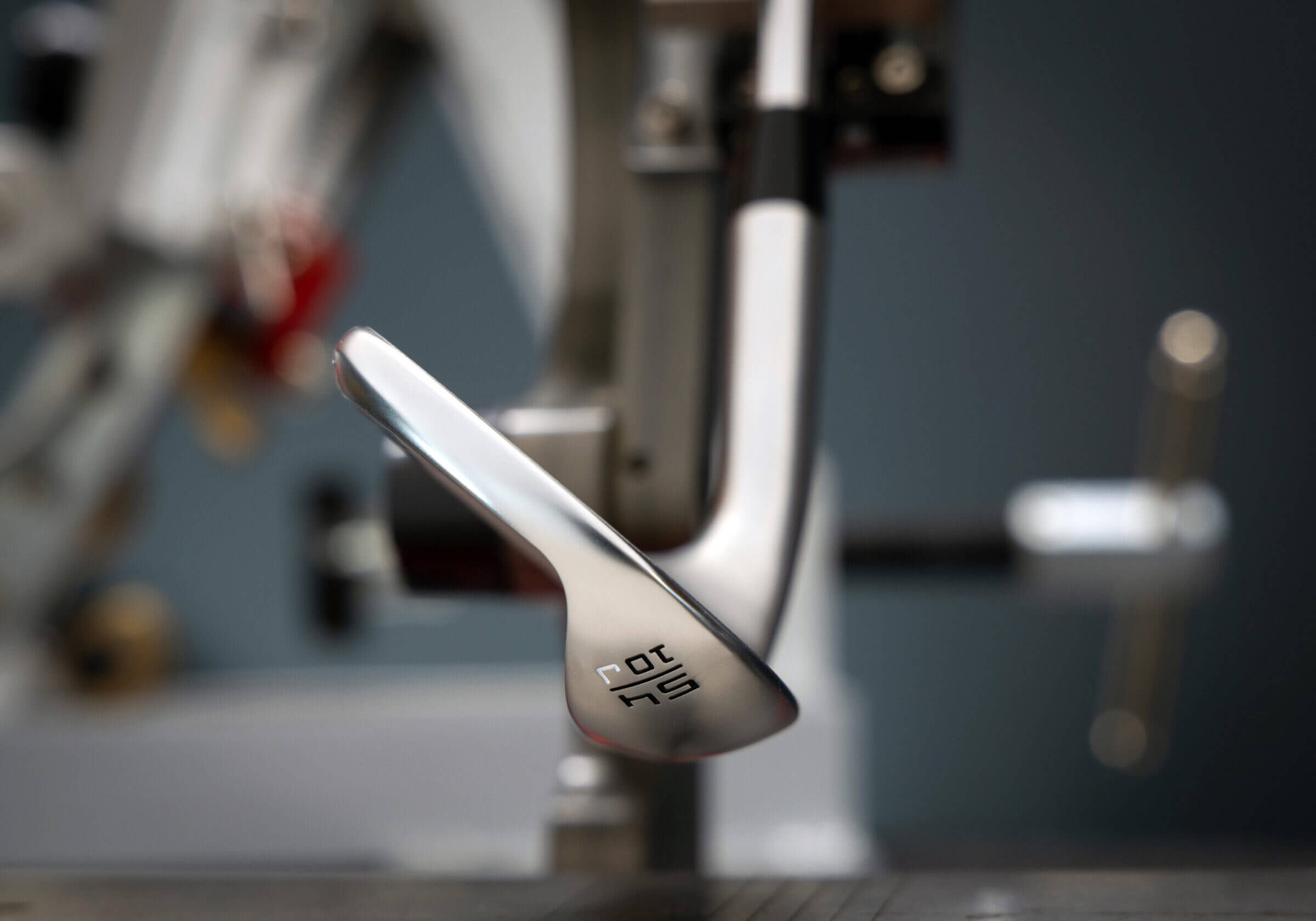
The return of offset (and a rounded leading edge)
The new Full Toe SP doesn’t look like Callaway’s last two similar offerings, and that’s by design.
“We kind of went away from the traditional Full Toe look that we had for the last two versions, and I would say we funked it up a little bit,” Herr says. “The leading edge is much more curved which, feedback is that when you open a club up wide, that curved leading edge really helps the club stay low and gives you confidence that you’re not gonna, you know, shank it to the right.”
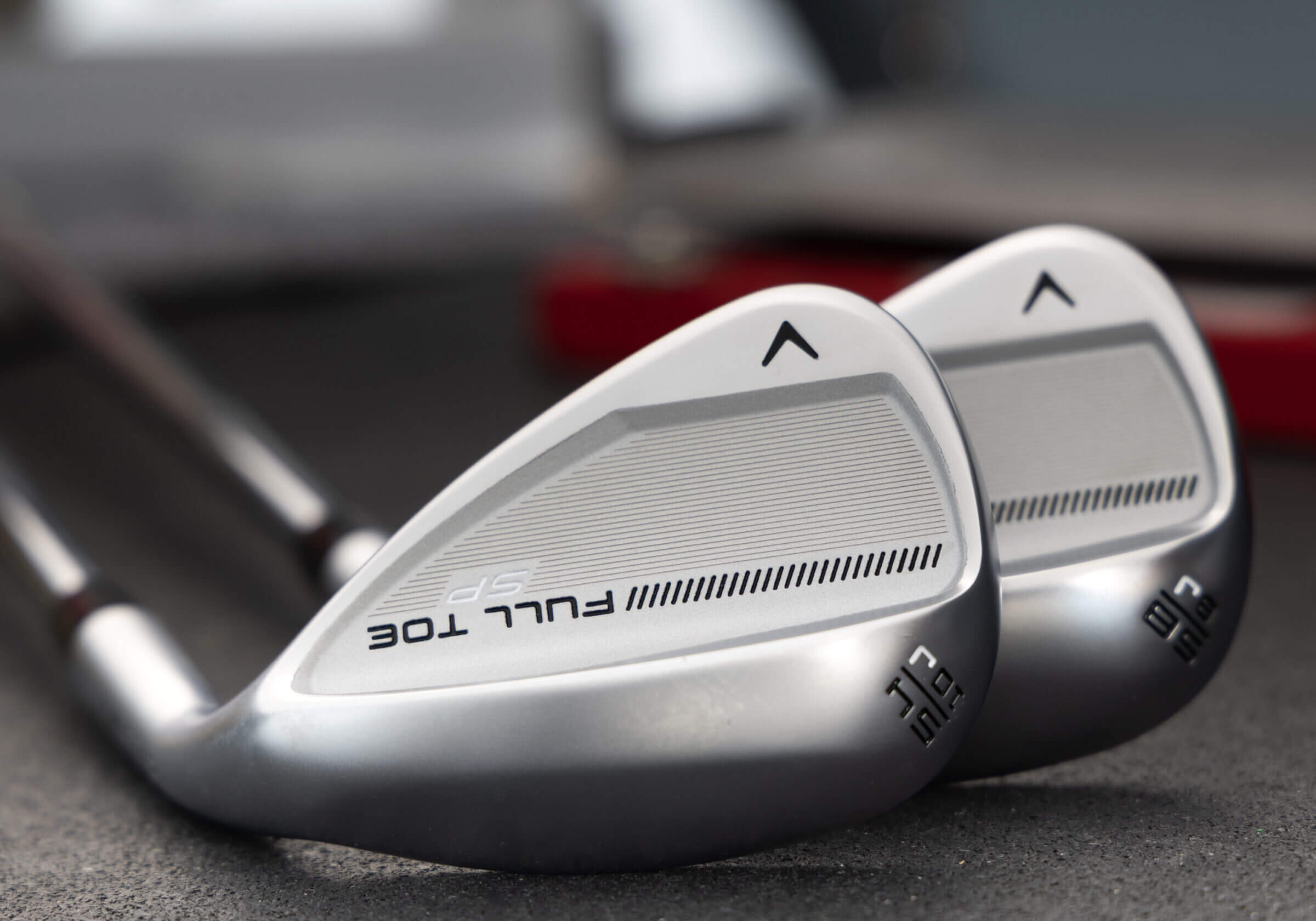
Callaway also put a meaningful amount of offset back into the head. Offset raises the launch angle and gets the ball out of sand more easily, which is the entire reason it’s there. Davidson points to Jim Furyk as a guy who always wanted plenty of offset in his wedges and played a lot of high shots around the green.
Offset isn’t a panacea. As with the full-face grooves, there is an element of personal preference that may defy the engineering. If the hosel bump bothers you at address, no amount of launch angle math is going to talk you out of it.
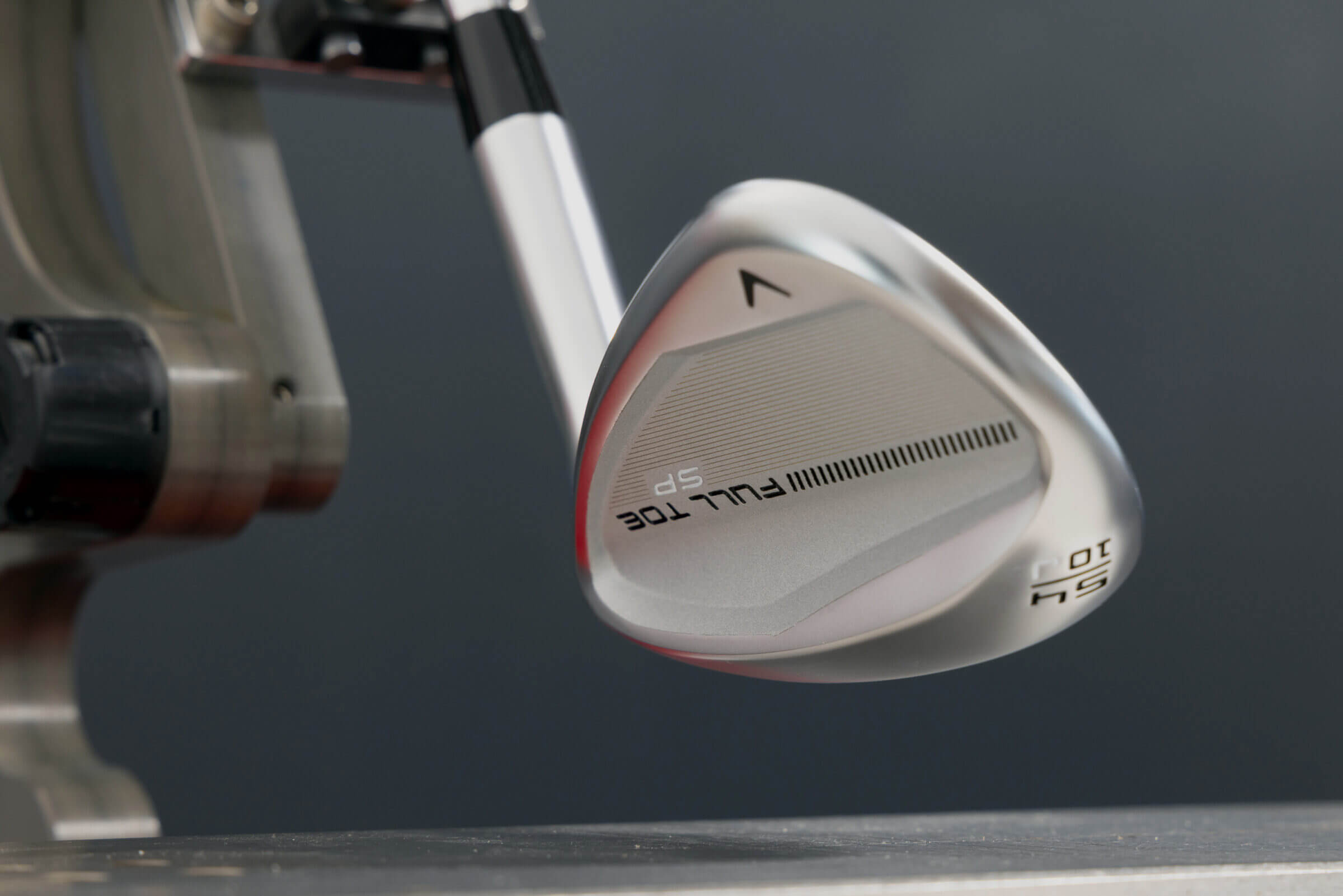
Callaway’s biggest spin pocket
The Spin Pocket debuted with Opus SP. Your quick refresher is that it’s a hollow pocket (the naming is as on-the-nose as it gets) behind the face that lets Callaway strip mass out of the bottom of the head and move it up which raises the center of gravity. Because the Full Toe SP has so much more toe to work with, there’s more room to hollow out.
The result is the largest spin pocket Callaway has made although admittedly there haven’t been many (yet). By the numbers, it’s 18 percent larger than the one in Opus SP+ and 35 percent bigger than the standard Opus SP. You’re also getting the highest center of gravity the company has ever put in a wedge.
That matters because a higher CG means more of your contact happens below the center of gravity which lowers launch and raises spin on square-faced shots. Pair that with the offset, which pushes launch back up when the face is open, and Callaway is doing every bit of engineering it can to have it both ways.
“It’s a Swiss Army knife,” Herr says. “It will launch low if you keep it square. It’ll pop it up high if you open it up.”
Now that we’ve covered what the Callaway Full Toe SP wedge is supposed to do, let’s look at the options meant to convert design intent into on-course reality.
The J grind and the JW grind
Out of the gate, I’m going to acknowledge that this isn’t a particularly robust grind lineup but with consideration for the niche nature of the Full Toe SP, I’m willing to tolerate it without too much chirping.
What we really need to be thinking about as we consider our (limited) options here is that wedge fitting begins (and arguably ends) with sole geometry.
Forgiveness and versatility generally pull against each other. Versatility means a sole with heel, toe and trailing-edge relief that lets you lay the face open and slide the club under the ball. Forgiveness usually comes by way of a wider, simpler sole that resists digging when you get steep. Low bounce and plenty of relief buys you shot-making and punishes even small mistakes. Wide and high bounce does the opposite.
With Full Toe SP, Callaway gives you a bit of each.
J grind
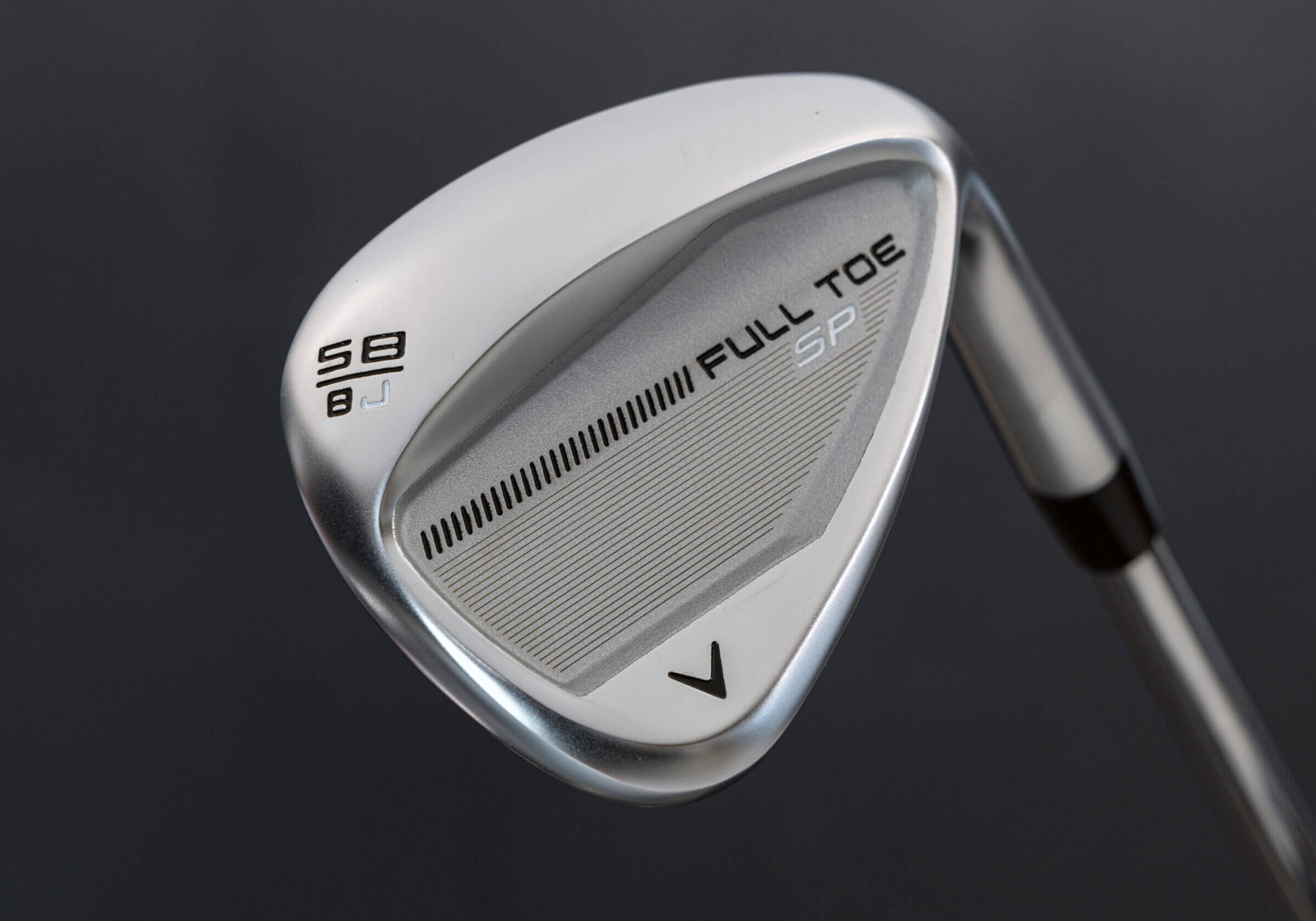
The J grind is the returning shape, albeit tweaked. The notable update is camber in two directions, heel-to-toe and front-to-back (or face-to-cavity). That creates a rounder sole such that less of it is in contact with the turf at any one moment.
“If you hit behind the ball a little bit, you’re not going to lose as much speed,” Herr says. “And when you open it up, you don’t have that hard edge when you’re kind of rocking it if you’re in the wrong position.”
That second part is key. A hard sole edge is what turns a slightly open face into a bladed shot across the green and rounding it off is a real benefit.
As with full-face grooves, opinions vary. Some golfers love the way a cambered sole helps frame the leading edge under the ball. I’m one of those guys. Others hate it.
With the J grind, bounce decreases as loft climbs: 10 degrees in the 54 and 56, eight degrees in the 58 and 60, six degrees in the 62. Effective bounce rises with loft on its own so pulling the bounce number down is what keeps the sole from getting overly bouncy off firm turf when you lay the face open. It’s also an indicator of who Callaway thinks will be buying a 62-degree Full Toe.
JW grind
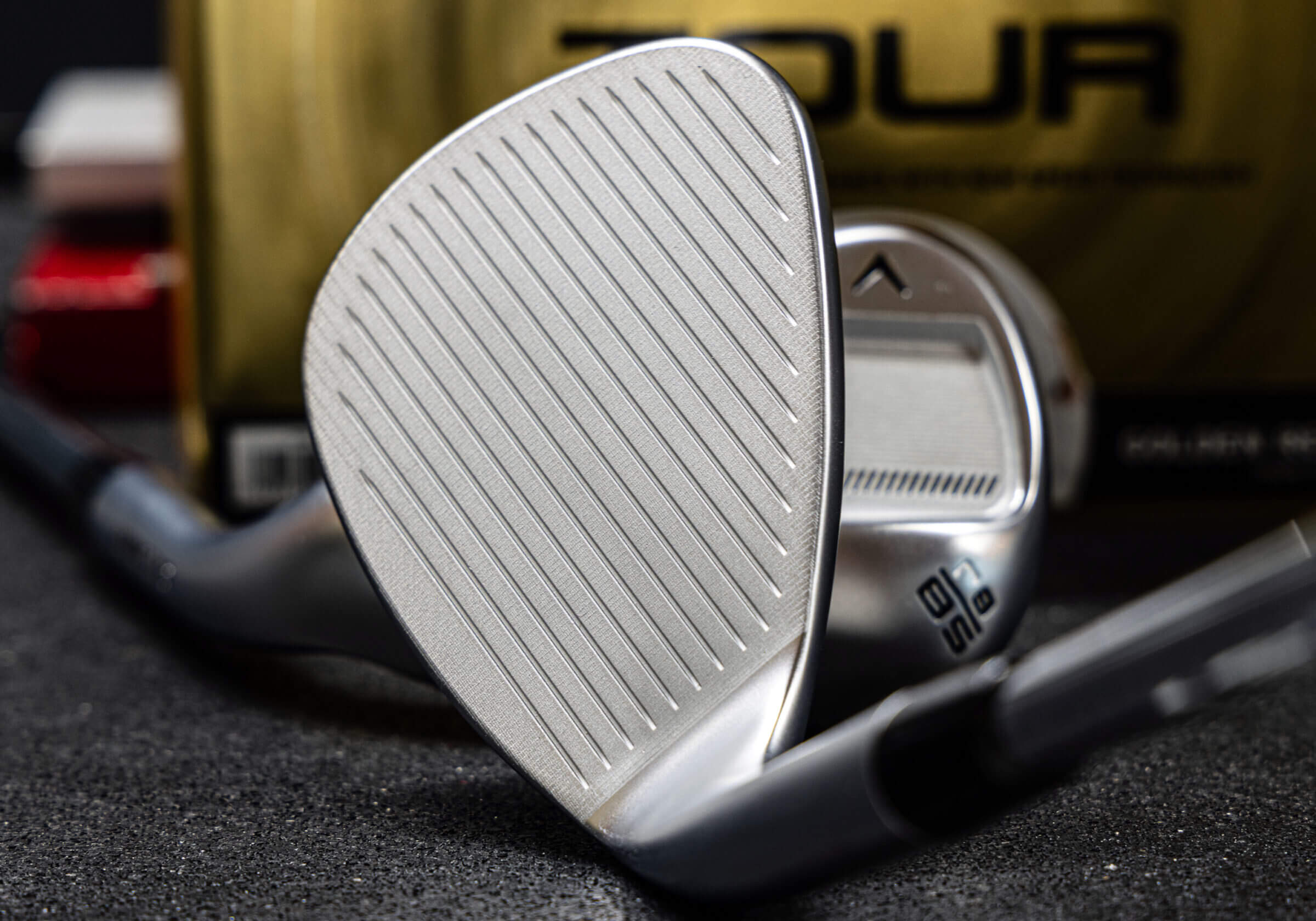
The JW is new, a wide-sole version of the J, and it exists in the 62 only at 14 degrees of bounce.
“You can go into the bunker and kind of have no idea what you’re doing, and it’s really wide,” Herr says. “You don’t need to open it up and just kind of swing, and it’ll pop it right out. It’s also pretty good on the grass if you keep it square. It’s pretty forgiving, so hard to chunk it or blade it.”
Six degrees of bounce and 14 degrees of bounce at the same loft is a wide spread which works to illustrate the trade-offs. If you open the face to manufacture shots, take the J. If a bunker is where your round goes to die, take the JW and stop pretending you’re going to learn the other technique before the season ends (he said while double-checking whether Callaway put a JW grind in the box. Spoiler alert: they didn’t).
One familiar gripe I expect we’ll hear is that both 62-degree options are right-handed only. Lefties top out at 60 in the J grind, which means the player most likely to benefit from the JW, the golfer who genuinely can’t get out of sand, is out of luck if they play the other way around.
Callaway pitches the 62 hard on bunker performance, and it isn’t the only club making that pitch. PING’s BunkR does the same job at 64 degrees with 14.5 degrees of effective bounce. If sand is a standing liability in your game, you’ve got options to try and buy your way out of it.
No gap wedge and that’s the right call
The Full Toe SP starts at 54 degrees and stops at 62. There’s nothing in the range that qualifies as a PW or GW loft.
“We keep it just in the high-lofted wedges, the sands and the lobs, because that’s what this is designed for, and we don’t believe it should go down in the 52, 50 or 48,” Davidson says.
He’s right. A gap wedge is mostly a full-swing club and full swings get struck near the middle of the face by definition. Everything the Full Toe SP is built to do solves a problem that only shows up when you’re manipulating the club. In a lob wedge, that’s a good bit of the job. In a sand wedge, it depends on how much of your 56 gets spent on full shots. Below 54, I don’t see the point.
Hitting the Full Toe SP at the Ely Callaway Performance Center
I spent some time with the Full Toe SP in the short-game area at ECPC which is a nice way to spend an afternoon but maybe not the best way to draw any firm conclusions about spin. No launch monitor and something about the grass out west means I’ve always found it easier to stop a ball there than I do at home in New York. Take that for whatever it’s worth.
Caveats stated, there was plenty of check and more than plenty into a slight upslope. I can’t tell you the spin pocket is the reason. I can tell you the Full Toe SP wasn’t lacking for spin.
The looks are the sticking point for me. I’ve never been a high-toe guy. It’s a lot to look at, particularly with the grooves running to the very edge of the face, and I’d argue the Full Toe SP reads closer to a game-improvement wedge than the traditional blade shaping that makes up most of the market.
And the more balls I hit, the more I enjoyed it. Admittedly, I’m a sucker for a good short-game area.
Who the Full Toe SP is for
The Full Toe SP makes sense if you open the face habitually, play out of thick rough with any regularity or spend a meaningful part of your round short-sided. Callaway’s internal shorthand for it is a get-out-of-jail-free card, roughly what the internal testing feedback keeps telling them.
It makes less sense if most of your greenside work is square-faced pitches off clean lies, if you’re particular about what a wedge looks like behind the ball or if you already have a wedge setup you trust. A specialty club is only worth a slot when it solves a specific problem (without creating others).
But if you’ve ever stood over a ball sitting down in rough with a bunker between you and the pin and wished you had a reliable solution, that’s the shot the Callaway Full Toe SP was created for.
Pricing and availability
Callaway Full Toe SP wedges are priced at $199.99 each. The J grind is available in 54 degrees (10 bounce), 56 (10), 58 (eight), 60 (eight) and 62 (six). The JW grind is 62 degrees only at 14 degrees of bounce. Lofts 54 through 60 are available in right- and left-hand. Both 62-degree options are right-hand only.
The stock build is a Dynamic Gold S200 shaft with a Golf Pride Tour Velvet 360 grip.
Full retail availability begins Sept. 4.
For more information, visit Callaway.com.
The post Callaway Full Toe SP wedges: The High Toe Gets Its Franchise Back appeared first on MyGolfSpy.
Article Link: https://mygolfspy.com/news-opinion/callaway-full-toe-sp-wedges-the-high-toe-gets-its-franchise-back/