
I’ve never been a fan of this whole Archer vs. Arrow nonsense.
First off, the analogy is just plain wrong. While the archer equates to the golfer, the arrow equates to the ball. The bow equates to the club. Ask any competitive archer and they’ll tell you, the bow matters.
The bigger issue I have with Archer vs. Arrow fallacy is the notion that a good golfer should be able to play good golf with anything. The tools of the trade, in this analogy, are irrelevant. However, ask any good tradesman and they’ll gladly tell you: The right tool makes the job a lot easier and the finished product a lot better.
Unless the person claiming it’s the Archer and not the Arrow is shooting even par with a department store driver, an old set of Spalding Executive irons and an imitation Bullseye putter, I’m not interested.
Yes, a good golfer can make do with anything. But to play good golf consistently well, having the right equipment matters.
Especially with wedges. We spent this spring trying out Cleveland custom wedge grinds and friends, it’s been a genuine learning experience.
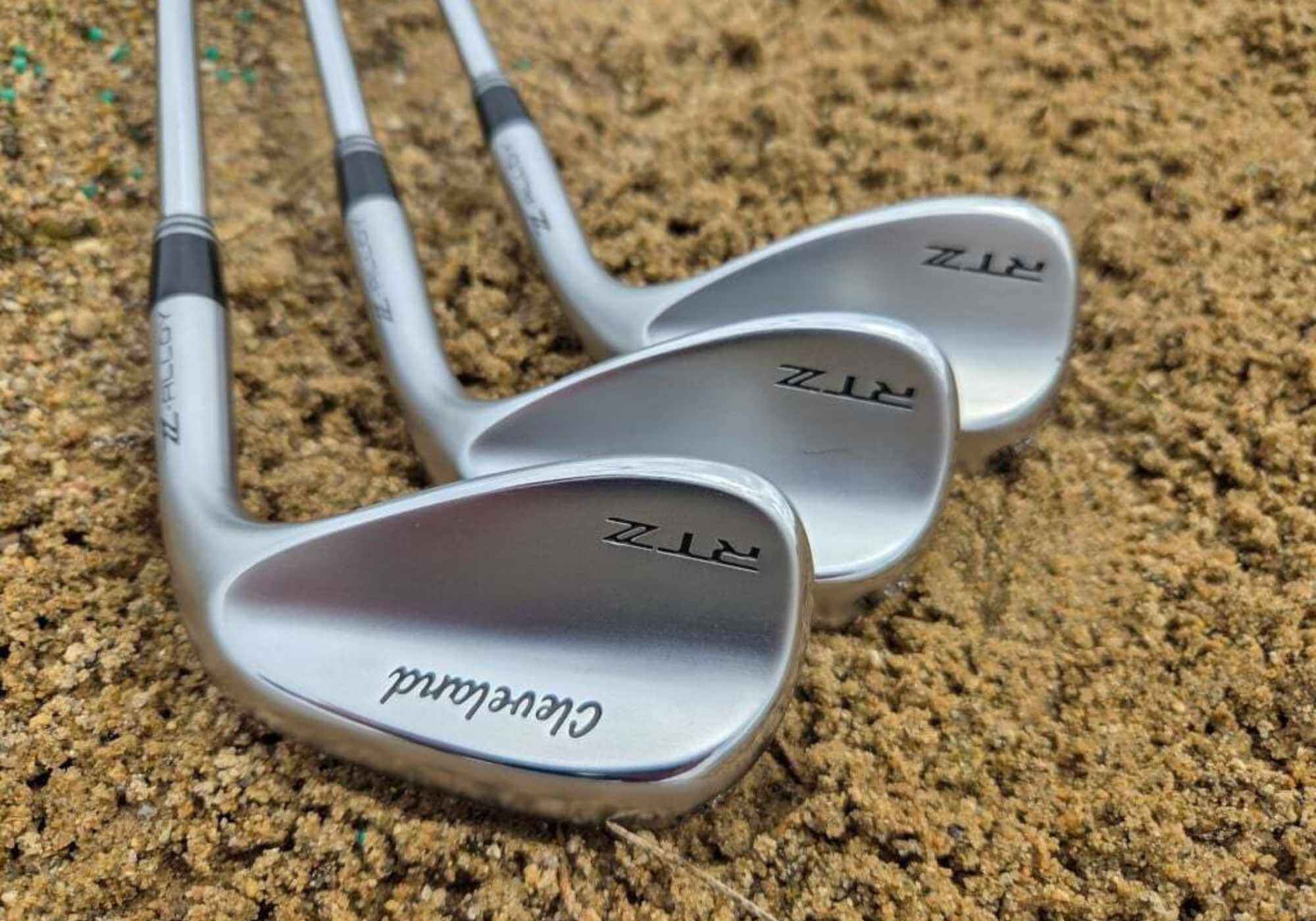
My April with Cleveland custom wedge grinds
It’s been a long, cold lonely winter, friends. And here in New England, spring hasn’t been all that great, either. April has been cold, windy and wet, but your intrepid scribe bundled up and hit the course.
For you.
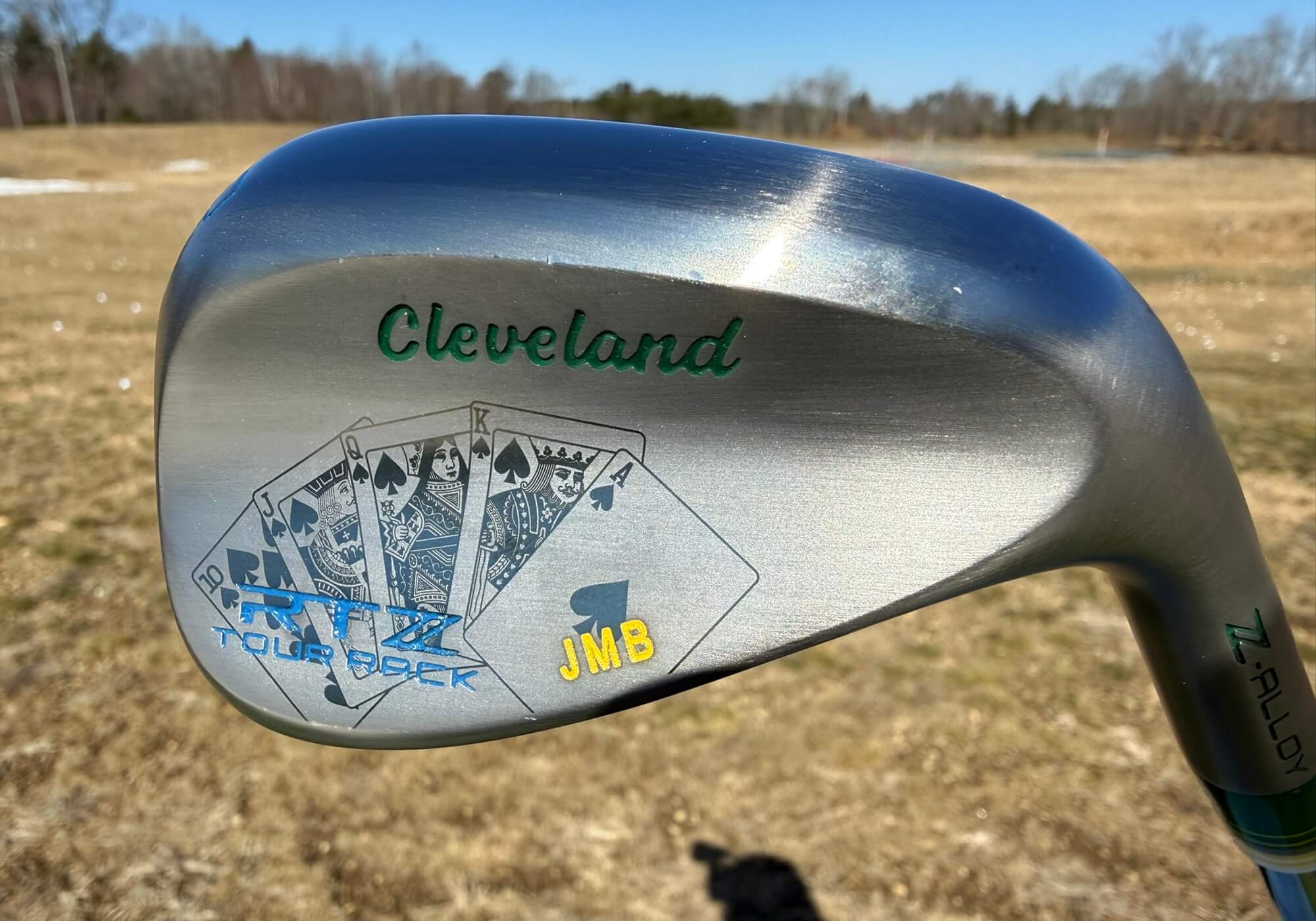
Earlier this month I shared my experience of getting fitted for a set of Cleveland RTZ Tour Rack wedges with customized sole grinds. We wanted to know if custom wedge grinds really make that much difference. Well, after four rounds, I can confidently say yes. The right tools combined with the right technique absolutely matter.
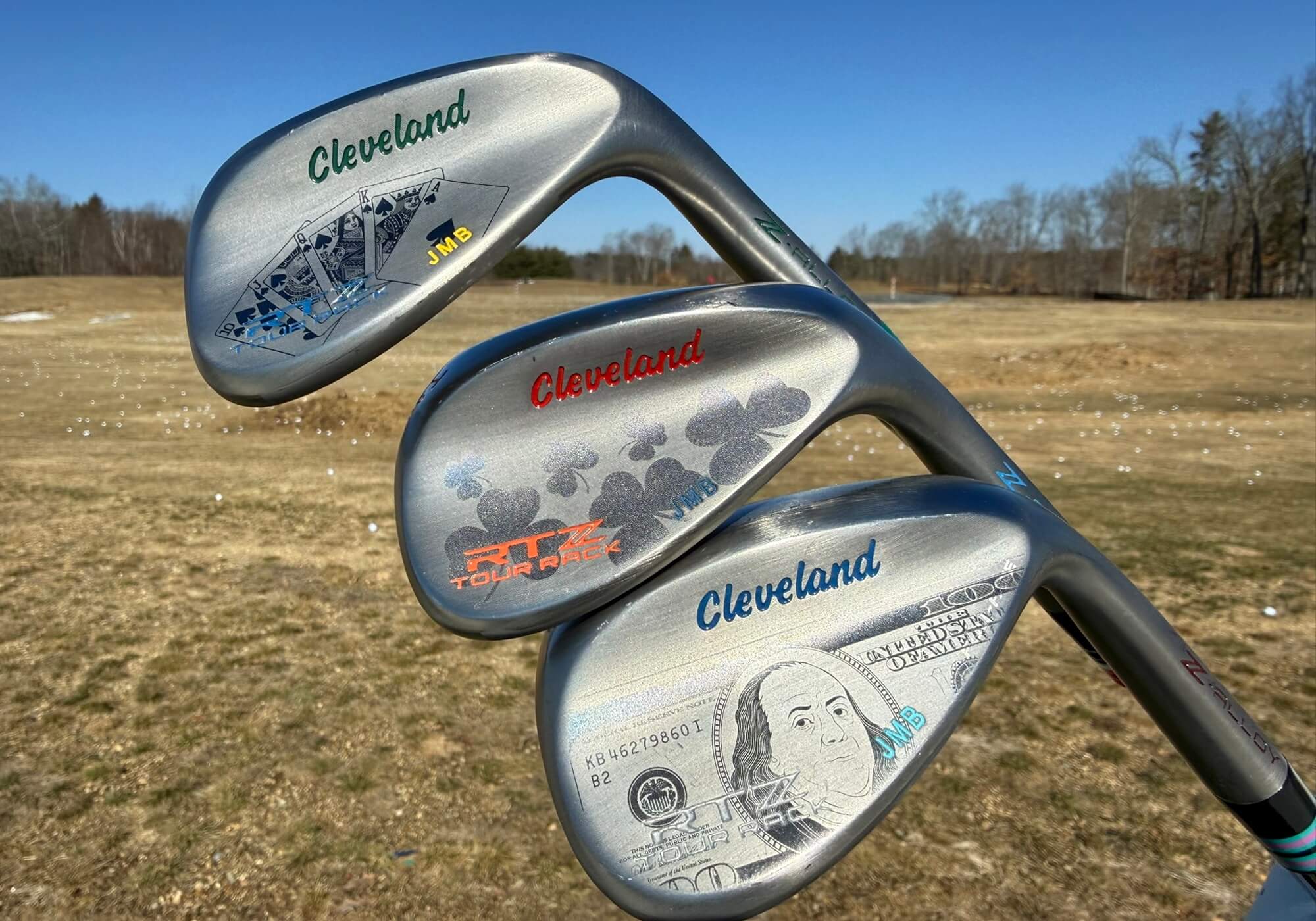
So, the plan here is to share what I’ve experienced through four rounds. I’m not going to bother with spin numbers, however. You can check last year’s MyGolfSpy wedge testing to get an idea. I will say that when it comes to spin, Cleveland RTZ wedges leave nothing on the table. I’m not a super high spin, hop-‘n-stop kind of player, but the RTZs give me all the predictable spin I could want.
What I want to focus on is what really matters: specific shots in the heat of competition and the all-important and often misunderstood world of Strokes Gained.
In simple terms, Strokes Gained is a stat that measures how much better or worse a player performs compared to a benchmark golfer from the same situation. For example, the Tour average to hole out from 150 yards in the fairway is 2.8 strokes. If you hit the green and sink a birdie putt, you’ve holed out in two strokes, so compared to Tour average, you’re plus 0.8 in strokes gained.
If you dump your approach in the sand, take two to get out and then two putt, that’s five strokes. You’d be minus 2.2 strokes gained.
And probably a little cranky.
T.S. Eliot was right, April is the cruelest month…
Like many of you who are emerging from winter, you might say my game is in The Waste Land. Compound plenty of rust with testing a new driver, irons and putter and you have a stat line that looks like an EKG gone bonkers.
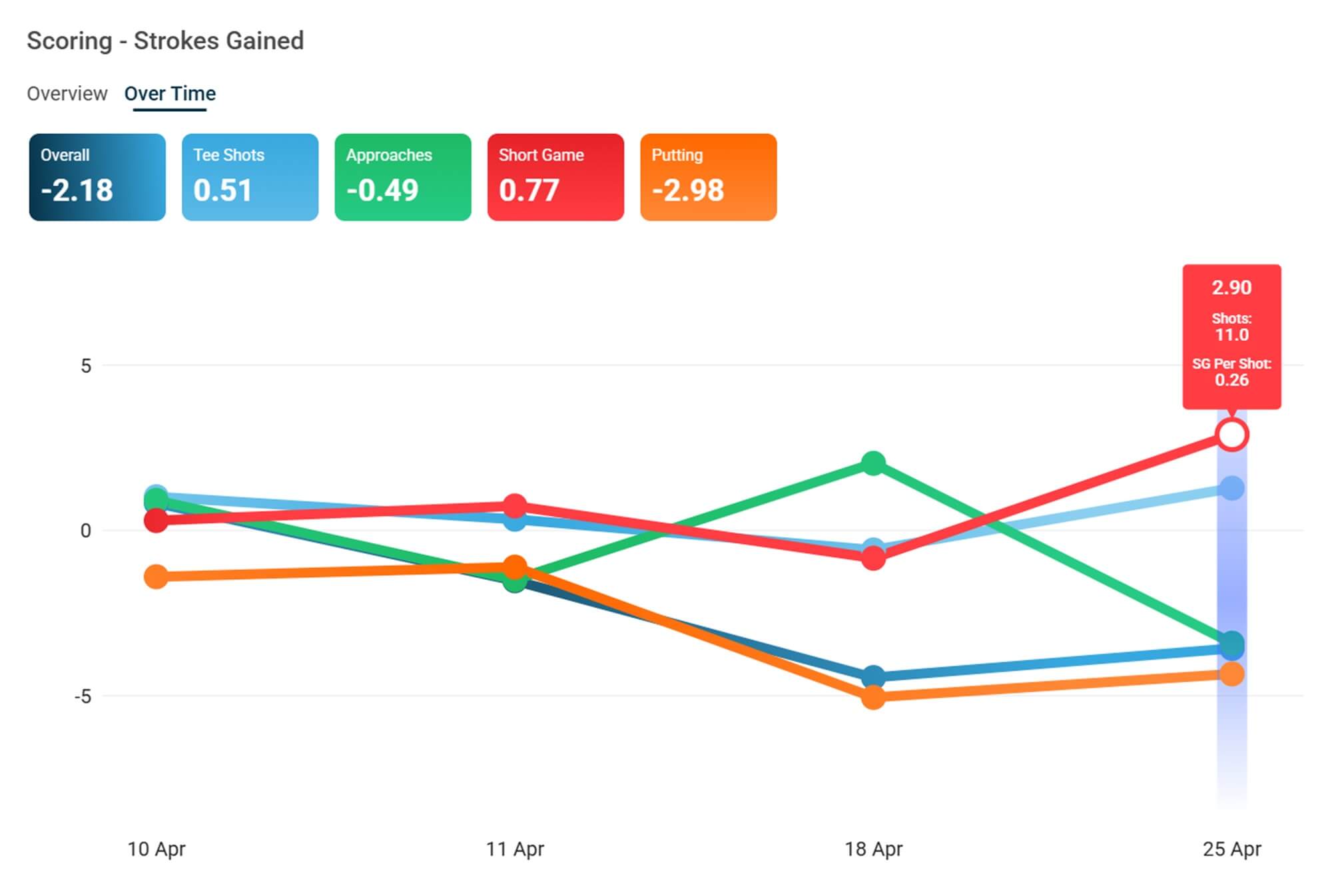
How bad has it been? According to Shot Scope, when compared to a typical 5 handicap (I’m a 5.6), I’m at a minus 2.18 strokes gained overall. Putting has been the biggest bugaboo at a nasty minus 2.98 strokes gained. Frustrating, because putting is normally something I don’t suck that badly at.
There is hope, however, growing out of this stony rubbish.
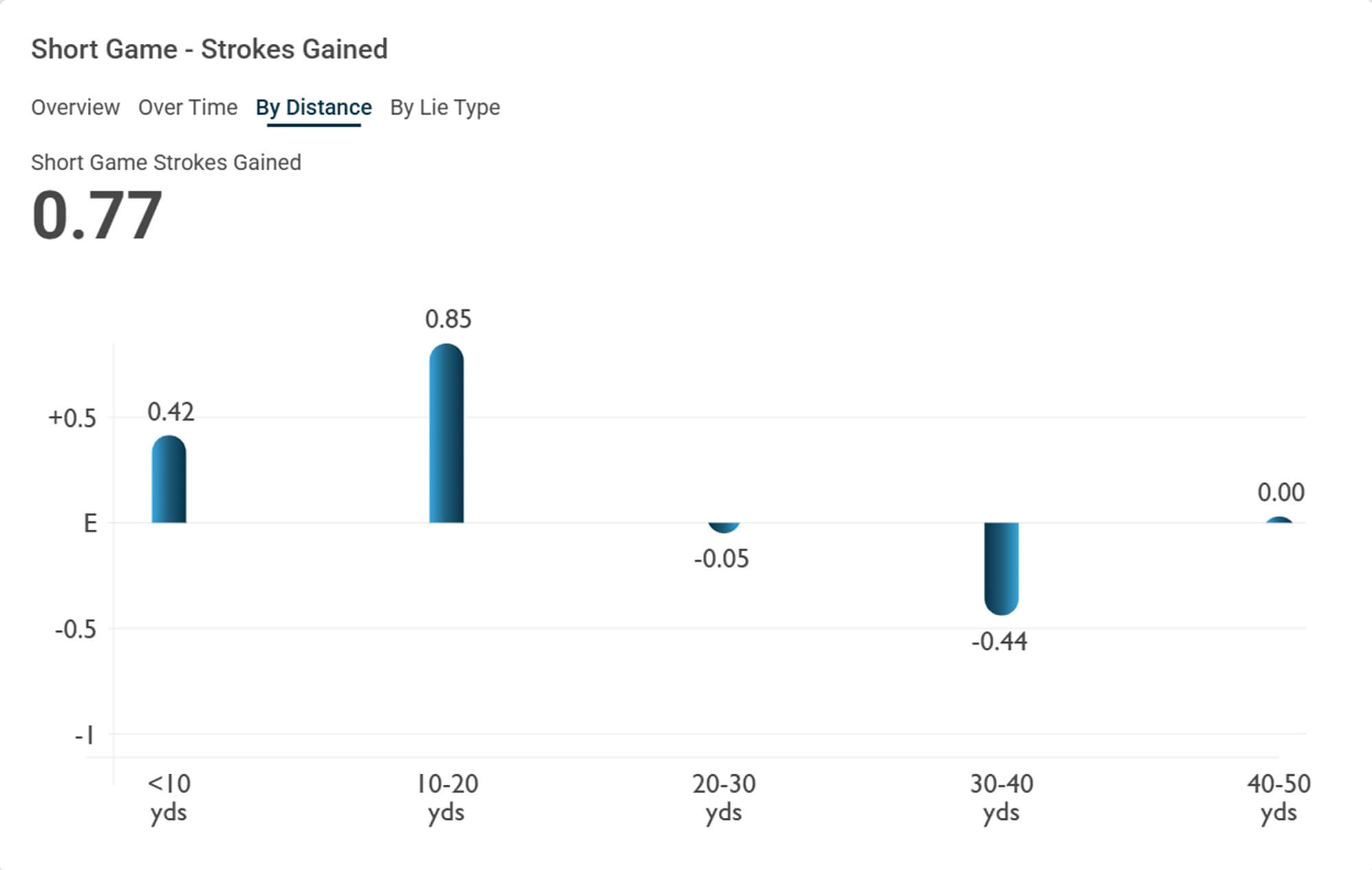
The short game has been saving my tuchus. With the Cleveland custom wedge grinds in the bag, I’m at plus 0.77 strokes gained over those four rounds. It’s a small sample size but what had been, at best, a neutral part of my game is turning into its only strength.
That doesn’t suck at all.
What I like about Shot Scope is that you can break down strokes gained to a fairly granular level. For example, this graph shows a positive strokes gained from 20 yards and in, but a slight drop off between 20 and 40 yards.
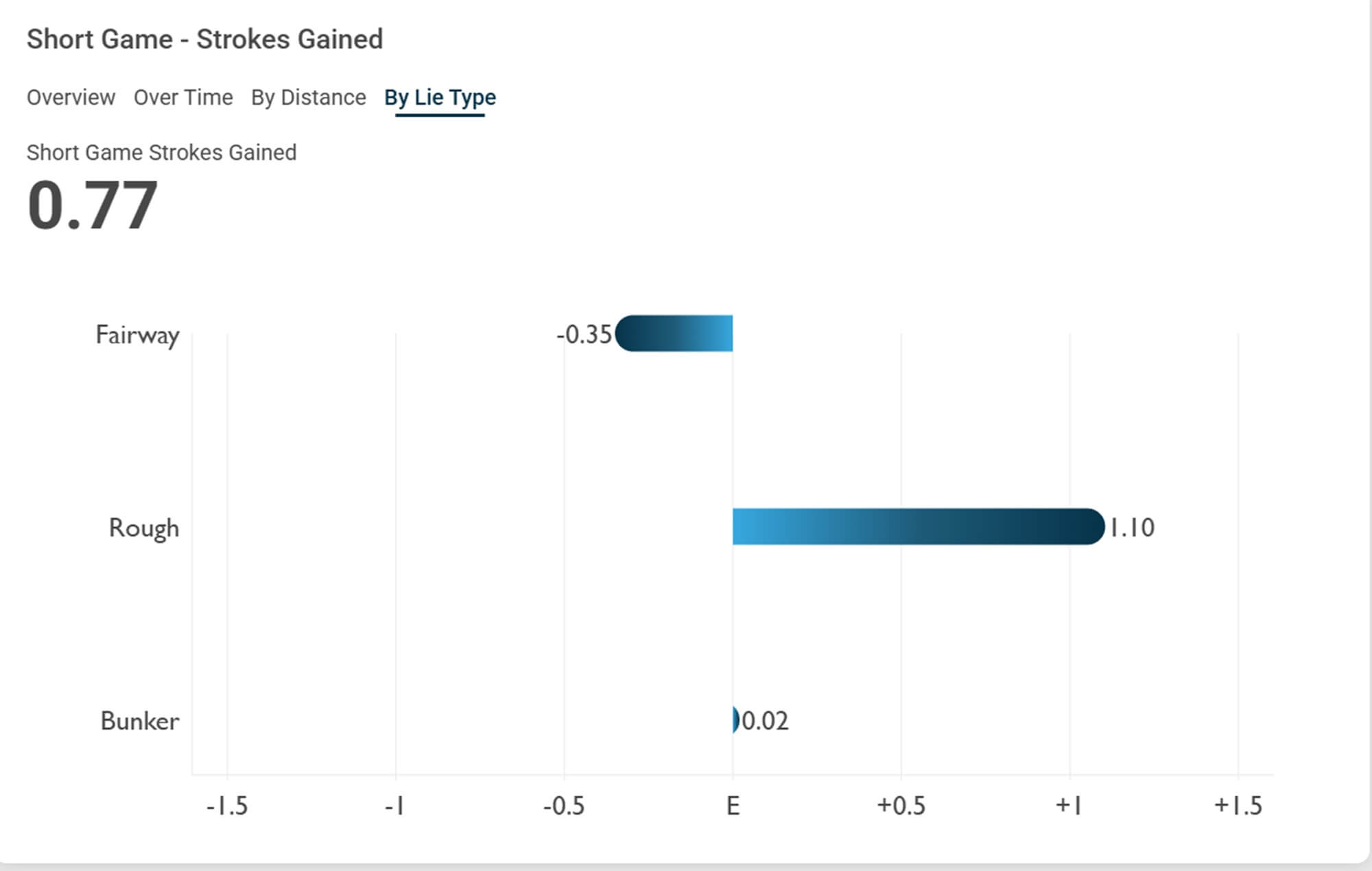
By comparison, this chart shows pretty solid performance from the rough and positive enough performance from bunkers. Those pesky fairways, however, are a problem.
I’ll need to make sure I miss more of them.
About those custom grinds…
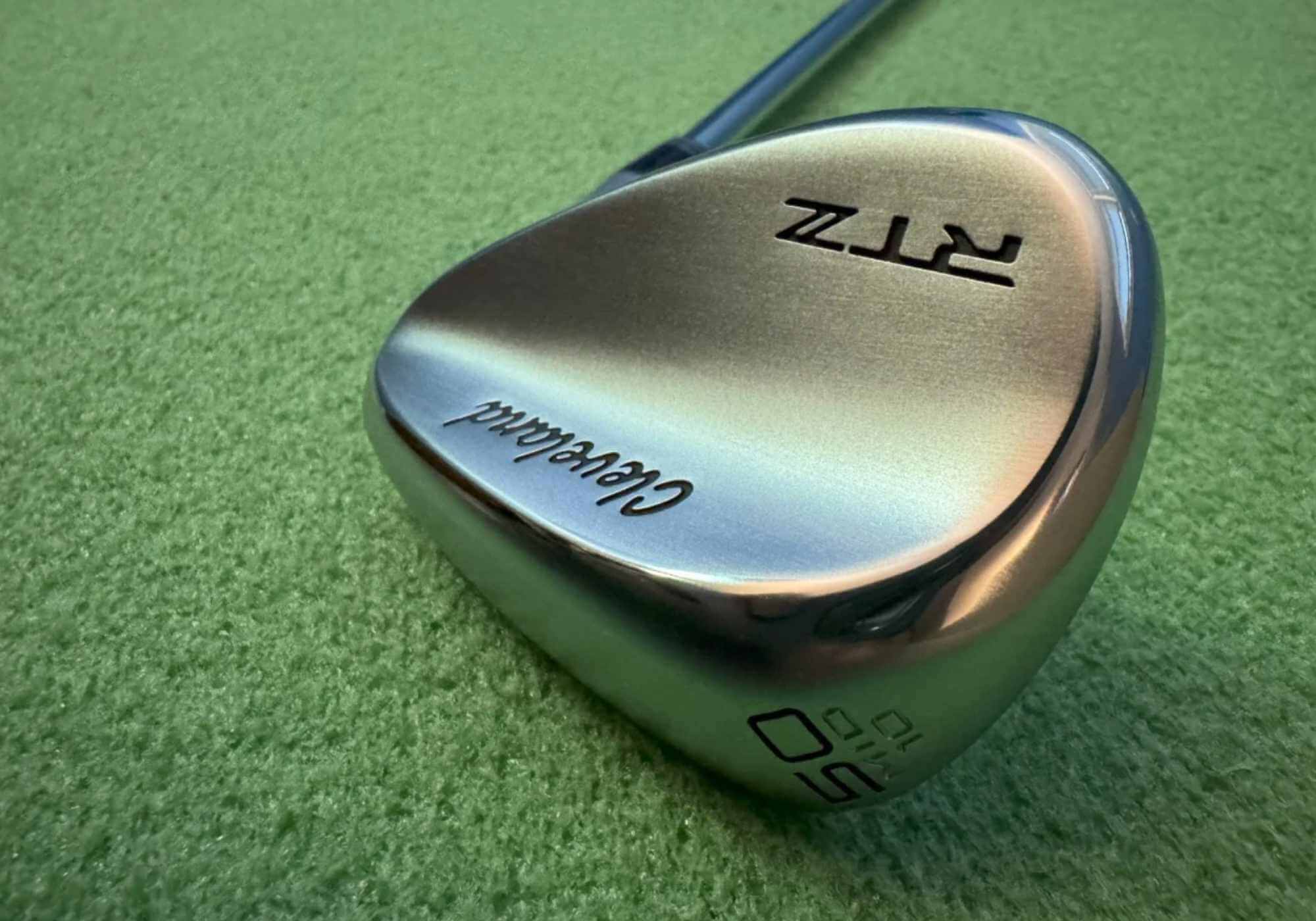
With some guidance from Roger Cleveland and a thorough wedge fitting with Steve Thomson of Golftec in Danvers, Mass, I settled on a 50/54/58 loft makeup to combine with my 46-degree pitching wedge. Using the Cleveland custom wedge grind selection tool online, we chose the mid-bounce sole option for the 50 and 54, with trailing edge relief and a sharpened leading edge. I tend to have a shallow angle of attack, and those lofts are primarily used for full shots.

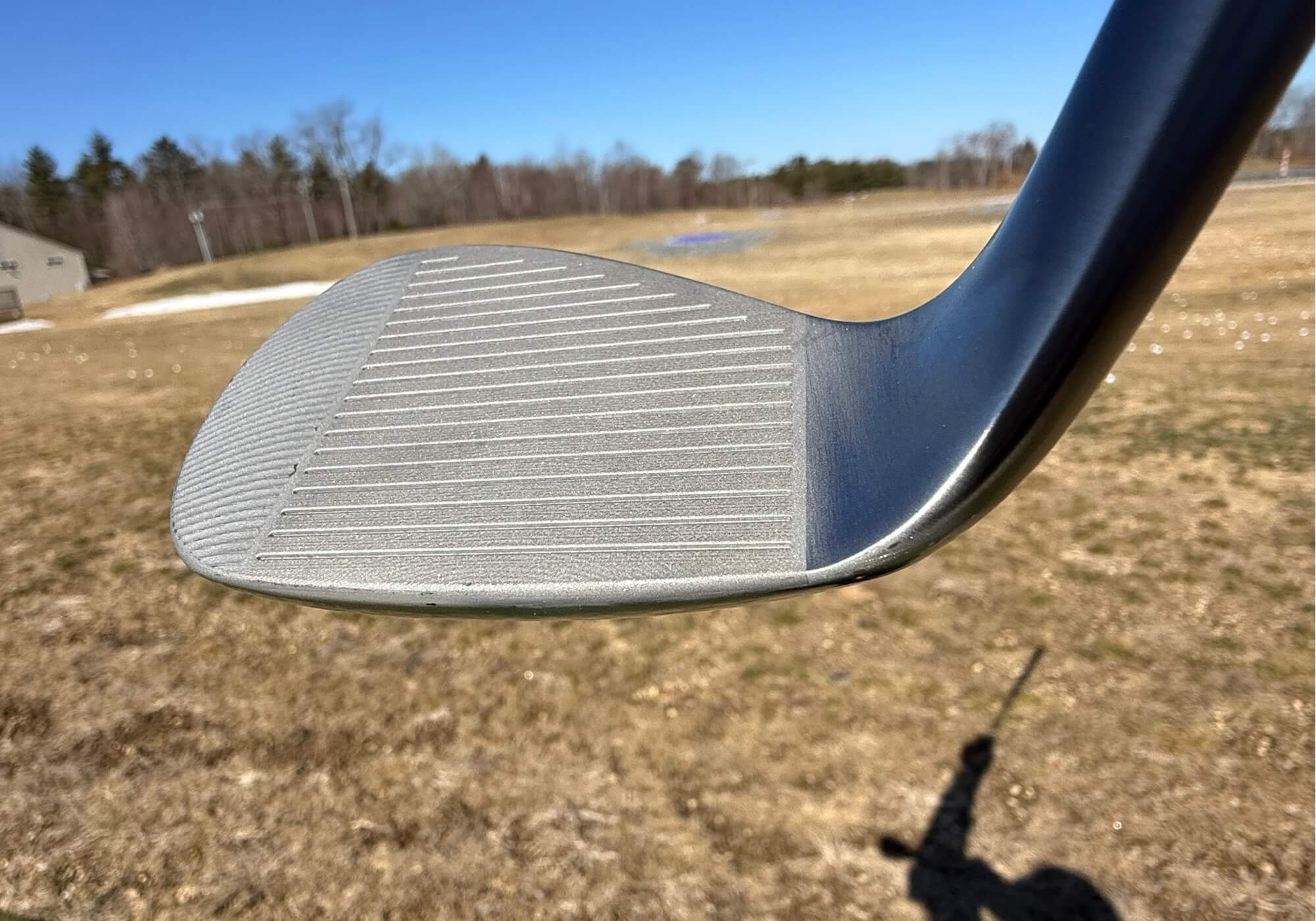
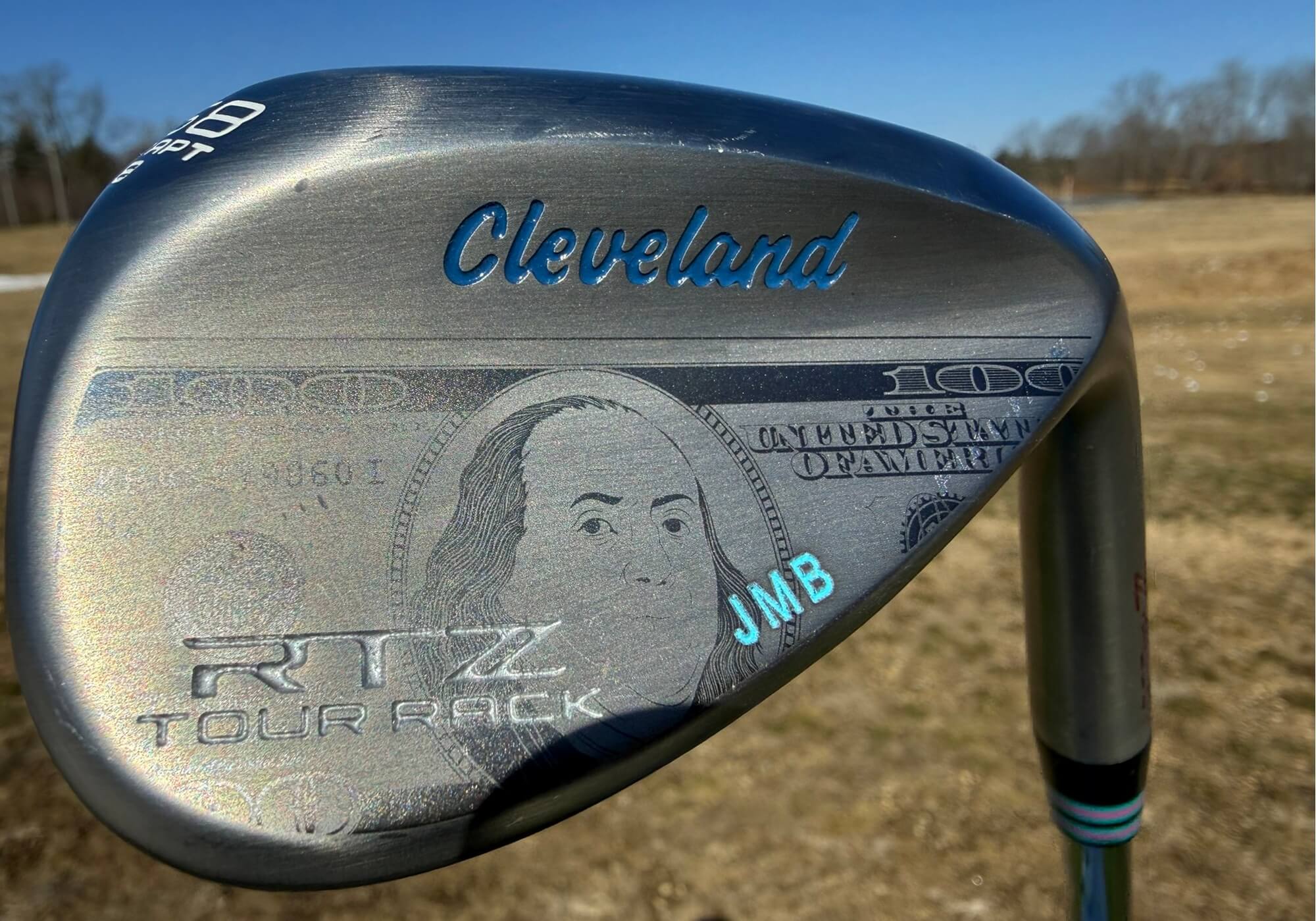
For the 58, we went with Cleveland’s Adapt grind with Full Face grooves. It’s my all-purpose club around the greens (except for bump-‘n-run shots), with occasional full and three-quarter shots. We chose extra heel, toe and trailing edge relief for versatility around the green and a little extra help in the bunkers.
“The sole is widest in the center and gets narrower towards the heel and toe anyway,” Roger Cleveland tells MyGolfSpy. “When you add more heel and toe relief, you’re taking the bounce you had and you’re moving it back, which takes bounce off in the center.
“It’s a good wedge if you’re fairly steep, and it’s good in form conditions.”

I found that extra relief to be most helpful on short pitches and chips close to the green. The sharper leading edge helped as well, as I was able to get solid contact and smooth turf interaction with the ball further back in my stance. The sharper leading edge and the heel relief also made it easier to hit higher or lower shots, simply by raising or lowering my hands.
Four rounds, positive trends
One of my favorite Hogan quotes doesn’t come from Ben but from his wife, Valerie. One day Ben, who notoriously hated the whole concept of putting (I feel you, my man), complained to her that he wasn’t sinking enough putts.
“Well, dear,” she replied. “Maybe you should try hitting it closer to the hole next time.”
I collected data from four rounds on four consecutive weekends in April. The first was April 10th on the Nicklaus Course at Pinehills in Plymouth, MA. It was the first round of the year and also my best, a 79 with 1.75 strokes gained overall. The short game was extra tidy, with 1.31 strokes gained. There was an even better score to be had, if not for the putting woes.
I didn’t have much opportunity to practice with the 58-degree in the sand, but my very first bunker shot with it was a beauty. It popped up nicely to the elevated green and settled to within five feet. I made the putt to save par, and it’s been the only putt of consequence I’ve sunk all spring.
The next round was a local favorite, The Oaks in Somersworth, New Hampshire. Again, the short game was the star of the show with a 1.58 strokes gained. Highlights included a 27-yard pitch from off the green to within a foot on the par-5 11th, and a full 54-degree from 94 yards out to within 18 inches on the 12th for birdie. The short game preserved an 80, but a questionable putter didn’t help.
The same thing only different
The last two rounds of April were carbon copies: solid front nines followed by dumb back nines. In both cases, however, the short game kept it from getting worse.
I’ll let one number tell you the tail of my round at Breakfast Hill in Greenland, New Hampshire: minus 6.19 strokes gained putting. This was the only round where the short game didn’t help much (minus 1.78 strokes gained). Valerie’s words kept ringing in my head as no matter what, I couldn’t get the ball closer than five feet on pitches, chips and partial shots.
The Clevelands returned to form in my final round of the month, at a splendid course in Southwick, Mass called The Ranch. Unfortunately, after a solid front nine, the driver, approach shots and putting all took the last train to Crapsville. Short game was plus 1.63 strokes gained (I don’t even want to look at the others). Highlights included a 20-yard pitch from the left rough to within a foot on the par-3 5th. Then there was an over-a-hill 27-yard pitch to a tight pin on 12, again to within a foot.
On the par-5 13th, it was in the rough a few inches from the fringe in two and lobbed a gorgeous 20-yard chip uphill/sidehill to maybe three feet. Perfect birdie opportunity, right? The damn putt lipped out and I had to settle for par.
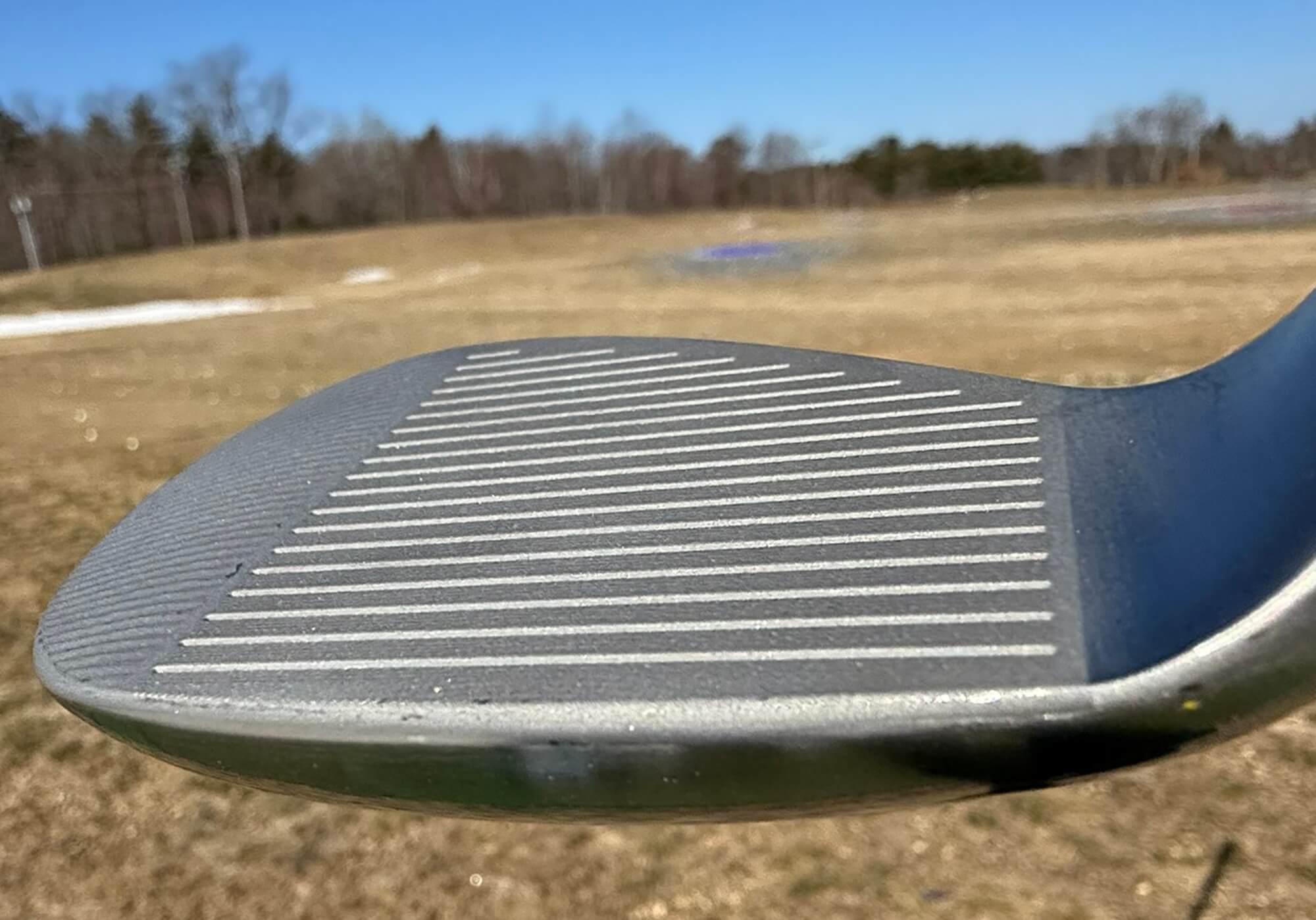
As useful as the 58 is turning out to be, the sharpened leading edge is making both the 50 and 54 pretty effective full-shot weapons. All day, both wedges were getting me within makeable-putt range. However, makeable on this day did not equate to made. Despite a plus 1.63 strokes gained for the short game, the putter was still atrocious, at minus 5.59 strokes gained.
Cleveland custom wedge grinds: Final thoughts
Roger Cleveland says your highest lofted wedge is the most important one to get right. Who am I to argue? It’s his name on the club, after all. The RTZ with the Adapt sole, extra heel, toe and trailing edge relief, combined with that sharpened leading edge, has worked great for me so far.
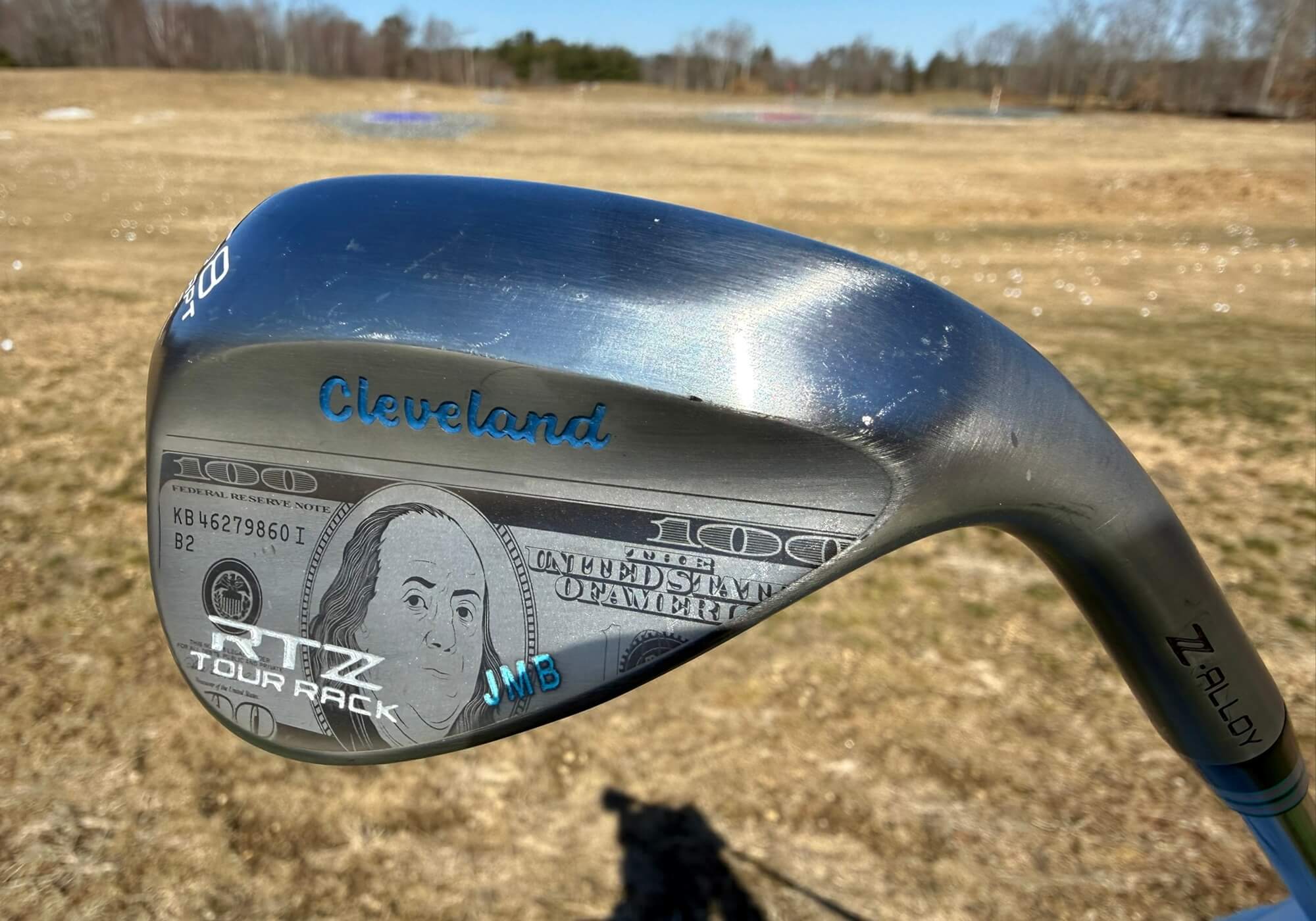
The low-ish bounce sole has been effective in early-season New England conditions, acting as a skid plate to glide through the turf. I’ve been able to play low rollers, medium spinners and have even flown a few hop-‘n-stop shots close to the hole, which is not a shot I would have typically tried in the past.
It’s that having the right tool thing, again.
The modified 50 and 54 have proven to be more versatile than I expected. It’s easier to flight the 50 a little lower with a half or three-quarter swing, but I have learned not to get too cute with them. Bump and run shots work better with a 7- or 8-iron.
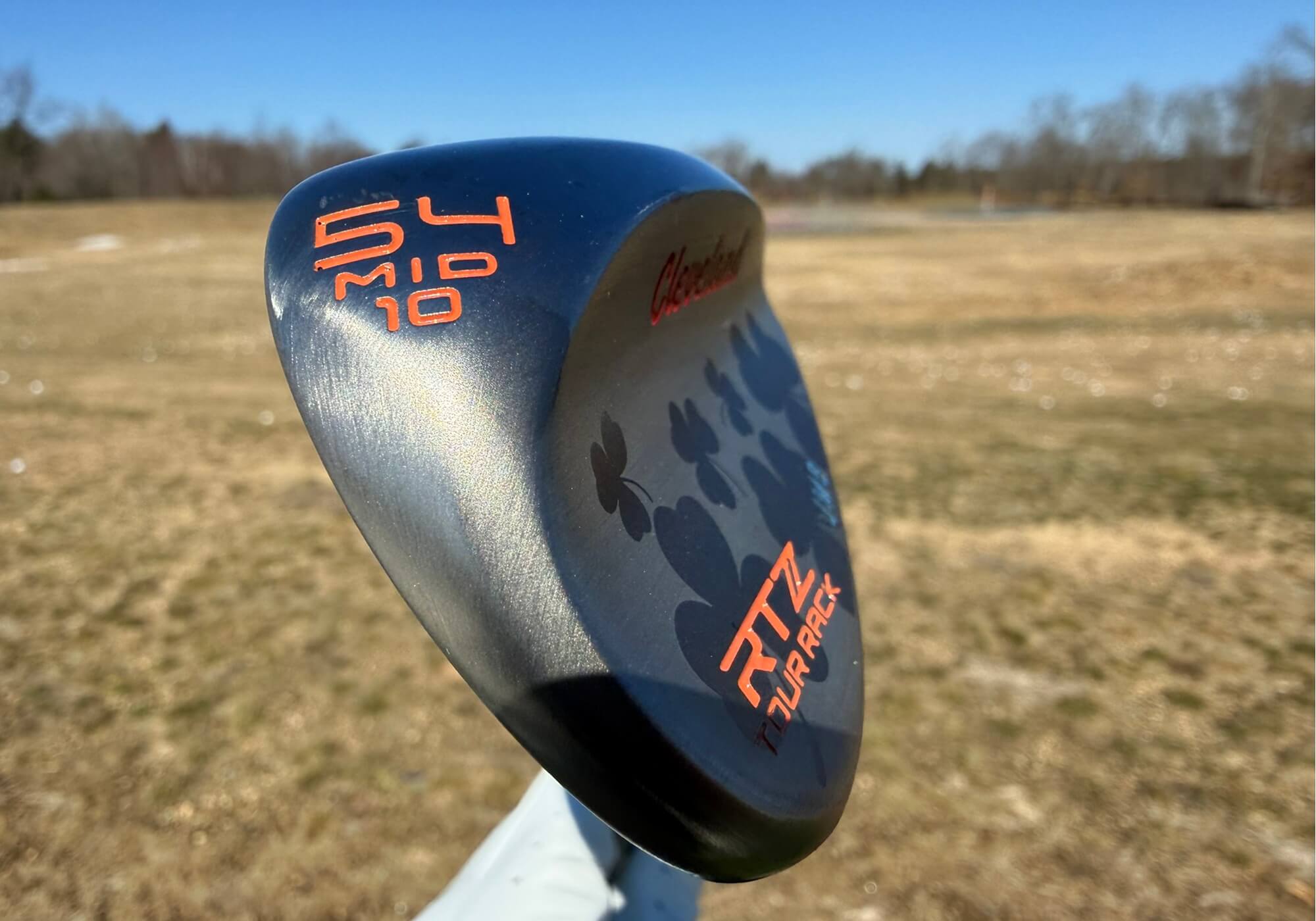
If I could offer you a recommendation, it’s to get fit for your highest lofted wedge at the very least. A good fitter should be able to see your tendencies, observe how you deliver the club and make appropriate recommendations. An outdoor fitting is ideal, but indoors off a mat can work if the fitter is perceptive, as mine was.
Cleveland does list fitting events on its website, and its online Wedge Selector tool can get you in the ballpark. It walks you through the basics but be warned: you can only customize sole grinds on the Tour Rack models. They’re raw, so Cleveland can adjust the grind without harming the finish.
For more information on Cleveland’s custom wedge grind program, visit the company’s website.
The post Can Custom Sole Grinds Help Your Short Game? Yes, If They’re The Right Ones appeared first on MyGolfSpy.
Article Link: https://mygolfspy.com/news-opinion/can-custom-sole-grinds-help-your-short-game-yes-if-theyre-the-right-ones/