
A reader submitted this question but I get asked some version of this a lot: I’m not that good, so am I wasting my money on Pro V1s?
The scenario is usually the same. A golfer who shoots 90 to 100 plays a premium ball because they like how it feels around the greens. They lose two or three a round and their playing partners remind them every time that they just donated another four bucks to the course.
So we took this question to the MyGolfSpy Forum and asked what they’d do. About 40 replies later, I had my answer or at least a better view of the question.
(Yes, it’s 2026 and a dozen Pro V1s is closer to $60 than $50. We’re keeping it at $50 for simplicity.)
Play what you like
This was the most common answer by far. The most popular reply asked whether you’d play cheaper irons because you haven’t broken 90. Nobody would so why hold the ball to a different standard?
Several people also said ball choice should follow your swing, not your scorecard. A 20 handicap’s swing can fit a Pro V1 just fine. For the guy who hits decent iron shots but gets into trouble elsewhere, a urethane cover can matter on those wedges into the green.
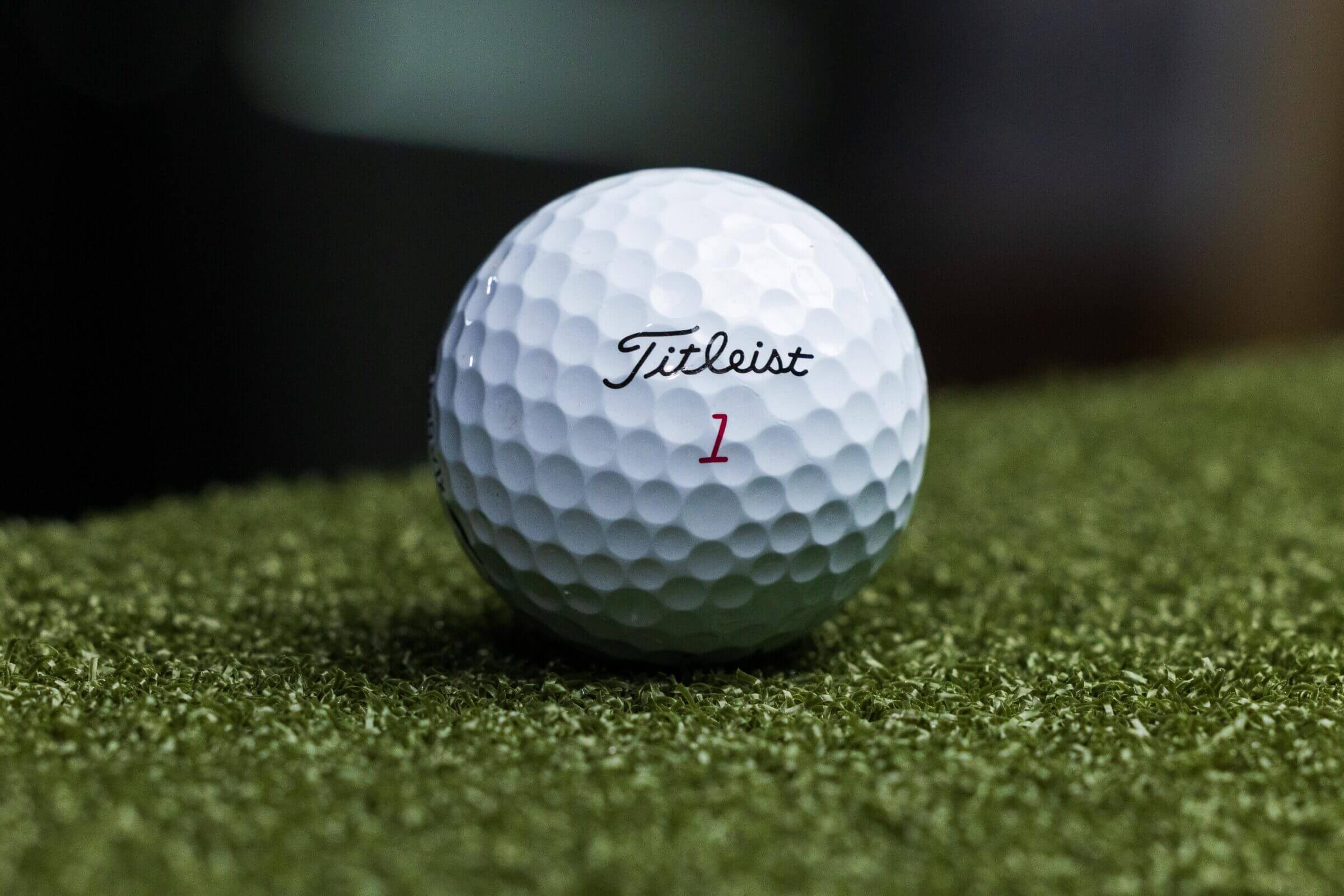
Test the cheaper premium balls
Plenty of people who respect the Pro V1 still said to try alternatives. Maxfli Tour came up more than anything else, usually as a ball that plays close to a Pro V1 for about half the price on sale. Vice Pro, Wilson Staff Model (especially during buy-two-get-one sales), Srixon Z-Star and TaylorMade Tour Response all got mentions.
The most detailed testimonial came from a Forum member who tested the Pro V1 against Maxfli Tour, Vice Pro and Seed SD-01. The Seed was the surprise. He found it closest to the Pro V1 in feel and performance, at about $2.50 a ball by the dozen, and shot his best round of the year with it.
There are plenty of alternatives at a lower price and you can check our own 2026 golf ball test results to see where the differences are between golf balls.
Use the MyGolfSpy Golf Ball Selector to compare 48 golf balls using data from our 2026 robot test. Filter by swing speed and see how each ball performs from driver to wedge to find the best fit for your game.
      <div>

              <div>
        <img alt="Tony Covey" height="50" src="https://uploads.mygolfspy.com/uploads/2020/08/ourteam_tony1-150x150.jpg" width="50" />
      </div>

              <div>
                      <div>
            Tony Covey              </div>

                      <div>
            Employee #2, Editor, Jack of All Trades              </div>
                  </div>
          </div>
The case for staying premium
One member pointed out that a year of Pro V1s costs less than half of a new driver and you hit the ball on every shot. The ball and you are the only constants from shot to shot so it should be as predictable as possible. Another relayed an industry voice’s point that premium balls are more consistent from ball to ball. And one member kept it short: if cheaper balls were better, the pros would play them.
The skeptics
A few people said they’d switch and spend the savings on lessons or beer. One thought you’d need to be a single-digit handicap to see a real difference between balls at all. None of them were really arguing about handicap, though. They were arguing about lost balls.
Picked for you, based on this story
 Testing & Data
2026 Greenside Spin Rankings
The gap between the highest and lowest spinning balls around the greens is 2,907 rpm.
Read story → News & Opinion
PGA TOUR Win With a $39.99 Ball
Ben Griffin won on the PGA TOUR with a ball that costs $39.99 a dozen.
Read story → Buyer's Guide
Best Ball + Wedge Pairings for Spin
One wedge produced higher spin rates wet than dry, at 6,795 rpm versus 6,454 rpm.
Read story →My take
The thread mixed up two questions.
Should your handicap decide your ball? No. Handicap tells you how you score, not what fits your swing or your short game. If you like a Pro V1, you don’t need to pass a golf handicap test to play it.
Should your lost-ball rate decide it? That’s the real question. Two or three balls a round at $5 apiece is $10 to $15 a round, a couple of hundred bucks over a season.
Here’s what I told the reader who sent in this original question. Don’t switch because of your score. Do test a couple of alternatives and give each a few rounds, paying attention to the shots around the greens, since that’s why he plays the Pro V1 in the first place. If you’re still losing a lot of balls, and that is bothering you, try a cheaper ball and see if you feel better about it. I don’t like the idea of putting a cheaper ball into play on holes with lots of water; you’re better off playing with something consistent throughout your round.
Bottom line
You don’t need to break 90 to play a premium ball. Nobody in the thread said you did. The better test is whether you can tell the difference on the course. If you can, pay for it.
The post Do You Need To Break 90 To Play A $50 Golf Ball? appeared first on MyGolfSpy.
Article Link: Do You Need To Break 90 To Play A $50 Golf Ball? | MyGolfSpy