
In 2022, Will Zalatoris looked like a man on the verge of something special. He was ranked first in Strokes Gained: approach, third overall in Strokes Gained: total, and had just broken through for his first PGA Tour win at the FedEx St. Jude Championship after a heartbreaking playoff loss at the PGA Championship earlier that year.
Then, the following week, he withdrew with a herniated disc. What followed was three years, two microdiscectomies and, eventually, a synthetic disc replacement surgery that literally made him taller. He lost half an inch of height during that stretch and got three-quarters of an inch back after the procedure.
His story is a cautionary tale because the swing move that contributed to his injury is more common than you might think.
What happened to Will Zalatoris’s back
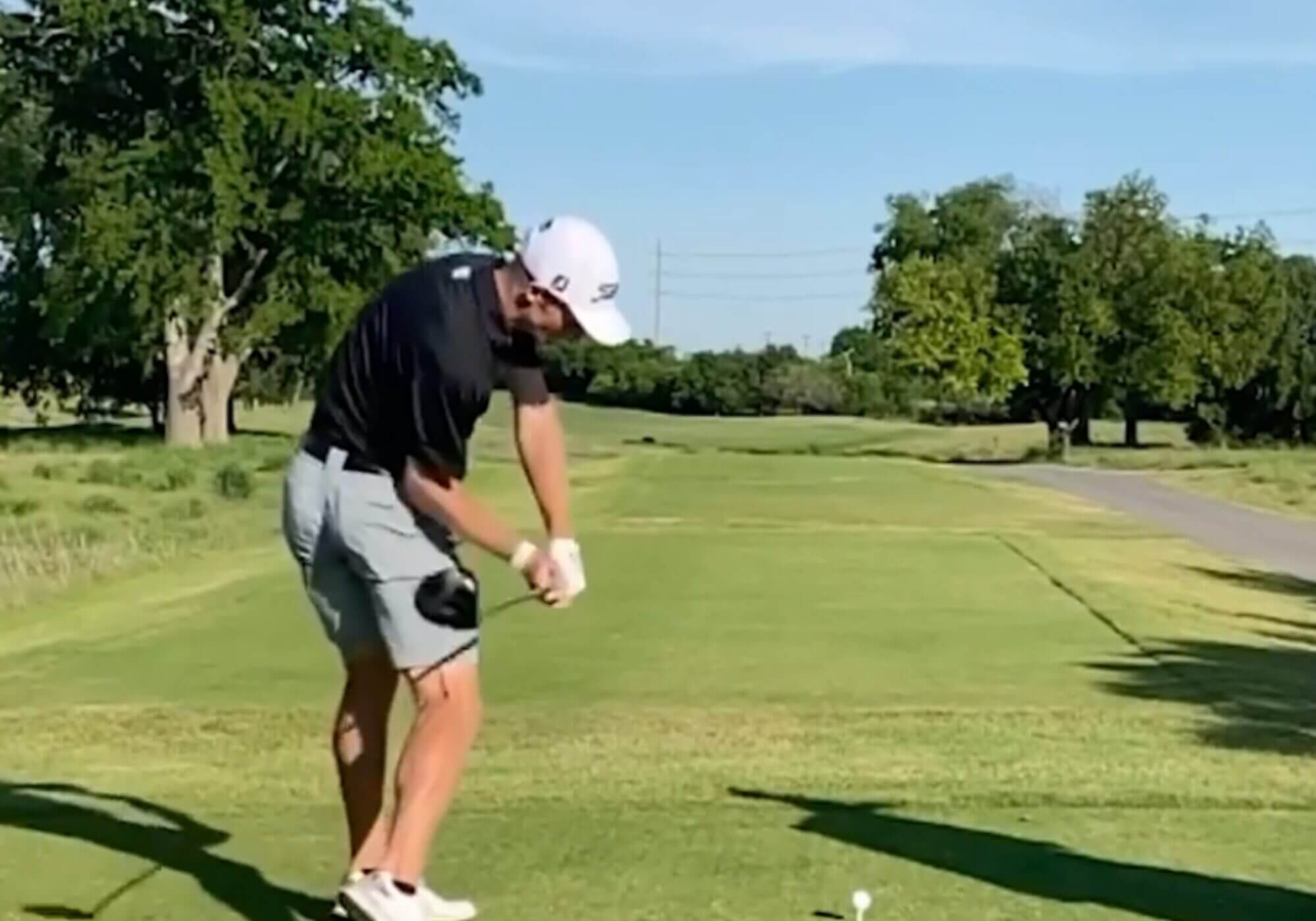
To understand the injury, you need to understand a movement called “side bend.” It’s the “reverse C” shape that forms in the upper body during the downswing. It’s a natural and necessary part of a good golf swing. Think of it like salt in a recipe: too little and the swing falls flat, too much and things start to break down.
Side bend happens because the lower body shifts toward the target ahead of the upper body as the club approaches impact. That gap between upper and lower body tilts the torso back, creating the shape. Done right, it helps golfers hit up on the driver and generate power. Done excessively, it compresses the L4 and L5 discs in the lower spine.
The L4 and L5 discs have relatively little muscle or bone protecting them.
To make matters worse, Zalatoris had another compounding problem at setup: a scooped, over-arched lower back. That extension already closes the facet joints along the lower spine. Add a significant side bend to the right on top of that and you’re closing those same joints from two directions simultaneously.
His arm position made it worse. With his arms traveling very vertically on the backswing, he needed to create an enormous amount of side bend in a fraction of a second on the way down just to shallow the club and make solid contact.
Zalatoris is talented and athletic enough to pull it off and he became one of the best ball strikers on Tour doing it. But the physical toll was inevitable.
What changed
Working with longtime swing coach Troy Denton and visiting the Titleist Performance Institute, Zalatoris made two relatively small but meaningful adjustments.
First, they addressed his posture at address. The over-arched lower back became a straighter, more neutral spine. This helped improve the issues before he even started the swing.
Second, they moved his arms slightly more around his body on the backswing rather than straight up. It was only a matter of inches. From that new position, he no longer needed to create excessive side bend on the downswing to find the ball. In his own words, he became “way more rotational and way more horizontal.”
After his 2025 disc replacement surgery, he described the feeling: “The stability in my back is so much better.” He compared his earlier microdiscectomies to removing a broken Jenga piece. The fragment was gone but the tower was still compromised. The synthetic discs finally addressed the root of the problem.
Could this happen to you?
Excessive side bend tends to be flagged as a problem for elite and junior golfers—people with a lot of flexibility who can drive their lower body aggressively. But the underlying risk factors show up in all kinds of players.
Here’s what to watch for.
- Your arms go very vertical on the backswing. The higher the arms travel straight up, the more side bend you’ll need to create on the way down to shallow the club.
- You over-arch your lower back at address. Standing up “straight” often means over-extending the lumbar spine. That closed-joint position under load is a problem on its own, let alone combined with side bend.
- Your lower back aches after a round, especially in cold weather. Stiffness and pain that worsen in cold conditions or during long practice sessions can be an early sign of disc stress.
- You feel like you’re working very hard to hit the ball. Zalatoris described swinging “so hard” that a short iron session left him exhausted. Effortless power and back health tend to go together.
If any of these sounds familiar, work on a more neutral spine at address. Experiment with letting your arms move a little more around your body on the backswing rather than straight up. And if back pain is a recurring issue, get a proper swing assessment.
Zalatoris says he expects to feel better at 30 to 35 than he did from 25 to 30. That’s a remarkable outcome—but a much harder road than it needed to be.
The post Don’t Let The Swing Move That Hurt Will Zalatoris’s Back Hurt Yours appeared first on MyGolfSpy.
Article Link: https://mygolfspy.com/news-opinion/instruction/dont-let-the-swing-move-that-hurt-will-zalatoriss-back-hurt-yours/