
As Tiger Woods marks 30 years since turning pro and hosts the 100th Genesis Invitational at Riviera Country Club, he reflects on legacy, Ryder Cup captaincy, recovery and growing his foundation’s impact beyond golf.
Tiger, it seems like we’ve done this several times through the years, but kind of feels a little different this year. As tournament host, what does it mean to you and the event to be back celebrating the 100th playing of the event?
TIGER WOODS: Yeah, playing the 100th championship here is pretty amazing. For me as a So Cal kid who grew up coming here, coming to this event, LA Open, coming here to Riv, it’s an iconic site. And then to see major championships here, we’ve had our event here, and for a 16-year-old kid just to be able to start here and then now host his own tournament at the same golf course is pretty special.
2026 is a year full of milestones on and off the course, 30 years since you turned pro, your foundation is celebrating its 30th anniversary, and the original Learning Lab in Anaheim celebrating its 20th anniversary. You’ve talked about the great legacy being off the golf course for you. What do these milestones mean to you and the future of the TGR Foundation?
Yeah, our first Learning Lab opened up 20 years ago here in Anaheim. To go from that to now expansion at Lulu’s Place here in Southern Cal, and we just opened up a facility in Cobbs Creek in Philadelphia last year and now we’re going to Atlanta and Augusta, Georgia. We’re expanding quickly.
We’re serving the underserved, and I think that’s the more important thing is that yes, golf has been a big piece of my life, but it’s not the only part of my life. The educational side and the opportunities that Stanford has provided me and the people that I’ve been able to meet there and that if I didn’t work on my grades, I didn’t work on my education side of it, then I wouldn’t have had that opportunity to go to such a great university
A lot of these kids that we’re serving are first-gens. They don’t really have an opportunity that they deserve, and it’s up to us to be able to facilitate them and give them what they truly deserve, which is an opportunity to be supported. That’s what the TGR Foundation has done for 30 years and we’ll continue to do so.
Q. I’m wondering, how do you feel after all these years knowing that people admire, respect you, and you have so much influence, not only in the game of golf but in sports in general?
TIGER WOODS: Yeah, I mean, I’ve had a great career, I think, of 30 years. I’ve played out here, been able to chase my dream, which is playing the PGA TOUR, winning golf tournaments, winning major championships, and I’ve met a lot of people along the way, a lot of sportsmen, a lot of great people all around the world. I would never have met any of those people or had relationships with them if it wasn’t for the game of golf, or probably where it all started was with your interview.
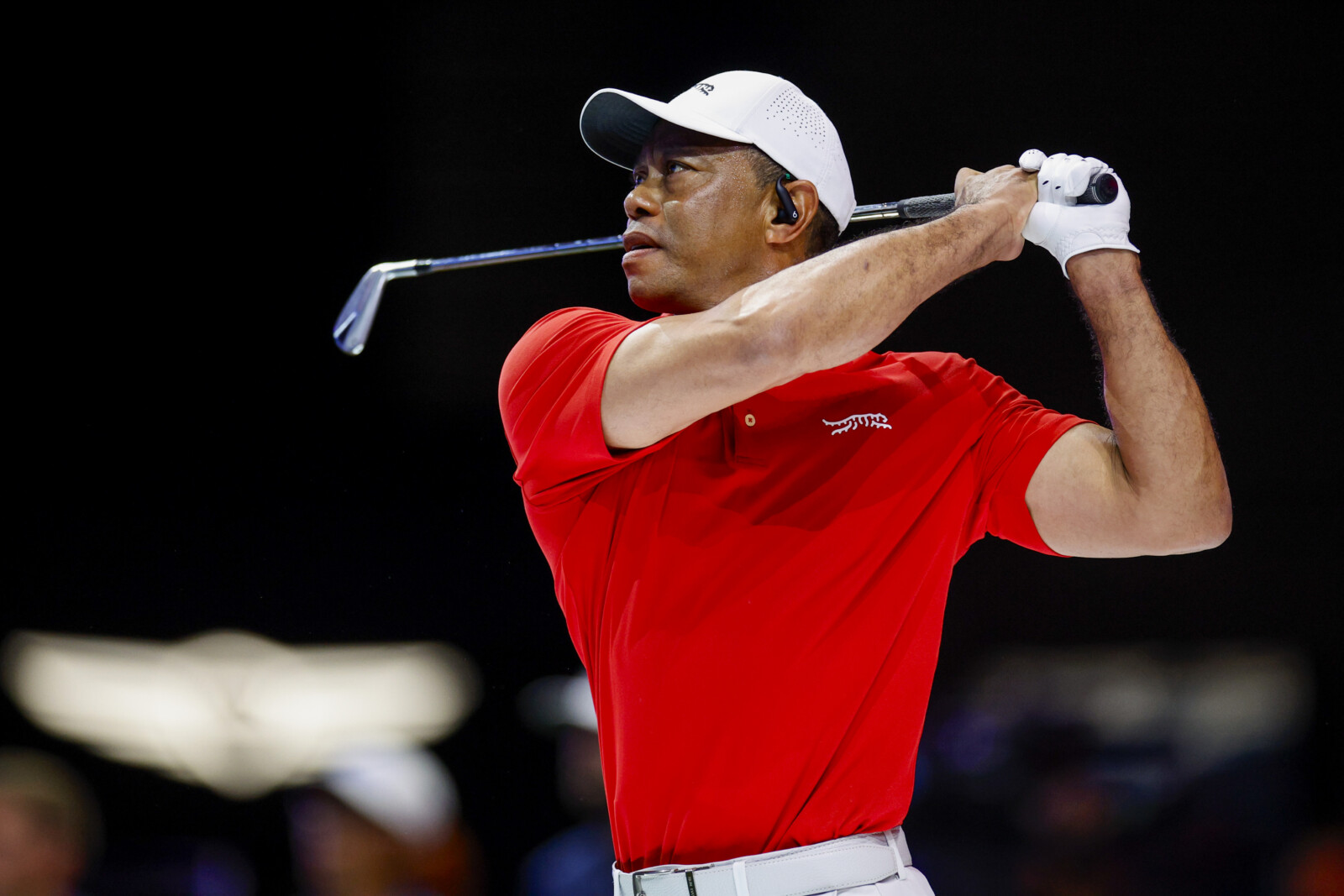
 Tiger Woods in action at the Genesis Invitational back in 2023
Q. Talk just a little bit about Pops, how he got you on the right road.
TIGER WOODS: Yeah, Dad was unbelievable. He was not only my dad, he was my best friend. He was a lot of different things.
We had an amazing relationship of — I used to — you know this, go to the Navy golf course where we did our interview, go out there, sneak out on the golf course, be able to play golf with Dad and play in the dark, that was great times.
He was the one that really provided the support and drive for me and the confidence that he instilled in me that I could chase after my dream, which is playing golf.
Q. And it also keeps you grounded?
TIGER WOODS: Oh, he definitely kept me grounded. We gave each other a lot of grief. It was great banter back and forth. Competitive. He always made everything fun; that was the thing. Whatever we did, it was always competitive. One, it was always competitive, and two, it was always fun. Because it was fun, we loved to compete, and we did everything together.
Q. This golf course shares the same zip code of hundreds if not thousands of homes that were burned in the Pacific Palisades. To honour that community one year later, what does that mean to you?
TIGER WOODS: Last year was just a horrific and terrible time for this entire community, what was going on just north of here. That fire was almost out and then it just spread and just ripped through here.
The whole community was devastated. But at the same time, the whole community rallied around our event, and we were able to go to San Diego, hold it at Torrey Pines. But for us to be able to come back here one year later and hopefully help repair this community — it was just a devastating thing. People lost their lives, lost homes, lost valuables that they’ll never, ever be able to replace, so hopefully we can make a positive impact this week.
 Tiger Woods is hoping to play for Jupiter Links Golf Club in the TGL soon (Photo by Mike Ehrmann/TGL/TGL Golf via Getty Images)
Q. Knowing you had a bit of relationship with Anthony Kim back in the day, what did you make of his comeback, and can you speak to the level of natural ability that he has?
TIGER WOODS: Yeah, this kid hit it so good. He was on an unbelievable run when he won at Charlotte, and we played each other — against each other at Congressional. He played unbelievable at the 2008 Ryder Cup. He had so much natural talent. He could hit any shot he wanted.
Then to see him struggle in life and didn’t really want to play golf, didn’t really want to be part of golf, and for him to come all the way back and for him to win and to be as devoted as he is to his family, it’s a story in which — you just have to wrap your heart around it because of the struggles.
We can all relate to struggles. We all struggle in life. The longer it goes, the more tough times you’ve had. But for him to fight through it and for Anthony to get to where he’s gotten to, from the low that he was in, is something that, as I said, you have to just wrap your heart around it.
Q. On a balance of work and play, play meaning whatever you’ve got going health-wise and work meaning the boardroom, what do you find to be the greater challenge for you right now, and can you give us any kind of an update on where things are looking schedule-wise?
TIGER WOODS: No, it’s been quite a challenge. It’s quite a bit of a challenge on both sides, from the physical golf side of it for me, from trying to do the right thing for all of our membership and our partners and everyone who’s associated with the
PGA TOUR, and trying to do that and trying to make our product even better going forward, given the challenges we have to face.
I thought I spent a lot of hours practicing in my prime. It doesn’t even compare to what we’ve done in the boardroom. It’s been challenging. We’re trying to do the right thing. We’re making some great strides. The player directors have been unbelievable with their time and their focus and the depth of knowledge and perspective.
Then we’ve had unbelievable board members that come from all walks of life that are wanting to make our tour better and wanting to make our product better.
 Tiger Woods in action for Team USA at the 2018 Ryder Cup at Le Golf National
Q. Was anything wrong with the schedule back in your early years?
TIGER WOODS: The schedule was different. We played I think it was La Costa at the time, I think, as the Tournament of Champions. Ended sometime after Halloween. So that’s a 10-month span of golf. That was all part of the PGA TOUR.
There was at that time, November, December, I think it was considered the silly season. It was just a different landscape. We played on the TOUR for 10 months. Had an opportunity to play some fun events, some different type of formatted events in November and December, or some of the players like myself would go down to Australia or South Africa and play on their tour.
It was just a different landscape than it is now.
Q. Can you explain to me how less is going to be more for the PGA TOUR?
TIGER WOODS: Yeah, we’re going to get more top players playing and we’re going to make it more competitive
by having — we’ll have fewer cards, so that in itself is going to make it more competitive just to be out here.
Having Brooks come back, having Patrick Reed play as well as he is and committed to coming back to the TOUR, having Scottie as dominant as he has been, and to have Rory complete the Career Grand Slam, you have a lot of top players, but also you have a lot of youth that has come up during that time.
We’re trying to create opportunities for that turnover coming from the PGA TOUR-U or it’s the Korn Ferry and trying to get more youth out here because eventually they’re going to take over the game.
So trying to create that opportunity, trying to create the right competitive model and the environment to foster that, that’s been — like Doug asked, that’s been the greater challenge of it all.
Q. How close are you to coming back to playing on either the PGA TOUR or Champions Tour?
TIGER WOODS: Well, I’m trying, put it that way.
Q. Have you had any setbacks?
TIGER WOODS: Well, the disc replacement has been one thing. It’s been a challenge to — I’ve had a fused back and now a disc replacement, so it’s challenging. And now I entered a new decade, so that number is starting to sink in and has us thinking about the opportunity to be able to play in a cart. That’s something that, as I said, I won’t do out here on this tour because I don’t believe in it. But on the Champions Tour, that’s certainly that opportunity.
Q. We’ve seen you recently doing some captaining work for Jupiter Links. Wondering if that’s given you a desire or itch to be the Ryder Cup captain in 2027, if you’ve heard from the PGA of America and where that stands.
TIGER WOODS: Good tie-in there. That was good.
Yeah, they have asked me for my input on it, and I haven’t made my decision yet. I’m trying to figure out what we’re trying to do with our tour. That’s been driving me hours upon hours every day and trying to figure out if I can actually do our team, our Team USA and our players and everyone that’s going to be involved in the Ryder Cup, if I can do it justice with my time.
Serving on two boards and what I’m doing for the PGA TOUR, I’m trying to figure out if I can actually do this and serve the people that are involved and serve them at an honourable level.
Q. If I could just go back to the physical stuff again, compared to all the other things you’ve been through, what’s the challenge with this, with the disc replacement, and is it fair to say that the achilles is not an issue anymore? Are you far enough beyond that?
TIGER WOODS: Yeah, the Achilles was not an issue. I can’t dunk a basketball anymore, so don’t have to worry about that.
As far as the disc replacement, it’s just sore. It takes time. Willy Z went through it, and it took him a while to come back. I’m a little bit older than Willy Z. It’s probably going to take me a little bit longer. My body has been through a lot.
It’s just one of those things where it’s each and every day, I keep trying, I keep progressing, I keep working on it, trying to get stronger, trying to get more endurance in this body and trying to get it at a level at which I can play at the highest level again.
Q. Are you able to hit full shots yet —
TIGER WOODS: Yeah.
Q. And are you?
TIGER WOODS: Yeah, I’m able to. Not well every day, but I can hit them.
Q. What about just the quality of life part of this? Compared to the microdiscectomy, is this a better outcome than what you felt with before?
TIGER WOODS: Well, the micros were early, so that’s when my back first had any kind of trauma to it. I’ve had many back surgeries since then.
The quality of life was better back then because it was just new. It was my first operation, so I’ve had many operations since then, so body has been through a little bit more.
Q. I know you’re juggling a lot of things and formulating the PGA TOUR schedule, whether it’s title sponsors or media partners. What do you see as the biggest challenge in trying to put this new schedule together?
TIGER WOODS: Well, I think it’s trying to serve literally everyone, from the player side of it, from our media partners, from all of our title sponsors, from the local communities or even changing venues and going to bigger
markets. It’s what do we need to do from a competitive model to make our tour the best product it can possibly be each and every year and still have room for development. How do we do all of that at the same time.
That’s been the challenging part because there’s been a lot of moving parts over the last couple years to try and get us into the position that we’re in now with the FCC or the boards being unified and linked together and working together.
It’s been a lot of moving parts, but it’s been in sync. We’ve had a lot of information thrown our way, which has been great. Everyone is working collaboratively together.
That’s where I was hesitant that we were going to have — we were going to be in this position where we were going to work together like this and function at a level to make our product better. But everyone is. Everyone is trying to make the PGA TOUR the best tour in the world, make it better than what it is now, make it as — how can I put
it? For the players, so that they can come out here at a younger age, an opportunity like a 16 year old kid here in Riviera in 1992 got an opportunity to play. Trying to give that opportunity and those opportunities to these players and the next generations or the generations to come.
Q. Do you anticipate this new schedule happening in 2027?
TIGER WOODS: We would like to have it happen in 2027. We may have to roll it out over a couple-year period. We may not be able to implement all of it in 2027, but there will definitely be parts of it integrated or changed than from what it is now in ’26 into ’27
Q. Many wonder if the West Coast events are better served later in the year when it’s better weather. Perhaps this event may be moving into a playoff spot. From your perspective, what would be the benefit of the Genesis being later maybe in August, maybe a playoff event?
TIGER WOODS: Well, I think that, one, you’re going to get weather not like this. That’s number one. We’re going to have perfect days. It’s always perfect in So Cal here in August. So yes, we’re looking at things like that, looking to go to bigger markets later in the year for the playoffs. Just trying to make our competitive model better, and how do we do that.
I think that is one of the options you mentioned with Genesis. That certainly is on the table.
Q. This tournament always brings you back to your youth, where you started. I’ve seen you messing around with some of your friends like Justin Thomas out here. I was wondering if you can remember the best golf roast or chirp that you ever heard on the course.
TIGER WOODS: The later you get in the day here on Friday and Saturday, you tend to hear a few things. Beverages served, things done, so coming up 17 and 18, I’ve heard a few things, and especially around 10 when you’re teeing off making the turn.
I wouldn’t say my best golf roast but I was the most shocked when I was out here when I was probably eight or nine, to hear some of the banter back and forth between the pros and the gallery.
I’ll tell you, it wasn’t a roast, but I’ll tell you kind of a cool story. I came down, I was on No. 8 green, the old 8 green, water on the left, and this golf ball comes slamming in there.
I go running over to it, and it’s a Ram golf ball. I’ve never heard of Ram. What is Ram? I’m eight years old, right? So I go running over there, and I’m just looking at it, and this caddie just pushes me out of the way: Kid, get out of the way.
I look up, and I don’t know who he is at that time, and later find out it was Bruce Edwards caddying for Tom Watson. So I used to give him a lot of grief about that. He said, yeah, you were in the way. (Laughter.)
For me, that’s part of the neat things being here at Riv, being able to go back in time as a kid.
Q. I want to know, do you have any tips on how to stay jacked in your 50s, because I tried on some Sun Day Red and I did not look like you.
TIGER WOODS: Well, that might be because you don’t do the same things I do in the gym.
Q. Any one tip or workout you’d recommend?
TIGER WOODS: No, not one workout. It’s being disciplined.
Q. With Riviera celebrating 100 years, wonder if you could talk about some of the ways this course has stood the test of time and why it’s been able to.
TIGER WOODS: Well, I think the layout — granted, they’ve moved some tees back. The 12th tee is nowhere near what it used to be. The 8th hole is nowhere what it used to be. They’ve moved a few things back here and there.
But what has stood the test of time is that iconic first tee shot. That hasn’t gone anywhere. We’ve always played in front of the clubhouse. It’s very similar — to me, it’s very similar to the first tee shot at St Andrews. It’s always been in the same spot. So when you go back through the test of time and you look at all the photos and you go back 100 years you’re going to see the same tee shot right in front of the clubhouse. There’s nowhere to go.
I think that the classicness of the golf course, the bunkering, the subtleness of the green complexes out here, how small they are, how subtle they are, and unfortunately it’s wet right now, but when it dries out here, this is one of the harder golf courses to post a score on.
The post GENESIS INVITATION: TIGER WOODS INTERVIEW appeared first on Golf News.
Article Link: GENESIS INVITATION: TIGER WOODS INTERVIEW - Golf News | Golf Magazine