
Callaway’s third straight mini driver release brings Tri-Force face tech, a new Step Sole and updated adjustability.
At this point, calling mini drivers a trend feels like an understatement. Every major OEM in the driver category (except PING, although even PING has a prototype floating around on the PGA Tour) has a mini driver at retail. What started as a niche curiosity has become a legitimate equipment category.
The Quantum mini driver is Callaway’s third mini release in as many years and while the category as a whole is still building momentum (in fairness, going from zero mph to any mph counts as some momentum), the mini driver appears to have real staying power. Callaway’s Zack Oakley, Senior Manager of Product Strategy and Category Management, describes them as “sticky” in the bag, meaning once a golfer puts one in, it’s hard to take it out. That’s been my experience, too.
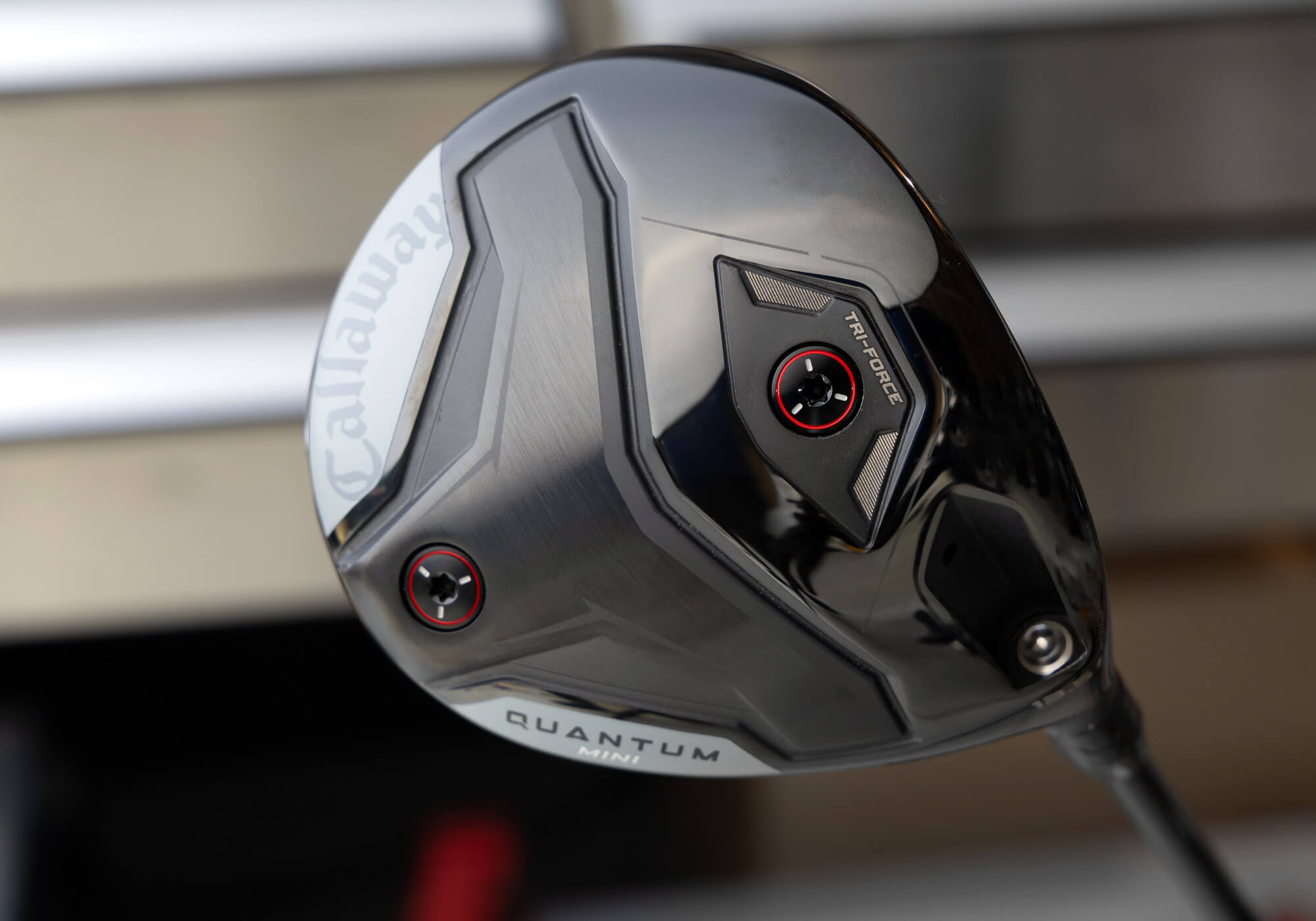
Not going back
I experimented with four mini drivers last year and eventually got one dialed in. While there are occasions when I miss having a more traditional 3-wood in the bag (I think all of us, from time to time, get the urge to blow one hard right of the green from an unrealistic distance), the mini just makes sense for how and where I play. I don’t know that I could go back.
If you’re new to the category, the audience generally falls into one of two camps. The first is golfers looking for an easier-to-hit alternative to a full-size driver. That’s primarily driven by the shorter build length although some golfers simply find the smaller head easier to manage at address. I’m hard-pressed to argue.
The second camp is golfers who can actually hit their driver too far and prefer something shorter off the tee rather than dropping down to a fairway wood. For that crowd, a mini is likely going to go a little farther than a 3-wood while also being more forgiving.
What’s new
If you followed our earlier coverage when the Quantum mini surfaced on the USGA Conforming List, some of this will sound familiar. But now that Callaway has pulled back the curtain, here’s what’s actually inside.
Tri-Force face
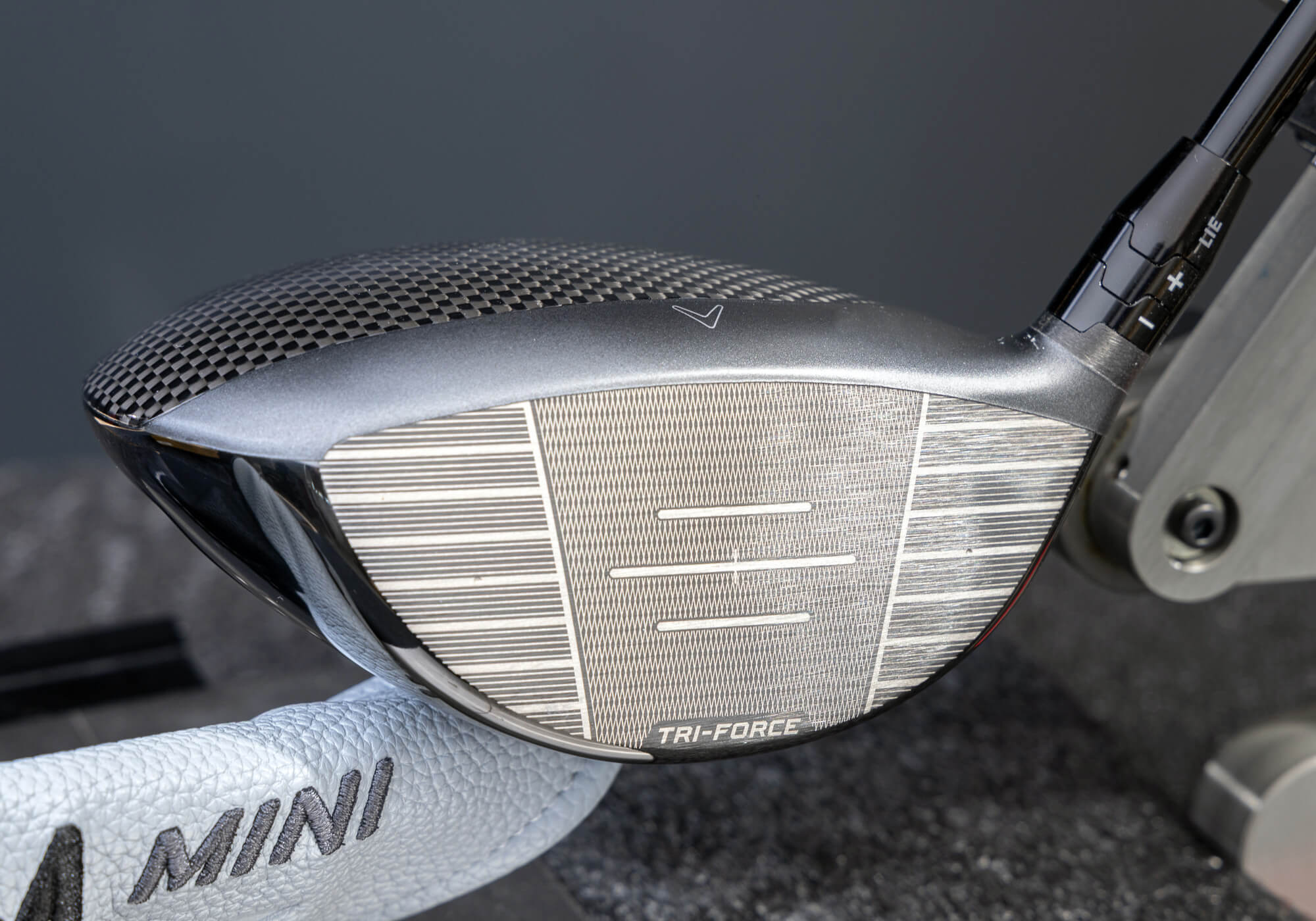
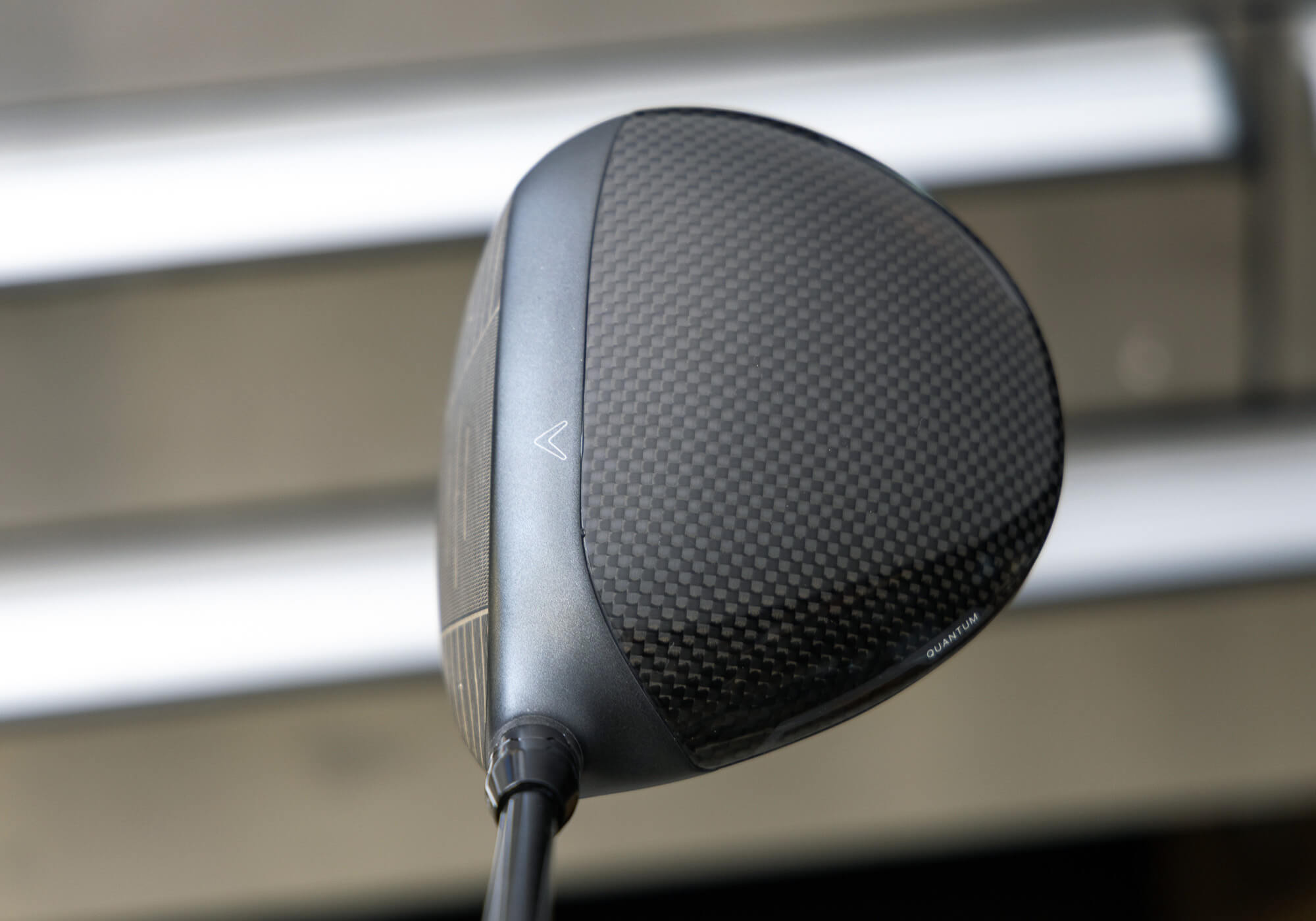
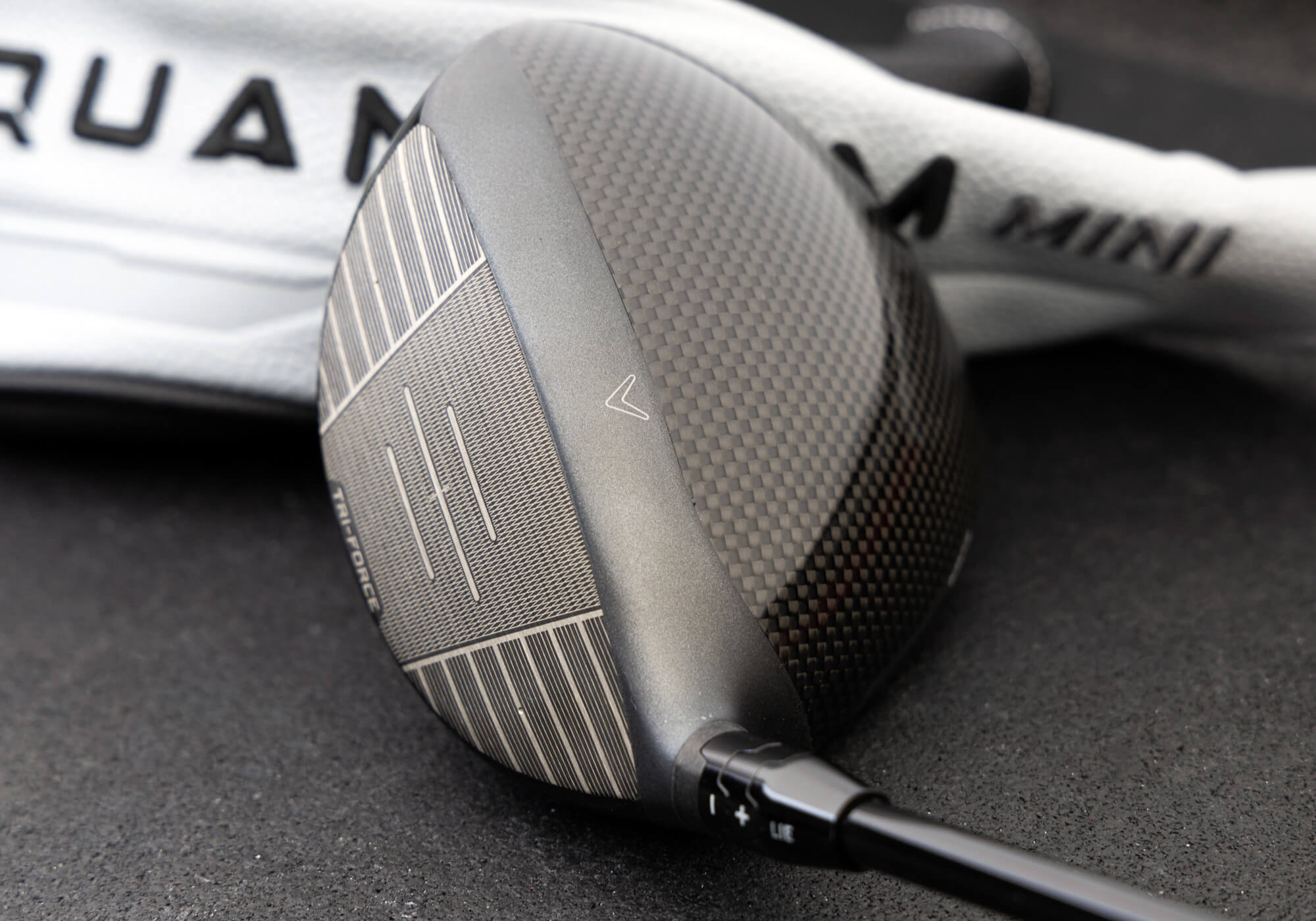
The headliner is Callaway’s Tri-Force face construction which layers ultra-thin, high-strength titanium with Poly Mesh and carbon fiber into what Callaway calls a fully integrated speed system. The claimed benefit is faster ball speeds and more consistent performance across the face, even on off-center hits.
What makes this notable isn’t just the tech itself. It’s the fact that it’s here at all. Tri-Force debuted in the full-size Quantum drivers but hasn’t made its way into Callaway’s fairway woods yet. Meanwhile, competing alternative-material face designs from TaylorMade (carbon face) and Mizuno (NanoAlloy) haven’t scaled below driver size because they rely on surface area to be efficient. That Callaway can package Tri-Force into a 340cc head at least suggests their approach scales differently. Whether that translates to a meaningful performance advantage at this size is a question we can’t answer yet.
Step Sole
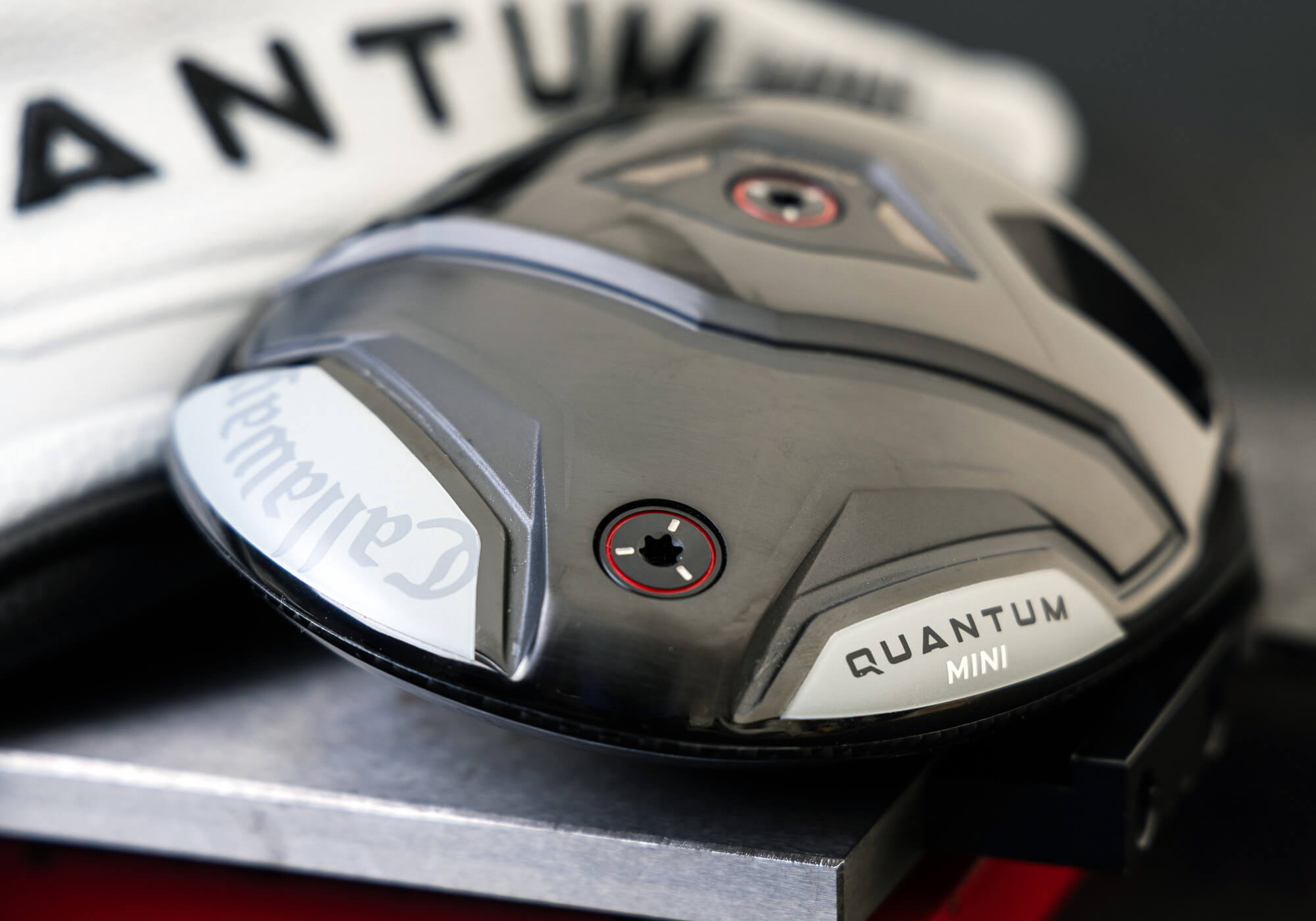
Callaway is largely positioning the Quantum mini as a tee-ball club. At 340cc, it’s still the biggest mini driver from any mainstream OEM and that’s not exactly a recipe for easy turf interaction. But that doesn’t mean Callaway isn’t at least thinking about playability off the deck.
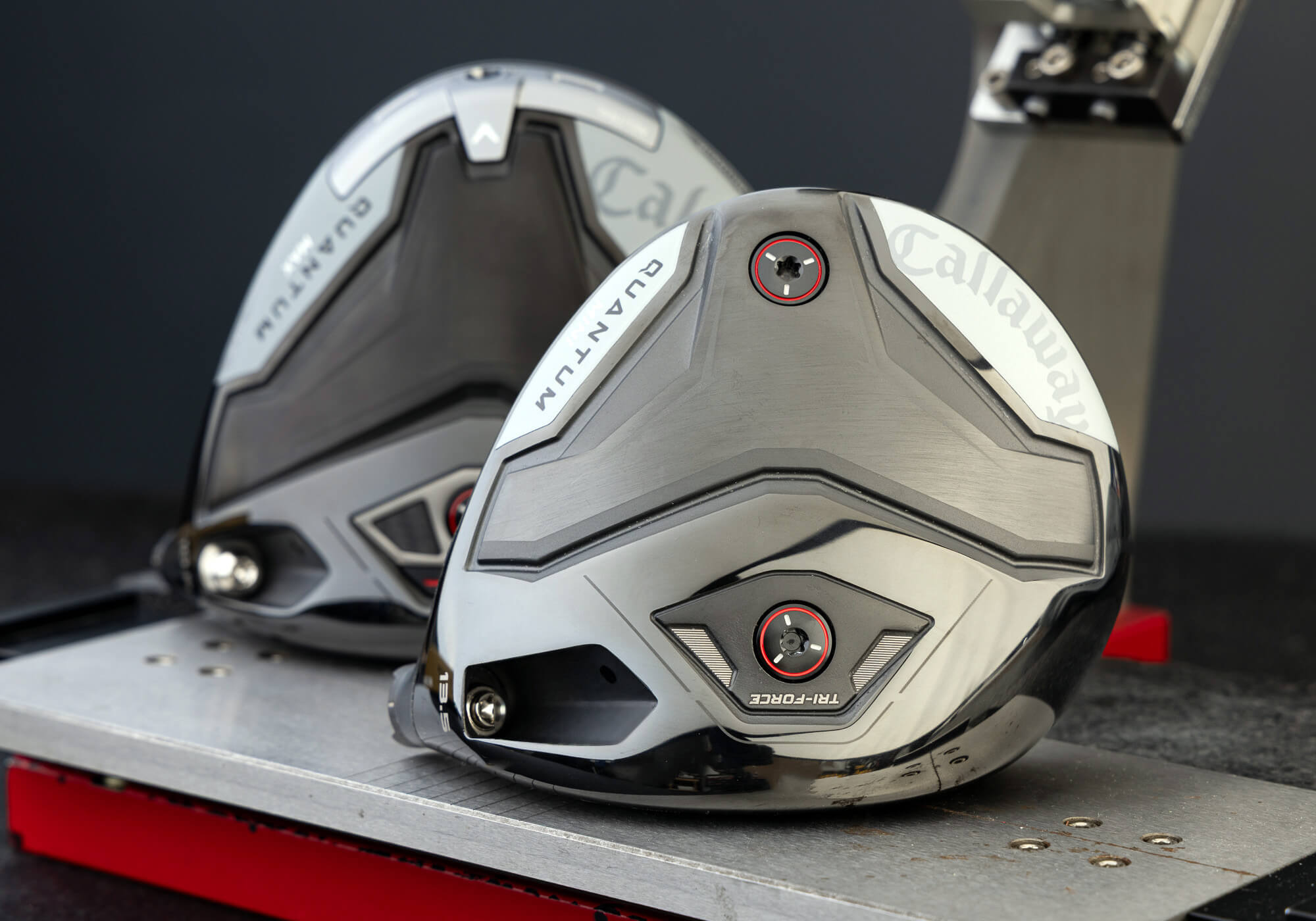
The addition of a Step Sole design, which migrated from Callaway’s utility woods into the fairway lineup and now into the mini, is designed to reduce how much of the sole contacts the turf at impact. The refined shaping is also meant to help the head sit naturally behind the ball at address. Will it turn a 340cc mini into a fairway wood? No. But it could make hitting it off the deck a little less adventurous than it was before.
Ball flight optimization
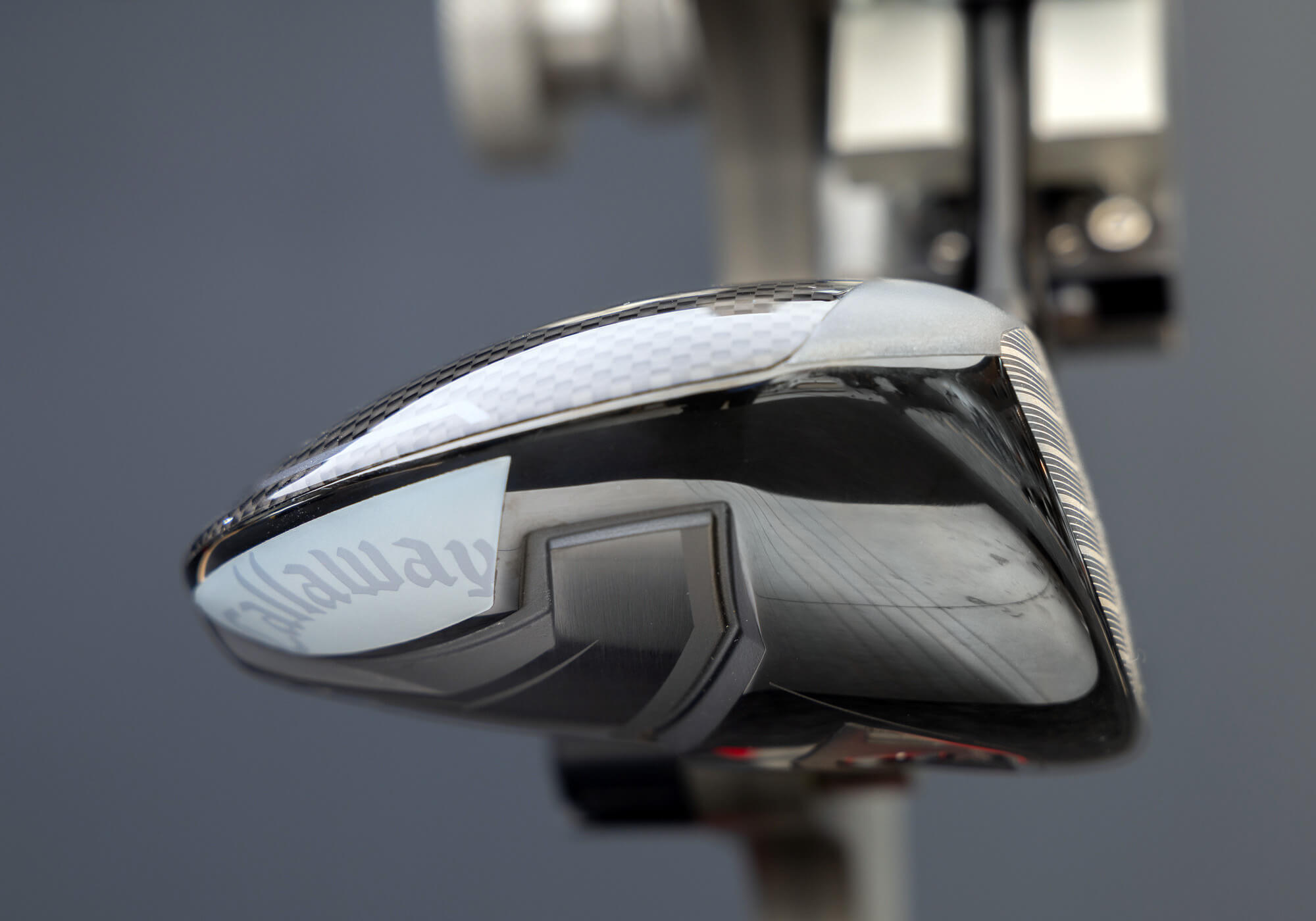
The Quantum mini features adjustable front-to-back weighting and it’s worth noting the distinction from the full-size Quantum drivers. Where those models use their adjustable weight to influence shot shape (fade/draw bias), the mini uses front-to-back positioning for trajectory control. Slide the weight forward for a flatter, more penetrating ball flight or push it back for more launch and forgiveness.
You also get Callaway’s OptiFit 4 hosel with seven settings to fine-tune loft and lie. Between the movable weight and the hosel adjustments, there’s a fair amount of tunability packed into this thing.
The finer detail here is that while last season’s Elyte Mini used the same tip adapter as Callaway drivers, the Quantum Mini takes a fairway wood adapter. In theory, that will let you use your 3W shaft in your mini, but if you already have an Elyte Mini with a shaft you love, you’re probably not going to be super keen on the change.
Rounding out the tech, the Quantum mini uses Callaway’s next-generation AI-optimized face design. The AI modeling now accounts for how titanium, Poly Mesh and carbon fiber interact within the Tri-Force construction, optimizing speed, spin, launch and accuracy based on real impact patterns.
The elephant in the room (at 340cc)
At 340cc, the Quantum mini is, again, the largest mini driver from a major manufacturer. Callaway has clearly decided that bigger is better here and for the primary-off-the-tee crowd, that’s probably the right call. More volume generally means more forgiveness.
But I do wonder if there’s a missed opportunity in not offering a smaller alternative. A 300cc (or thereabouts) option aimed squarely at the off-the-deck crowd would give golfers a choice Callaway isn’t currently providing. And God knows Callaway has never been afraid of SKU creep. If anyone could justify two mini driver models, it’s the company that offers Chrome Tour and Supersoft in roughly 9,000 limited-edition designs.
On Tour
The Quantum mini is already in play on the PGA Tour with Min Woo Lee, Max Greyserman and Justin Rose (who, at this point, I’m fairly certain has literally everything in his bag) among the early adopters. For what it’s worth the new Callaway Mini was the most played Mini at the 2026 Masters.
Final thoughts
Look, there’s only so much you can say about a mini driver launch. Callaway didn’t reinvent the category. It didn’t need to. What it did was take the tech from its flagship driver line, scale it into a 340cc package, and add a Step Sole to at least acknowledge that some of us want to hit this thing off the turf once in a while.
Specs, pricing and availability
The Quantum mini driver is available in 11.5- and 13.5-degree lofts at 340cc with a 43.75-inch shaft. Both lofts are available in left-hand configurations.
Stock shaft options include the Fujikura Ventus Black/Charcoal 60g (S, X), True Temper Denali Frost Silver in 50g (R, S) and 60g (S) and the Mitsubishi Chemical Eldio 40g for the women’s model.
The stock grip is a Golf Pride Tour Velvet 360 (Lamkin ST Soft for women’s).
The Callaway Quantum mini driver is $549.99. If that’s more than you want to spend to figure out if a mini is right for you, last season’s Elyte Mini has been discounted to $400.
Retail availability for the Callaway Quantum mini driver begins April 29.
Have your say
Are you carrying a mini driver? Thinking about adding one? Let us know.
The post Is The Callaway Quantum Mini Driver The One You’ve Been Waiting For? appeared first on MyGolfSpy.
Article Link: https://mygolfspy.com/news-opinion/is-the-callaway-quantum-mini-driver-the-one-youve-been-waiting-for/