
In this edition of MGS Debates, we discuss the long-term viability of TGL and WTGL, the indoor simulator leagues that are carving out their own niche in the golf entertainment landscape. TGL will enter its third season next month while WTGL’s inaugural campaign began earlier this month.
TGL averaged 488,000 viewers per broadcast in its second season compared with 498,000 in its first. Nielsen changed its measurement methodology between seasons to include a wider data set so the ratings decline was more pronounced than those raw numbers suggest. However, the four Season Two playoff matches averaged 618,000 viewers and the title-clinching match, which featured Tiger Woods, averaged 989,000 on ESPN.
TGL’s third season opens Dec. 27 under a multiyear extension with ESPN.
WTGL’s Nov. 8 debut averaged 97,000 viewers and peaked at 138,000 on ESPN. The match aired on a Sunday afternoon opposite NFL games. The second match, held on a Tuesday night, averaged 118,000 viewers. The league’s inaugural schedule includes matches on ESPN, ABC and ION.
Arjun Chowdri, President of MyGolfSpy, believes TGL and WTGL can grow alongside the thriving simulator golf space. Sean Fairholm, MGS Senior Editor, sees a lacking TV product and questions why golf fans will stick with either league over the long run.
Let’s dig into it.
Simulator golf has exploded in popularity. Can TGL capitalize on that or is there not enough overlap between recreational sim golfers and a live sports TV product?
Arjun: I’m buying on TGL capitalizing on sim golf. Part of it goes back to what I saw in South Korea.
About 15 years ago, while I was working on the PGA of America’s international strategy, I spent a good amount of time there. Golfzon was already a big deal and you could turn on the TV and watch live simulator tournaments. I came away thinking screen golf had a chance to become a sport people followed as well as a game they played.
I see a version of that in my own house now. My 11-year-old is learning the game at Golf House Academy in Atlanta. We can walk to Candler Park, our local nine-hole muni, but we get out there less often. For him, hitting into a screen is a normal way to play golf. The National Golf Foundation counted 48.1 million Americans who played golf on or off a course in 2025 including roughly 19 million who played exclusively off-course.
That’s a lot of people whose golf lives already exist—and in some cases start—beyond a traditional tee time. That familiarity is only going to grow and TGL is cornering a niche in the market with talented golfers playing sim golf.
Sean: I absolutely buy the growth of simulator golf. In fact, I only see it getting bigger because it’s a huge time saver and becoming more accepted as a “real” way to play golf.
The part that is harder for me to grasp is how that trend translates to someone spending two hours watching a regular-season TGL match between Tour pros. The personalities involved are mildly entertaining but the true selling point is supposed to be that this is a legitimate competition between standout players in a unique environment. Yet we have teams based on cities with virtually no connection to the players representing those cities; we have what our own MGS gear staff describes as lackluster technology with Full Swing which is only being used because Tiger (and Golf Channel) are investors; we have matches where the 1,500-seat arena has many empty seats and feels more like we’re milling around an exhibition at the PGA Show rather actively watching a live sporting event.
Compare this to the Internet Invitational we just witnessed on YouTube. Intriguing personalities. No commercials. On-demand. Meeting consumers where they already regularly engage with golf content. And immediate viewership success.
TGL feels like a stark departure from the compelling golfer experience of simulator golf and the ratings seem to agree.
What makes you think someone who enjoys playing indoors is going to follow this particular league?
Arjun: Your comment about “two hours” is a big deal. The Indian Premier League is now one of the most valued sports entities in the world. Why? They took an existing sport that people loved in cricket and condensed it into a more manageable viewing experience through the 20/20 format.
Additionally, I think familiarity gets you further than you’re giving it credit for.
Streaming and esports have made screen-based competition like TGL familiar to a generation of viewers. I still struggle to watch other people play video games but plenty of people, especially younger generations, are happy to spend an evening doing just that. I remember developing a sponsorship for NOS Energy Drink with Major League Gaming in the late 2000s and it was already clear where this was heading. By 2012, MLG reported 11.7 million unique online viewers for the year, up from 3.5 million in 2011 and 1.8 million in 2010. Viewership that rivaled the NBA All-Star Game.
Today, the scale is far bigger. Twitch logged about 18.9 billion hours watched in 2025 with 2.09 million viewers watching at any given moment on average in 2026. And the 2025 League of Legends Worlds final peaked at more than 6.7 million viewers.
TGL has a chance to reach golfers who grew up playing indoors and also enjoy watching competition on screens.
There’s also a practical reason I think kids will keep coming in through that door. Even with programs like Youth on Course making green fees more affordable, you still need a tee time and enough daylight to get around. Indoor golf gives families another way to fit the game into their lives. My old boss at the PGA of America, Pete Bevacqua, used to point out that when someone says they played basketball over the weekend, nobody assumes they played five-on-five on a full court. I think we’re getting closer to speaking about golf the same way.
The more people who count a night at the simulator as playing golf, the more people who might look at TGL and recognize it as their version of the game.
That’s why TGL is a long-term play. It’s not just about the initial ratings we’re seeing early on. Look at the people behind the venture—they are not used to losing in the business world. The team ownership list alone reads like a who’s who of people who already run sports businesses: Arthur Blank, Steve Cohen, Marc Lasry, Stephen Curry, Alexis Ohanian, Serena and Venus Williams, etc. Fenway has also joined WTGL as the fifth and final confirmed ownership group and WTGL franchises were already valued at $20 million each. Those owners can bring venues, fan bases and sponsor relationships.
They see where the game is headed and know this can work.
Sean: I will concede that TGL’s floor is relatively high. This is definitely not a LIV situation where the whole enterprise is built on a house of cards (golf tees?) and is doomed from the start. I anticipate TGL having a long shelf life. My “sell” position is not a “TGL will be closing shop in two years” stance. I believe it will likely linger in relative obscurity, propped up enough by ESPN, Tiger/Rory and strong ownership to continue functioning at a high enough level to be operational.
But I am selling that TGL follows sim golf’s popularity. I am selling that fans gravitate towards it.
The esports world is based on people who have a deep emotional connection to video games they have played. Someone plays “Grand Theft Auto 6” with their friends and then watches a true expert play the exact same game. It’s as if our MGS staff all played at Augusta National in mid-March and then watched the Masters.
Virtually no golfer has played in the TGL arena. They haven’t played those holes. They know the golfers but only a few elicit an emotional reaction. What is the connective tissue between fans and TGL?
The factors you listed may get people to give it a shot. Will they keep them watching?
I’m not sure they have so far.
Arjun: I honestly think our perspective is more alike than you think. If it is provided with enough runway, the audience catches up to it. They will have deep connection to sim golf because that is golf to them.
It’s not sim golf, it’s just golf.
Picked for you, based on this story
 News & Opinion
I Was Wrong About TGL … Sorta.
An in-person TGL visit left one writer convinced TV is the better seat.
Read story →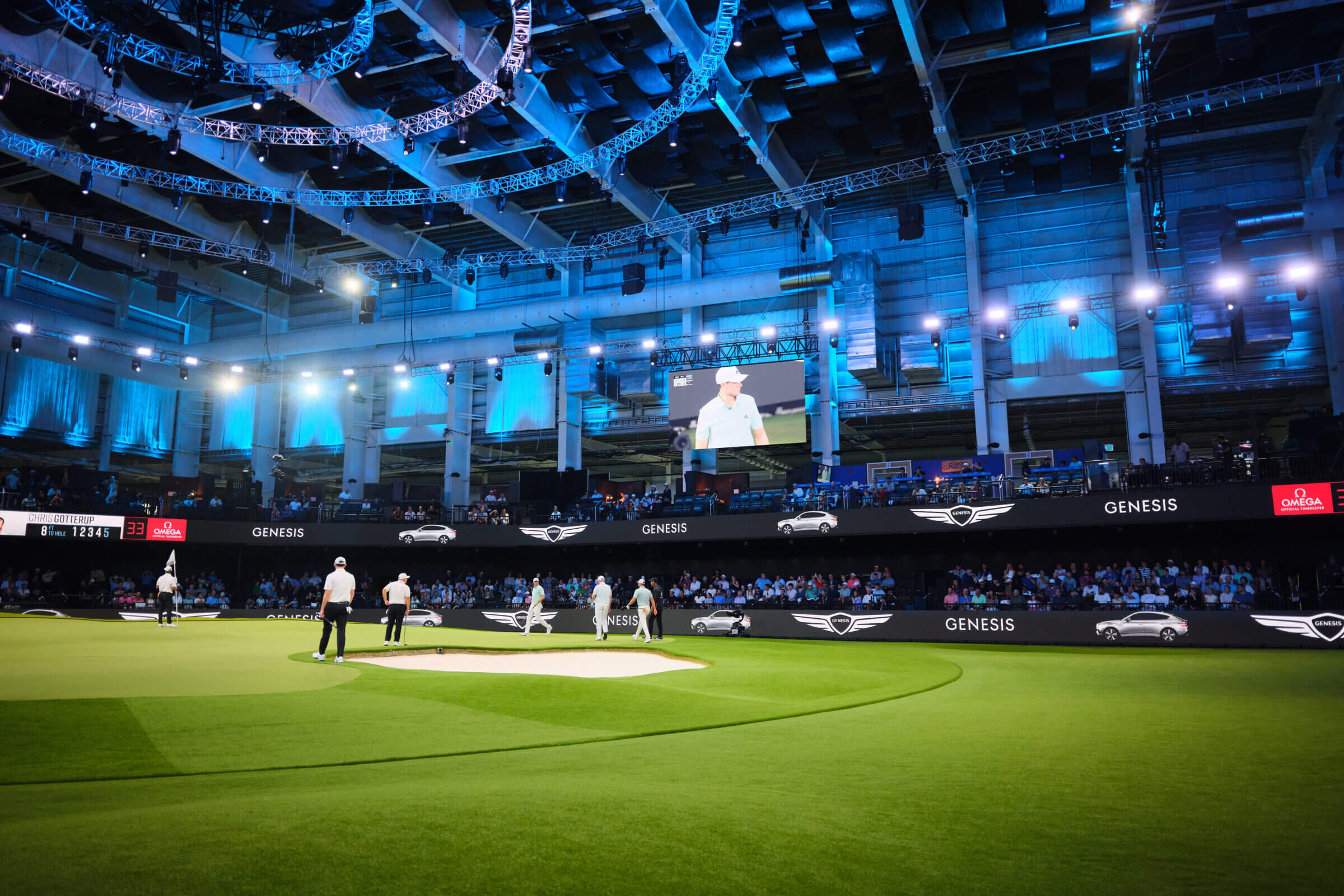 News & Opinion
Does TGL's Logic Hold Up?
Genesis put its brand on every corridor of SoFi Center — but is it paying off?
Read story → News & Opinion
What Golfers Pay To Play Simulator Golf
Sim golf is a $2-billion annual U.S. market, and bay rates start at just $20.
Read story →Let’s move on to another topic. TGL has Tiger, Rory and several notable stars. The most-watched nights have involved Tiger, especially. Is this a positive or a negative? Is the draw more about the game being played or the characters involved?
Sean: The title-clincher last season drew more than twice the season average with Tiger in the lineup. To nobody’s surprise, he remains a huge draw and something of a trump card.
I love that we have a spot to watch him play outside of whatever ceremonial PGA Tour starts he has left. But my concern is two-fold:
- Are there enough other characters that people care about to watch?
- What happens when Tiger can no longer play?
I’ll reiterate that this is another reason I call TGL a high-floor, low-ceiling proposition. ESPN has room for live golf in the winter and the weeknight programming that used to be in TGL’s place was college basketball with modest ratings.
However, we’re not talking about whether TGL can outperform a random regular-season college hoops game between Syracuse and Providence. We’re talking about whether TGL is going to continuously gain traction and become more of a fixture, right?
Tiger gets people in the door but does anyone else?
My feeling is that most of the characters in this, while tremendous golfers, are faceless. And the gameplay alone isn’t enticing enough.
Arjun: I’d give the TGL playoffs a little more credit. The four postseason matches averaged 618,000, up from 434,000 the year before. Tiger helped lift that average and the postseason also had more matches on ESPN and fewer on ESPN2.
Even with those factors, I take some encouragement from seeing the league draw an audience when the matches meant more. ESPN’s multiyear extension gives TGL time to figure out how to create more of those nights.
We’ve also had some scheduling inconsistencies in terms of timing and what network the matches are on. I think that will smooth out more with each season and viewers can create more of a routine.
On your question about who gets people in the door after Tiger, this is not a question just for the TGL, but one that professional golf has been struggling with for years. I think the teams have to do some of that work. If fans start following a team, they have a reason to pay attention to who’s in the lineup, how the players get along and what happens the next time they face the team that beat them. That’s how some of the guys you’re calling faceless might become players people actually look forward to seeing.
I also think there’s a way to make the gameplay more interesting to people watching at home. You made a point earlier about being able to play on the same course. About 90 percent of golfers (my estimate, not fact) will never play on a PGA Tour course but there is an opportunity to make it more accessible for golfers to play the holes they do in the TGL. Say my son and I could play a TGL hole at Golf House Academy and then watch the pros play it that night. If I’ve already put two balls in the virtual water trying to take on a carry, I’m going to pay a little more attention when a player has to decide whether to go for it with the match on the line. That’s the connection I would like to see TGL build between the people who play simulator golf and the people who watch it.
Sean: Those are valid points and I would love to play TGL holes to compare myself against the pros. I still need a reason to choose it over whatever else I could watch. TGL’s competition ranges from YouTube golf to other live sports to Netflix and beyond.
Tiger is a reason to watch but I’m not sure I’m seeing more reasons. I found myself having a hard time wanting to watch, to be brutally honest.
I’m going to play devil’s advocate against my position for a moment and it’s based on something adjacent to what you mentioned. I think one of TGL’s biggest opportunities is the technology being used. Yes, we’ve established they don’t have Trackman or more reliable options from a launch monitor perspective. However, they do have the ability to design holes to be anything they want. That is an attention-grabber for many, including myself.
This potential has been somewhat untapped to this point. TGL has aced a few designs like the Stinger hole where players have to hit tee shots under a huge rock. This is very intriguing and I love this type of concept. They’ve also done holes with skyscrapers, bridges, etc.
However, many of the holes are incredibly boring and look way too much like a typical simulator golf experience. The entertaining part for me is if TGL looked completely different from traditional golf. Connecting that to your point about golfers being able to play TGL holes, that could separate it from normal sim golf.
In a way, the teams have a similar problem for me. When I watch a PGA Tour event, I bring years of context about the players and the tournament with me. With TGL, I’m still figuring out what makes one team different from another. It’s not like the New York team is from New York or plays in New York.
That is one part that feels like LIV (at least the logos are much better).
Arjun: That’s where the ownership groups could help. Arthur Blank and Fenway Sports Group have experience giving fans reasons to follow teams across a season and building relationships with local sponsors. Players on the Atlanta Falcons aren’t from Atlanta but the community is still connected to them.
The league has recognizable golfers from Day One. Over time, I’d like to see those ownership groups use their ties to their home markets to give fans a reason to pick a team and stick with it.
I also strongly believe this isn’t about you or me watching. It is a bet on the future viewer.
Where does WTGL fit into all of this?
Arjun: The opener went up against the NFL. I’m more interested in what happens as viewers get to know the teams and the league settles into its prime-time dates. There’s real talent here including Lydia Ko, Jeeno Thitikul and Charley Hull. Giving those players another setting where fans can see their personalities and watch them compete is worth a season to see what catches on.
Sean: WTGL is an idea that looks awesome in a board room. They surely have data about the WNBA’s popularity and the viewership growth of other women’s sports—pair that with female golfer participation increases and you have a reason for people to be bullish.
The issue WTGL has that TGL doesn’t is the core TV product for women’s golf. The PGA Tour is a certified staple and an American institution that shows up on network TV every weekend. Sure, the ratings aren’t comparable to football but they have generally been recession-proof and reliable. The LPGA Tour’s viewership is a relative pittance. While overall ratings rose seven percent this year, non-major telecasts averaged about 87,000 viewers. WTGL isn’t building off an already successful audience base.
I’m on record as saying the women should have been added to TGL instead of given their own standalone league. I think that would have been more beneficial for both.
What could change your mind about TGL and WTGL?
Arjun: I have patience with the TV product but I would become less enthusiastic if three things happen.
One, TGL doesn’t make connections with the recreational simulator golf world and each local market. Two, they lose the talent. They have some of the top golfers today but after the excitement of the first few years, that could erode, especially given the gruelling schedule they already participate in. And three, keeping focus.
TGL has experienced executives, owners and a media partner willing to give it time. I’m watching how TMRW Sports uses that time. It’s now growing the men’s league, getting the WTGL off the ground and developing a flag football league. That’s a lot of priorities to juggle.
They are still in the early innings. It will take time and I would bet on TMRW Sports CEO Mike McCarley and his team.
Sean: Here is a wish list of elements that would make me more likely to watch TGL:
- Rotating guest celebrity players who join their respective teams for one match. Bringing the common golfer into this would be intriguing.
- As mentioned, virtual hole design that borders on the absurd. And being able to play them in my own indoor simulator.
- Better technology although I think this one is simply never happening.
- Adding home arenas in each city so fans can cheer/jeer freely.
- Combining the TGL with WTGL.
I am doubtful some of these will come to fruition but I’m open-minded to give it a chance. Until then, my TGL viewership will be background noise at best.
Your turn, MGS readers. Are you buying or selling TGL? What would make you tune in every week? Leave a comment down below.
The post MGS Debates: Buying Or Selling TGL? appeared first on MyGolfSpy.
Article Link: https://mygolfspy.com/mgs-debates/mgs-debates-buying-or-selling-tgl/