
Graham Averill will turn 50 this year and he’s freaking out. Instead of buying a motorcycle or getting a tattoo, he’s decided to try to get really, really good at golf. He’s a 13 handicap attempting to reach scratch in a year. Welcome to his midlife crisis.
“Focus on the short game.”
Everyone says it. Wanna drop your handicap? Figure out how to score inside 125 yards of the hole. That’s where you score. Many people reached out through the comments and said that very thing when I started this project a couple of months ago. My coach, Sam Hahn, told me as much when we began working together. He took one look at my natural swing and all of its flaws and said, “I bet you have trouble when you get close to the green.”
“Trouble” was an understatement. My swing produced inconsistent contact that resulted in chunked shots and multiple two-chip scenarios at distances that better players consider easy layups. You know the scenario: Beautiful drive, shank the chip. Sometimes, I’d shank it twice just for good measure.
“Short game” is a broad term that encompasses a lot of different shots. It’s everything from 150 yards out to the two-foot putt I seem to tremble over every time. But thanks to a month of data collection, I know where I’m leaking the most shots. When I started tracking my rounds, I was losing 3.5 strokes per round to a scratch golfer within 50 yards of the hole. Move that distance beyond the 50-yard marker and you could add another four shots to the tally.
Those 7.5 shots per round account for more than half of my handicap. You can’t argue with math. Fix the short game and I can make up some ground.

The dedicated work I’ve done on my swing has helped with the contact issues and I’ve been incorporating a lot of short-game simulations around the practice green that have improved my chipping close to the hole. I don’t always get up and down but it happens more than it used to. When I’m within 25 yards of the hole, I’m getting up and down 28 percent of the time. Ideally, I’ll get that figure closer to 60 but I’m happy I’m making a little progress. I’ve even dropped my strokes lost on longer approach shots to 2.9 in my last 10 rounds.
But there’s still a lot of room for improvement. I’m only hitting 50 percent of greens from 50 to 125 yards out. That’s the distance scratch golfers put their foot on the gas and score but I’m floundering.
Sam thinks I’m having trouble with these approach shots because I’m relying on full swings. If I’m looking at 115 yards to the pin from the fairway, I pull my sand wedge because my full sand wedge distance is about 115 yards. It’s fun to watch when I fly it high and long but the truth is I have less control over the distance and trajectory of a full swing shot so Sam wants me to incorporate more partial wedge shots.
“We’re not looking for power with wedges,” Sam says. “We’re looking for a good strike that gets you good spin. We want the ball flying low with lots of spin unless you absolutely have to hit it high over a bunker.”
Low-flying, partial wedge shots are more predictable and the ball checks better on firm, fast greens. In a game that seems to be underwritten by chaos, I’m eager to find some predictability so I jumped head first into the work.
According to Sam, hitting a flighted wedge is pretty straightforward. Plant most of your weight onto your left foot, put the ball a little back in your stance and set up with some shaft lean over the ball. Take it back halfway, hinge early and then swing the butt of the club towards the ball, holding the angle and pulling the butt through the ball to the left of your body. Hold the finish.
This move is essentially how you compress the ball with irons and I’ve found it to be my favorite shot to practice. It looks cool and the crisp contact and low flight are downright addictive.
It’s also super fun to play on the course. Recently, I was facing 125 yards into the middle of the green and decided to try two shots: full gap wedge and partial pitching wedge. I flew the gap wedge high to 130 yards but just right of the green. It hit the wayward side of a grass bunker and bounced another 15 yards in the wrong direction. Then I hit a low-flying, three-quarter pitching wedge directly into the front third of the green and stuck it to eight feet of the hole.
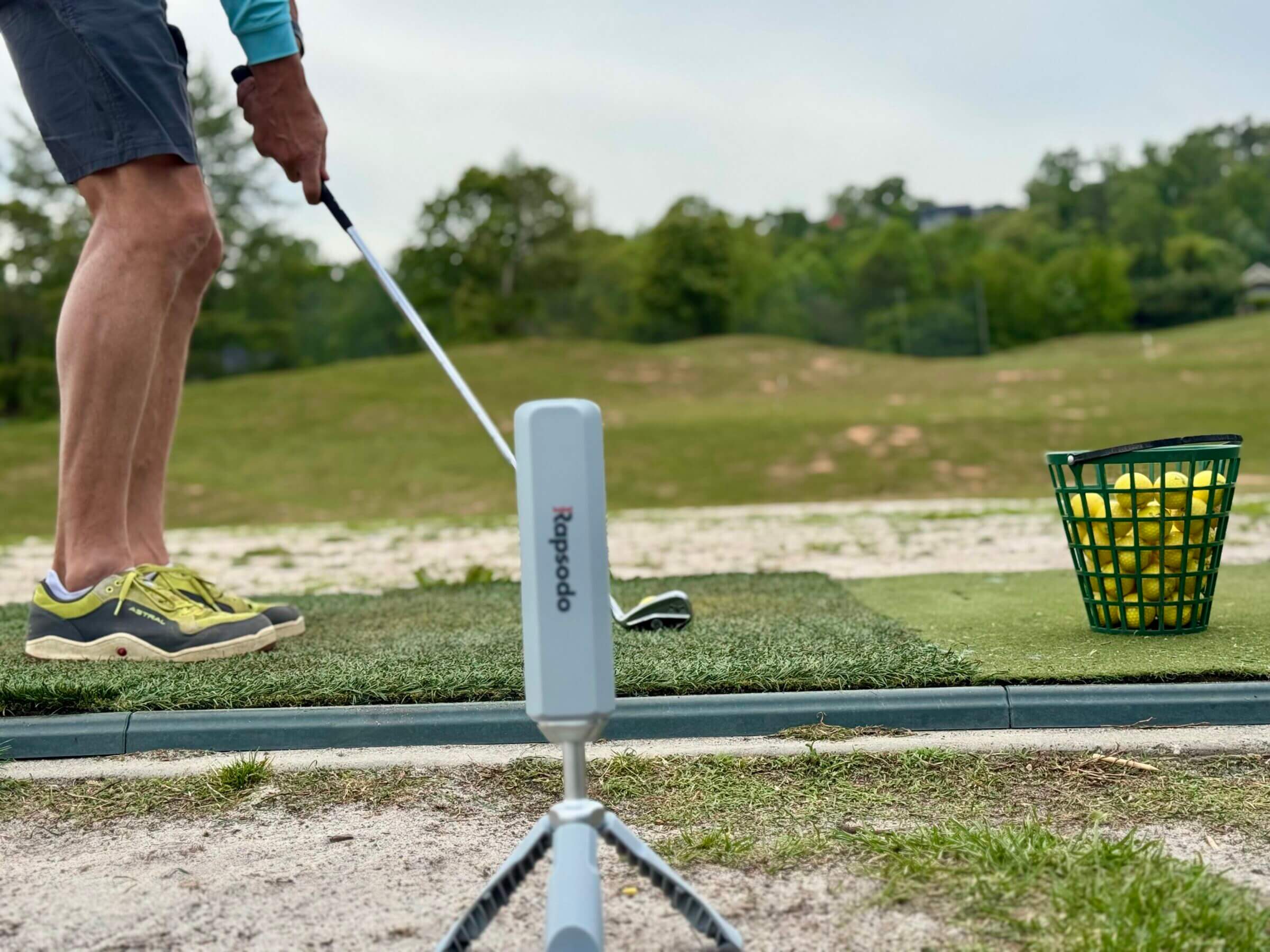
I would love to tie this up with a bow and tell you that after a week of working on these partial wedge shots, I have it dialed and I’m hitting 75 percent of greens from 100 yards out. But this isn’t a Disney movie. This is golf.
The actual swing feels good and my contact is crisp but I’m still trying to dial in my distances. The truth is I don’t know how far a three-quarter wedge shot goes. I don’t know how far a 50-percent gap wedge shot goes. That knowledge gap is why I often rely on full throttle shots: I mostly know how far they’ll travel. I’ve started incorporating a launch monitor into my range sessions to get some hard data but I still have a hard time trusting my distances on the course.
Sam says it just takes time. “There’s no way around the work with this. You have to spend the time practicing at the range and, with a launch monitor, to get a feel for what swing equals what distance.”
Practice, trust, feel … the better I get at golf, the harder golf gets.
Dig deeper into one golfer’s struggle to get better at golf in middle age and read last week’s Scratch By 50 that lays out the current state of Graham’s game.
The post Scratch By 50: Short Game. Short Game. Short Game. appeared first on MyGolfSpy.
Article Link: https://mygolfspy.com/news-opinion/scratch-by-50-short-game-short-game-short-game/