
The next time you watch Jack Nicklaus make that birdie putt on the 17th hole at Augusta (“Yes, sir!”), look at the club he raises over his head.
It’s a MacGregor Response ZT 615, an oversized blade that Nicklaus initially thought was a joke. By the end of that Sunday in 1986, it was the putter that had helped him win his sixth green jacket.
That putter is only eighth on this list. A few spots ahead of it, there’s a club with wings that won on the PGA Tour, a shaft that bends into a U-shape and a training aid that a European tour player decided to use for a living (if it works, it works).
Every putter here made it into competition. I’ve ranked them by how much explaining I would have to do if I pulled one out of my bag on the first green during my Sunday morning foursome.
10. Bettinardi Kuchar Model 1 Arm Lock (Matt Kuchar)
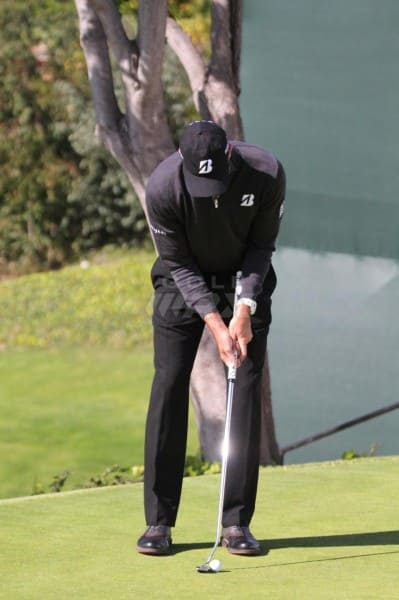
The head is the least interesting part of this putter so we can move right past that.
Kuchar helped popularize modern arm-lock putting on the Tour. For a while, his peers simply called it ‘the Kuchar method.’
But his Bettinardi Model 1 took arm lock to another level. It measured 44¾ inches and had a 17-inch grip and seven degrees of loft. Pressing the handle forward took loft off the head, so the club needed more loft built in to begin with. At address, with that forward press, the grip ran up the inside of his left forearm perfectly.
At the time, it was deeply unusual how the length, grip and loft worked together to suit his stroke. Now we see this technique more often.
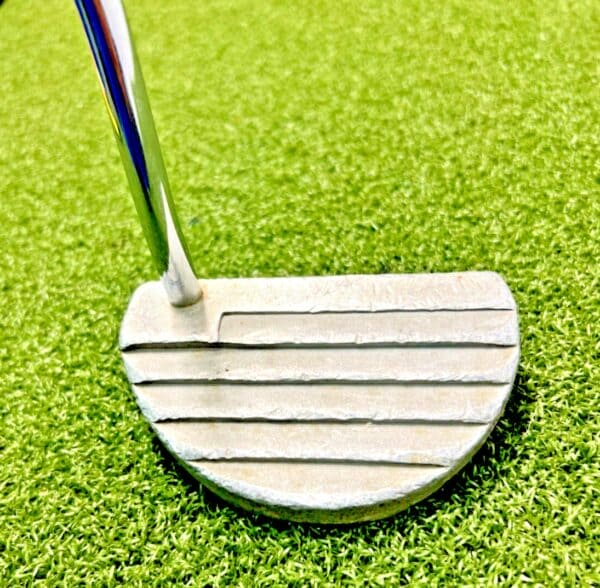
9. Bobby Grace The Fat Lady Swings (Nick Price)
Sometimes it’s about a name more than anything else.
Bobby Grace put his sense of humor right on the club. The head was a big, rounded mallet with a high moment of inertia, which helped it resist twisting on off-center strikes.
In an era when a blade was still a familiar sight on the PGA Tour, it was a lot of putter to look down at. Compared with some of the mallets you see today, the head has aged surprisingly well although it was considered very odd at the time. The name, however, still has no peer.
Nick Price took a prototype to the 1994 PGA Championship and won. He also won that year’s Canadian Open with a Fat Lady Swings so the putter got more than one week in the sun.
8. MacGregor Response ZT 615 (Jack Nicklaus)
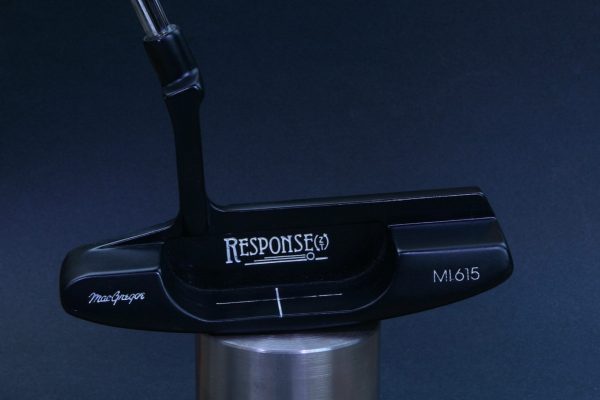
During John Barba’s History’s Mysteries story about the MacGregor Response ZT 615, he wrote about how the putter was considered exceptionally funky at the time.
So consider the time period plus the player who made it arguably the most famous putter of the 20th Century alongside Bobby Jones’ Calamity Jane.
As the story goes, Nicklaus liked Tom Watson’s PING Pal and asked MacGregor designer Clay Long to make something along those lines. Long came back with a blade on a much bigger scale.
An early version had an overhang that the USGA rejected. Long took it off. What remained was still one of the largest heads on Tour at the time. But it wasn’t just the size—it was the distinct shape.
What I love about this one is that the shape is easy to recognize. It’s a conventional-looking blade until you see it in Nicklaus’ hands and realize how much club there is from heel to toe.
There may never be a better advertisement for a putter than Nicklaus holding that thing up while the crowd behind 17 comes to its feet.
Picked for you, based on this story
 Buyer's Guide
Best Putters of 2026
Zero-torque putters would occupy all 15 top spots if ranked together.
Read story →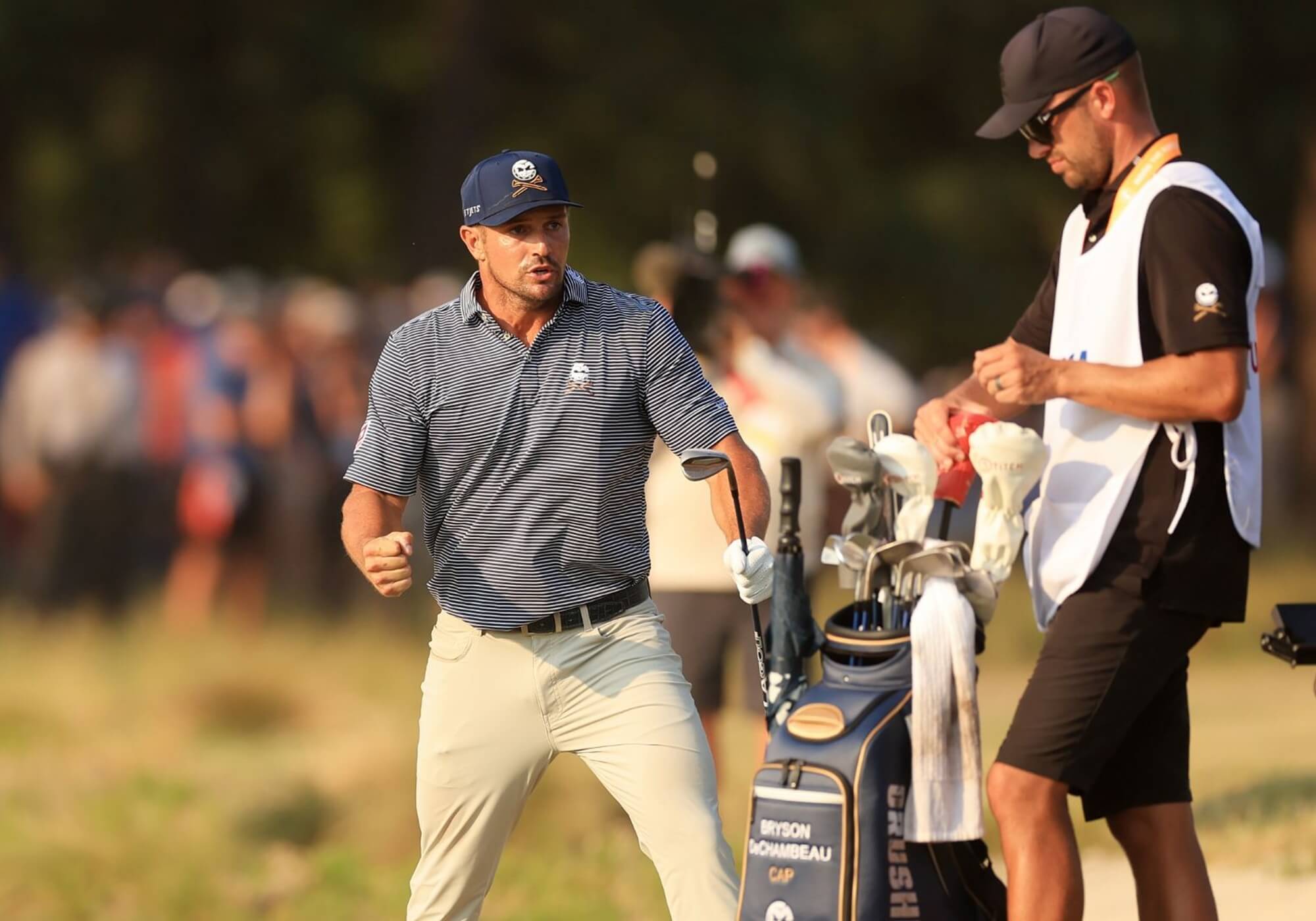 Feature
When Did A Blade Last Win A Major?
Eight straight majors have gone to mallets since the 2024 U.S. Open.
Read story →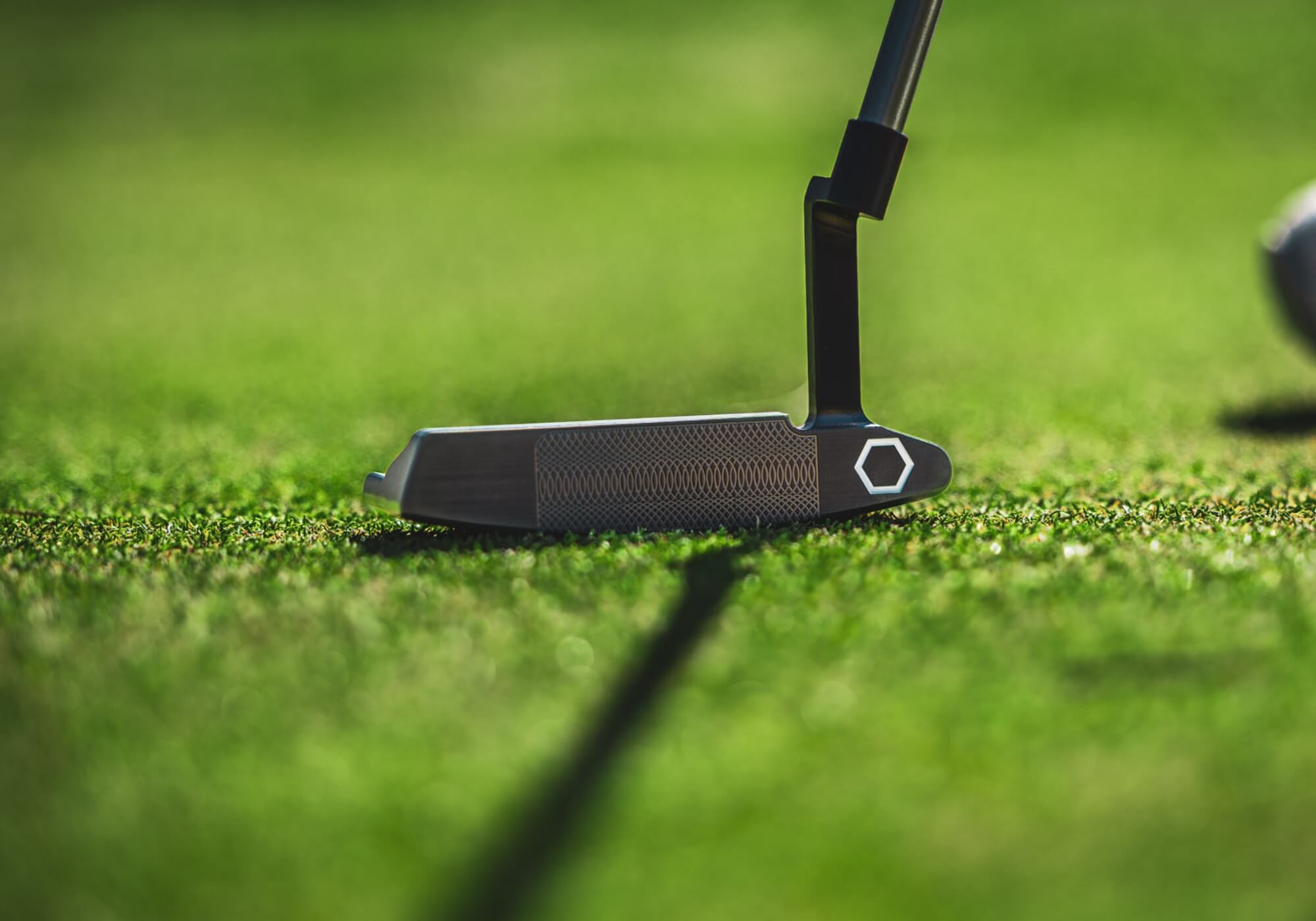 Testing & Data
What The Data Says About Bettinardi
A Bettinardi ranked first for proximity at every distance in the blade test.
Read story →7. Odyssey Backstryke Marxman (Thomas Bjørn)
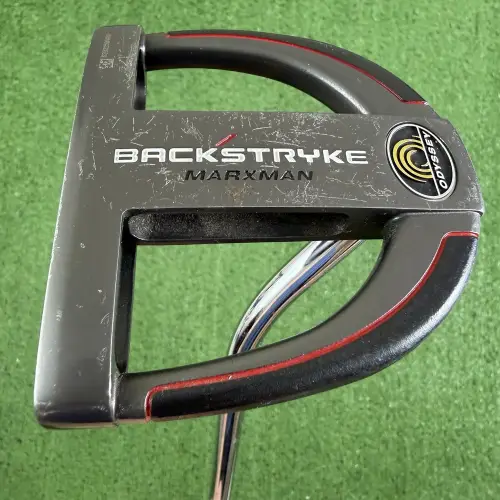
Follow the shaft down and you’ll see what makes the Backstryke so odd.
It joins the head at the back, well behind the face. Odyssey wanted to give the player a clearer view of the face and ball at address. If you were accustomed to seeing the shaft enter near the heel or the center of the head, the Backstryke asked you to get comfortable with a very different picture.
Thomas Bjørn won the 2010 Estoril Open de Portugal by five shots with the Marxman version and averaged 28 putts a round that week. He also had it in the bag when he won the 2011 Qatar Masters where he went bogey-free over the weekend.
6. L.A.B. Golf Directed Force 2.1 (Adam Scott)

The DF 2.1 looks like a bottle opener with a putter face attached.
There’s a broad front section, a narrow waist and a round opening in the back. The unusual shape makes it easy to overlook what L.A.B. was trying to accomplish. The company balances the head for the putter’s lie angle so it resists twisting as the player swings it.
Scott played a DF 2.1 at the 2019 Masters before moving to a MEZZ.1 prototype in 2022. Seeing L.A.B. putters in Tour bags has since become familiar but Scott was certainly an early adopter and willing to look unusual.
The first time you look down at a DF 2.1, it still takes a second.
5. Black Swan (Sandy Lyle)
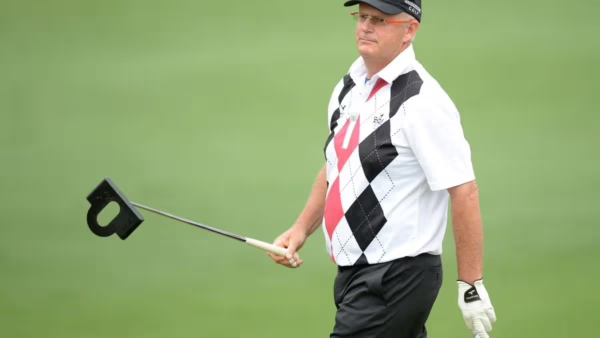
The Black Swan had a head so thick that it earned the nickname “brick on a stick.”
Lyle brought it to the 2013 Masters, 25 years after he won the tournament (and after missing the cut on his three previous visits). The club helped get him through to Saturday at one over par. He shot 81 in the third round but let’s not pay attention to that part.
If a giant block behind the ball helps you commit to the line on Augusta’s greens, I can see the appeal. I would also have guessed that a head this big was as far as Lyle would go. Five years later, he came back with a shaft that deserved its own camera angle.
4. Face-on prototype (Bryson DeChambeau)
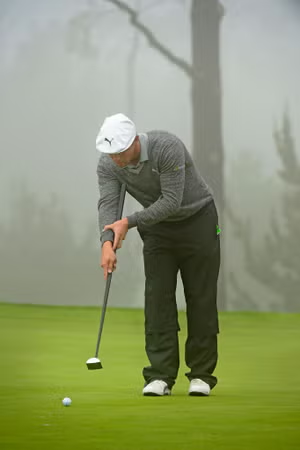
There is having a unique putter and there is putting completely different from everyone else.
At the 2017 Sony Open, DeChambeau stood beside the ball facing the hole and putted with a center-shafted prototype. He tied for 49th after receiving permission to use that version for the tournament.
However, the USGA subsequently deemed that particular putter non-conforming. The ruling applied to the equipment. Other versions he submitted conformed.
DeChambeau played a conforming version at the CareerBuilder Challenge but went back to conventional putting shortly after. Sam Snead had, of course, used a side-saddle stroke decades earlier but DeChambeau was the first in decades to attempt a revival.
Mind you, this was his rookie season and he was already trying to reinvent the wheel.
3. StickyGolf winged putter (Jesper Parnevik)
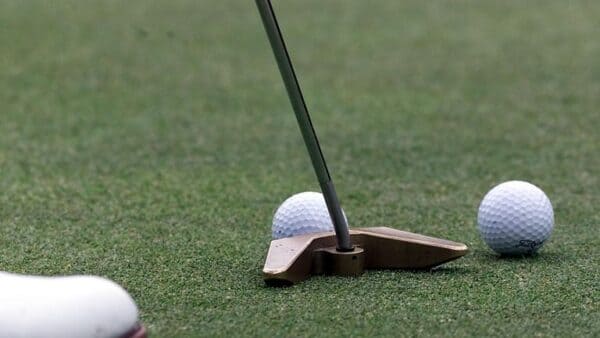
The face is small. The angled wings are what catch your eye.
It looks like the sort of prototype an equipment rep might hand someone on the practice green to see what they think out of comedy more than practicality. But Parnevik put it in play at the 2001 Honda Classic and won. (Side note: this event took place at TPC Heron Bay, my childhood home course.)
Of all the designs here that won on the Tour, this is the one I would most like to see someone pull out on a Sunday today. The putter already looks odd sitting still. Imagine how much attention those wings would get in a close-up with the tournament on the line.
2. U-shaped putter (Sandy Lyle)
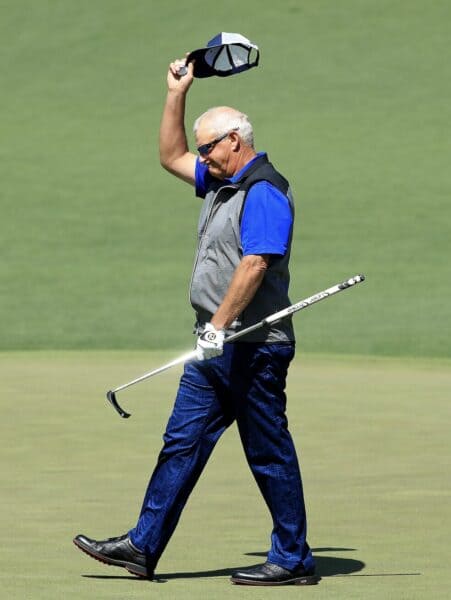
Lyle strikes again!
Most unusual putters give you something to look at behind the face. At the 2018 Masters, Lyle gave you something to look at on the way down the shaft.
Near the head, it dipped into a deep U, with the bottom of the bend sitting inches behind the face. Follow the shaft down in a photo and your eye has to double back before it gets to the head.
Lyle made an eagle in an opening 74. He was playing Augusta on the 30th anniversary of his win there and had somehow found a piece of equipment that could compete with that storyline for airtime.
1. Cleveland Smart Square Stubby (Jaco Van Zyl)
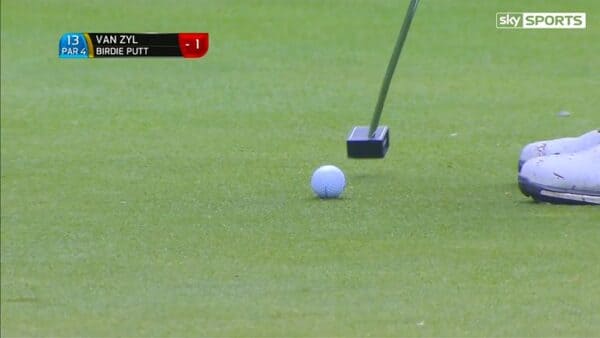
Cleveland made the Smart Square Stubby to help golfers practice finding the sweet spot. The head is barely wider than the ball which makes an off-center strike obvious.
At the 2017 Joburg Open, Jaco Van Zyl took that tiny training putter out on the course and played tournament golf with it.
A lot of the putters on this list give a player more of something. More head behind the ball, more shaft to brace against a forearm, more room to see the face. Van Zyl looked at a club designed to expose a mishit and decided that was exactly what he wanted over a putt that counted.
I’m not even mad. I’m impressed.
Which of these putters would you be most willing to take out for 18 holes? What are some other putters that were head turners? Let me know in the comments below.
Top Photo Caption: Jaco Van Zyl’s Cleveland Smart Square Stubby (GETTY IMAGES)
The post The 10 Most Head-Turning Putters I’ve Ever Seen A Pro Use In Competition appeared first on MyGolfSpy.
Article Link: The 10 Most Head-Turning Putters I've Ever Seen A Pro Use In Competition | MyGolfSpy