
There was a time when Wilson wasn’t the “other” brand in the golf shop.
It was the brand.
Wilson’s history reads like a roll call from the World Golf Hall of Fame. Walter Hagen. Gene Sarazen. Sam Snead. Arnold Palmer. Nick Faldo. Padraig Harrington. The company has been part of 62 major championship victories—more than any other equipment brand—and has won at least one major in every decade since the 1920s.
For much of the 20th Century, Wilson Staff irons represented the standard. The brand helped usher golf from hickory into steel shafts and matched sets before establishing a reputation for forged blades built around feel, precision and control.
Then Wilson got lost.
Changes in ownership, uneven product strategies and a confusing split between premium Staff equipment and department-store box sets blurred what the brand stood for. Meanwhile, Callaway, TaylorMade, Titleist and PING became the companies golfers reflexively considered.
Wilson never stopped making quality irons. Golfers simply stopped putting them on the same mental shelf as the biggest brands.
That perception-versus-performance gap made the 2026 Wilson Staff Model Forum test especially interesting. We weren’t just testing three iron heads. We were asking whether Wilson’s modern equipment was worthy of its history—and whether golfers have been overlooking one of the best iron families on the market.
Most Wanted put Wilson back in the conversation
The 2026 Staff Model family includes three heads designed to work alone or blend together: a traditional muscle-back blade, a forged cavity-back and the new hollow-body XB.
Before our Forum members completed their reviews, Wilson had already made noise in MyGolfSpy’s independent testing.
In the 2026 Most Wanted Player’s Iron test, the Staff Model XB finished fifth overall among 15 irons and third for accuracy. Its 8.8 overall score put it ahead of the Tour Edge Exotics CB, PING i240, Callaway Apex Ai 150, Titleist T100 and others.
The Staff Model CB finished farther down the board with an 8.2 overall score but posted an 8.7 for forgiveness and still finished ahead of the Titleist T100. The Blade wasn’t included because traditional musclebacks are excluded from Most Wanted player’s iron testing.
The Staff family wasn’t an isolated success, either. The Wilson DYNAPWR Forged won the 2026 Most Wanted Player’s Distance Iron test with a 9.4 score beating Mizuno’s Pro M-15 and leading the category in accuracy and forgiveness.
The numbers challenged the idea that Wilson equipment is somehow a step below the biggest brands. In some cases, Wilson wasn’t just keeping up with them. It was beating them.
The next question was whether golfers would see the same performance in the wild.
Four golfers, four different tests
Four MyGolfSpy Forum members spent more than three months with the Staff Model lineup. They combined for more than 50 rounds, numerous practice and launch-monitor sessions and handicaps ranging from plus-3 to 11.3.
Bohnson tested the Blade against his Srixon ZX7 Mk II/Z-Forged II combo set. azstu324 put the CB against his beloved Maltby TE+. MattF compared the XB with his similarly constructed Tour Edge Exotics C725. Cfhandyman tested a blended set—MB in the short irons, CB in the middle and an XB 4-iron—against fitted Mizuno Hot Metal Pros.
The four final scores ranged from 90 to 94, producing a composite rating of 92/100. More convincingly, every set displaced its tester’s gamer.
That is difficult to dismiss as nostalgia.
Wilson still knows how to shape an iron
The visual connection between Wilson’s past and present was obvious immediately.
The satin finish, compact profiles and restrained badging look like modern clubs made by a company that remembers what a player’s iron should be. Bohnson gave the Blade a perfect 10 for looks.
“The brushed satin finish is gorgeous. The compact blade length, razor-thin topline and minimal offset create exactly what I want to see standing over the golf ball.”
The reduced offset also helped neutralize his fear of the left side.
“The Wilson blades simply fit my eye better. I don’t feel like I have to guard against the left side of the golf course anymore and that confidence has shown up in my ball striking.”
The CB preserved that classic shape while making it more approachable. azstu324 initially found its heel-to-toe length shockingly short compared with his Maltbys—“holy crap that looks short!” was his first reaction—but adjusted within one round.
MattF found that the XB hid its hollow-body construction and additional help particularly well.
“The blade length and topline hit that perfect middle ground where you feel confident you aren’t trying to hit a razor blade, but you also don’t feel like you’re swinging a sledgehammer.”
That visual consistency became even more important in Cfhandyman’s combo set.
“The transition from MB to CB to XB is seamless throughout the set. Compared to many modern irons chasing technology through increasingly complex shaping, the Wilsons embrace traditional simplicity.”
For golfers who want progressively more help without seeing three unrelated designs, Wilson delivered one of the lineup’s clearest advantages.
The Blade: Tournament-level precision
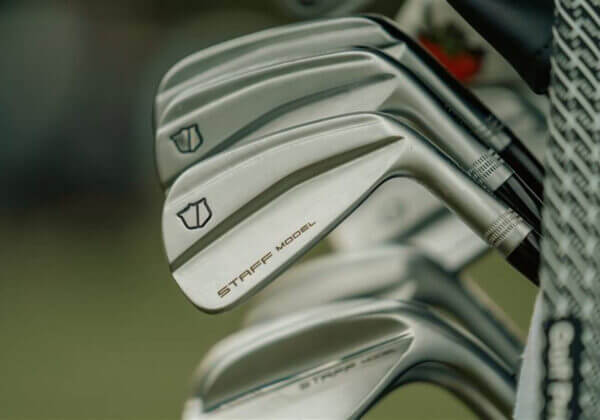
A true muscle-back 4-iron doesn’t suddenly become a game-improvement club because the calendar says 2026. The Staff Model Blade still expects the golfer to participate.
Yet Bohnson found more playability than its compact shape suggested. Launch-monitor testing showed predictable spin and carry with tighter dispersion than his Srixon combo set. From the rough, the Wilsons retained spin and produced fewer flyers, making distance control easier when he missed the fairway.
The larger proof came under pressure. Bohnson put the Blades into play during a U.S. Amateur qualifier within his first week and missed advancing by only two shots.
“First real tourney and a big one—I staffed the Wilsons, so that was fun. I gave the Wilsons a real test today and they passed!”
His DECADE data supplied further validation. Shortly after making the switch, he recorded a personal-best approach performance against PGA Tour benchmarks—something he said had rarely happened.
The only significant performance concern was the 4-iron.
“It is a true blade and requires a quality strike. I think most golfers, even very good players, would benefit from building a combo set with the Staff Model CB or XB long irons.”
Bohnson scored the Blade 93/100. The Srixons were marginally softer but the Wilsons were straighter, fit his eye better and produced fewer large misses.
“These irons aren’t leaving my bag.”
The CB: Compact without the expected punishment
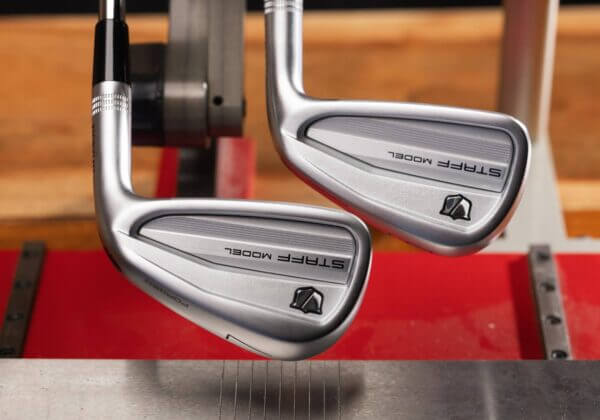
The CB faced perhaps the toughest assignment. azstu324 entered the test devoted to his Maltby TE+ irons, a set he considered among the best he had played regardless of price.
The Wilsons were nearly a club shorter because of their more traditional lofts but he quickly found that taking one more club and making an easier swing was a manageable trade.
The surprise was how little punishment came with the smaller profile. He described the 4- through 6-irons as “almost comically easy to hit.”
“I’ve had more picture-perfect shots with the longer end of this bag in the short time that I’ve had them than I’ve had with any sets of clubs over the past 10 years.”
The sole also impressed him. Its U-shaped design and subtle leading-edge relief moved cleanly through the firm Arizona turf. On-course performance earned a perfect 30/30, his unofficial handicap moved from roughly seven to five and he recorded personal bests at multiple courses.
“The Wilson Staff CBs have done everything that I could ever expect an iron to do at my level of play.”
The negative was difficult to ignore. Three irons sustained unusual damage during regular play. azstu324 could not determine whether it reflected a durability issue or an unlucky series of encounters with hidden material beneath the turf. Wilson declined to replace them because the damage occurred during play.
“I still can’t quite say if it’s poor durability on Wilson’s part, or if it’s just complete bad luck, karma or the golf gods punishing me for turning my back on Maltby.”
He still scored the CB 90/100 and committed to keeping it in the bag through 2026 and into 2027, but the durability question kept an otherwise outstanding review from being a clean sweep.
The XB: Help without the hollow-body compromises
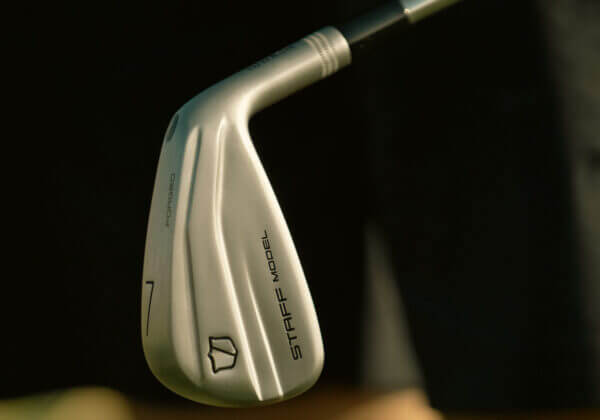
MattF’s XB test came with a complication: His swing went missing at roughly the same time the irons arrived.
To his credit, he didn’t blame the equipment.
“My recent scorecards reflect a ‘me’ issue, not a club issue.”
The struggle offered a revealing test of the XB’s limits. Tungsten weighting helped toe and heel strikes retain ball speed and direction but the head didn’t pretend every poor swing was a good one.
“No iron on the market can fix a late release or a block into the woods—as much as I tried to test that feature extensively.”
When MattF delivered a functional swing, the XB produced high trajectories, predictable spin and enough stopping power to hold greens. Gapping from 4-iron through pitching wedge was seamless while turf interaction remained clean from both the fairway and tee.
The closest comparison was especially useful. His Tour Edge C725s used the same UST Mamiya Recoil Dart HDC 70 S shafts as the Wilsons. Both heads were hollow-body filled player’s distance designs, allowing him to compare them without introducing a major shaft variable.
The XB won.
“On solid strikes, the Wilson XBs feel noticeably smoother and softer than my previous set. Flush hits give you that dense, heavy ‘thud’ that every golfer chases, with zero clickiness or hollow vibration.”
MattF scored the XB 91/100 and sold the Tour Edge irons before the test ended.
“They are officially in the bag to stay.”
The Combo Set: Trading distance for better golf
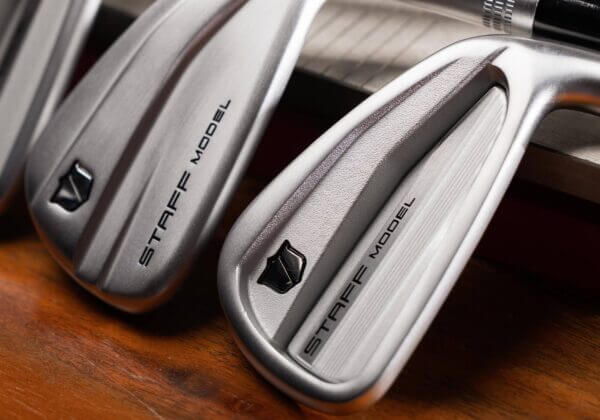
Cfhandyman’s blended set connected the entire family and produced the deepest data set.
His configuration used MBs in the 9-iron and pitching wedge, CBs from 5- through 8-iron and an XB 4-iron. The CB became the standout, providing nearly all the feedback and workability of the Blade with additional stability. The XB supplied easier launch at the top although his on-course confidence with the 4-iron remained inconsistent.
Across the set, turf interaction was excellent. Narrow soles and modest bounce moved cleanly through firm, average and moderately soft conditions. The only meaningful difficulty came from extremely heavy rough.
The Wilsons were six to 10 yards shorter than his stronger-lofted Mizunos. Initially, that bothered him. Eventually, it changed how he evaluated irons.
“I have traded some distance for precision, consistency and control, and the data shows that trade has improved my overall scoring.”
His final 20-round Arccos comparison against his previous 20 rounds with the Mizunos showed:
- Overall play improved by 0.9 Strokes Gained per round.
- Greens in regulation increased from 52 to 58 percent.
- Overall approach proximity improved from 49 to 45 feet.
- Double bogeys or worse fell to 0.2 per round.
The irons didn’t fix everything. His approach play remained below the scratch benchmark and the 200-plus-yard range was still a weakness. However, the Wilsons produced more greens, more predictable misses and fewer costly mistakes.
“The launch monitor suggested it. The golf course confirmed it. Arccos validated it.”
Cfhandyman scored the combo set 94/100 and ranked Wilson alongside Srixon, Mizuno and Titleist in the top tier of player’s irons he had tested. His description captured a theme shared by the group: “The irons communicate without punishing. Center strikes are addictive.”
Maybe it’s time to stop overlooking Wilson
The Forum test didn’t prove that every Wilson is automatically better than every Titleist, Mizuno, Srixon, Callaway or PING. Irons are too personal for that.
It proved something more useful: Wilson belongs in the same fitting.
Most Wanted showed the XB outperforming several of the market’s most recognizable player’s irons, particularly in accuracy. DYNAPWR Forged won its category. On the Forum, the Blade delivered tournament-level control, the CB won over a devoted Maltby player, the XB replaced a directly comparable hollow-body set and the combo produced measurable gains over fitted Mizunos.
All four testers kept the Wilsons.
There were some bumps in the road along the way. Retail and fitting availability remain limited compared with the biggest brands. Golfers can’t discover how good an iron is if it never enters the fitting bay.
That may be Wilson’s modern challenge. The company doesn’t need to relearn how to make an iron. It needs to convince golfers to see the Staff shield without thinking about the years when the brand lost its way.
Cfhandyman summarized both the clubs and Wilson’s place in the market:
“If you’re looking for premium forged player’s irons, don’t overlook Wilson because of brand perception. Judge them by their performance.”
Golfers regularly walk into fittings asking for Titleist, Mizuno, Srixon, Callaway or TaylorMade. The 2026 Wilson Staff Model family makes a compelling case for adding one more name to that list.
Not because Wilson used to be great.
Because, at least when it comes to irons, it may already be great again.
The post The Most Overlooked Irons In Golf? Wilson Staff’s Past Meets Its Present appeared first on MyGolfSpy.
Article Link: https://mygolfspy.com/news-opinion/the-most-overlooked-irons-in-golf-wilson-staffs-past-meets-its-present/