
This article is part of a new Smarter Golf series powered by Arccos data.
Every golfer has a lay-up number. Mine used to be 100 yards, full sand wedge, because a coach told me two decades ago that a full swing beats a partial one and I never questioned it.
Ask any golfer about the “right” number to leave yourself on a par-5 and you’ll get a different answer every time, anywhere from 80 to 100 yards. Some swear by leaving a full 9-iron in. The bottom line is that how you lay up on a par-5 is a real course management decision and having the data behind it helps.
Arccos pulled 1.34 million par-5 holes from 18,285 USGA-handicapped golfers over a full year and tested that decision directly: lay up to a favorite number or get as close to the green as you can. So if you’ve ever wondered whether you should go for it or lay up, here’s what the data says.
There is no lay-up sweet spot
If a sweet spot existed, strokes-to-hole-out would improve at some ideal distance and get worse on either side of it. It doesn’t. It gets worse in a straight line the farther back you lay up, at every distance in the data. The table below shows the strokes to finish from each of these layup locations.
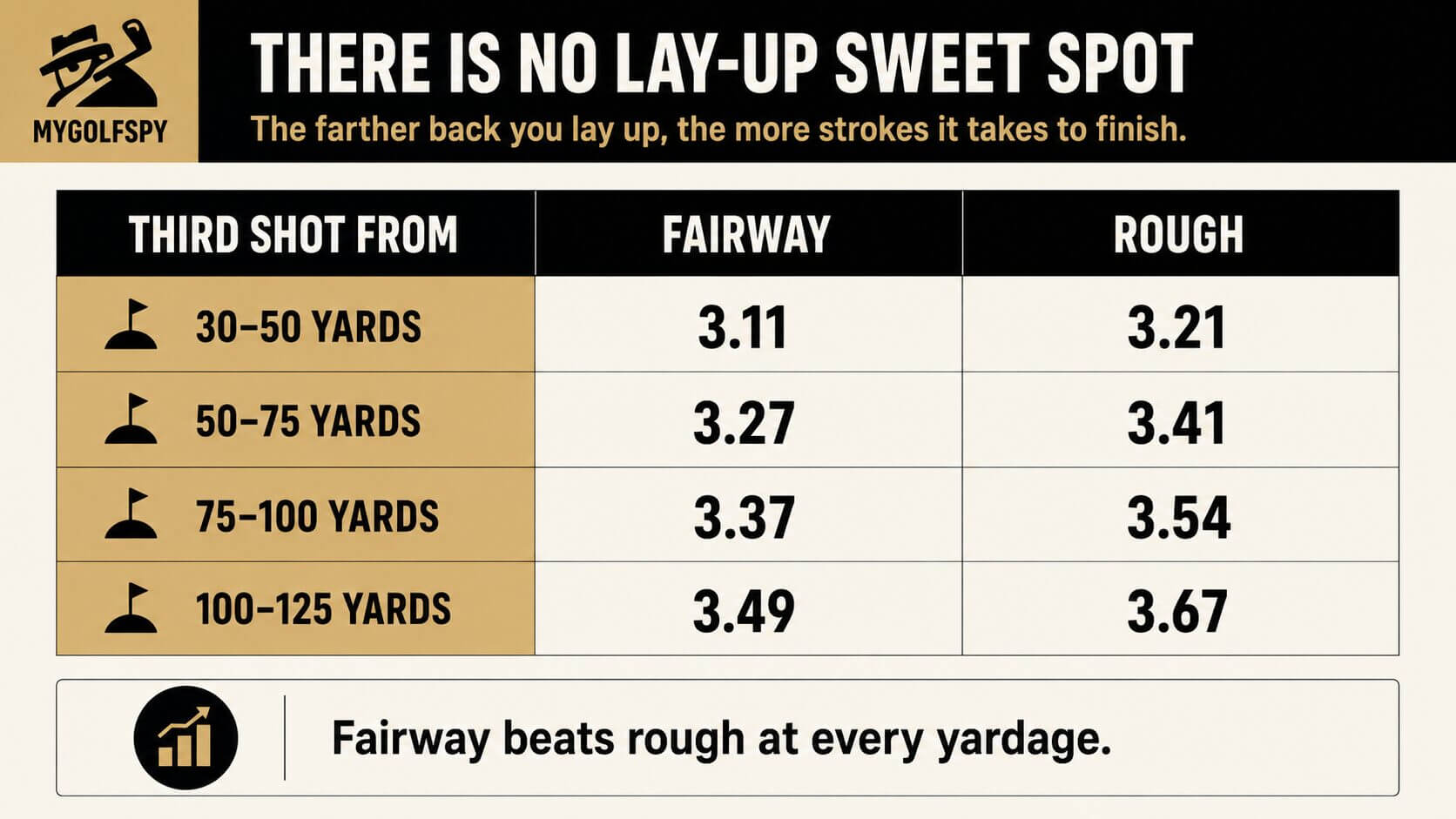
There’s no distance where that trend turns around. Laying back from 60 to 100 yards costs about 0.22 strokes and it only gets more expensive from there. The one thing that does move the number is lie. Fairway beats rough by 0.09 to 0.18 strokes at every yardage.
So here’s the clean answer.Don’t lay up to a number. Lay up to the fairway as close to the green as you can get without bringing trouble into play.
Going for it beats laying back, at every handicap
Another important way to look at this data is based on handicap ranges. It might be easy to think of a scratch golfer attempting to go for the green and having success with it compared to a 20-plus handicap. Arccos isolated second shots hit from the fairway from 180 to 260 yards out. They compared golfers who finished on the green or within 40 yards of it against golfers who laid back.
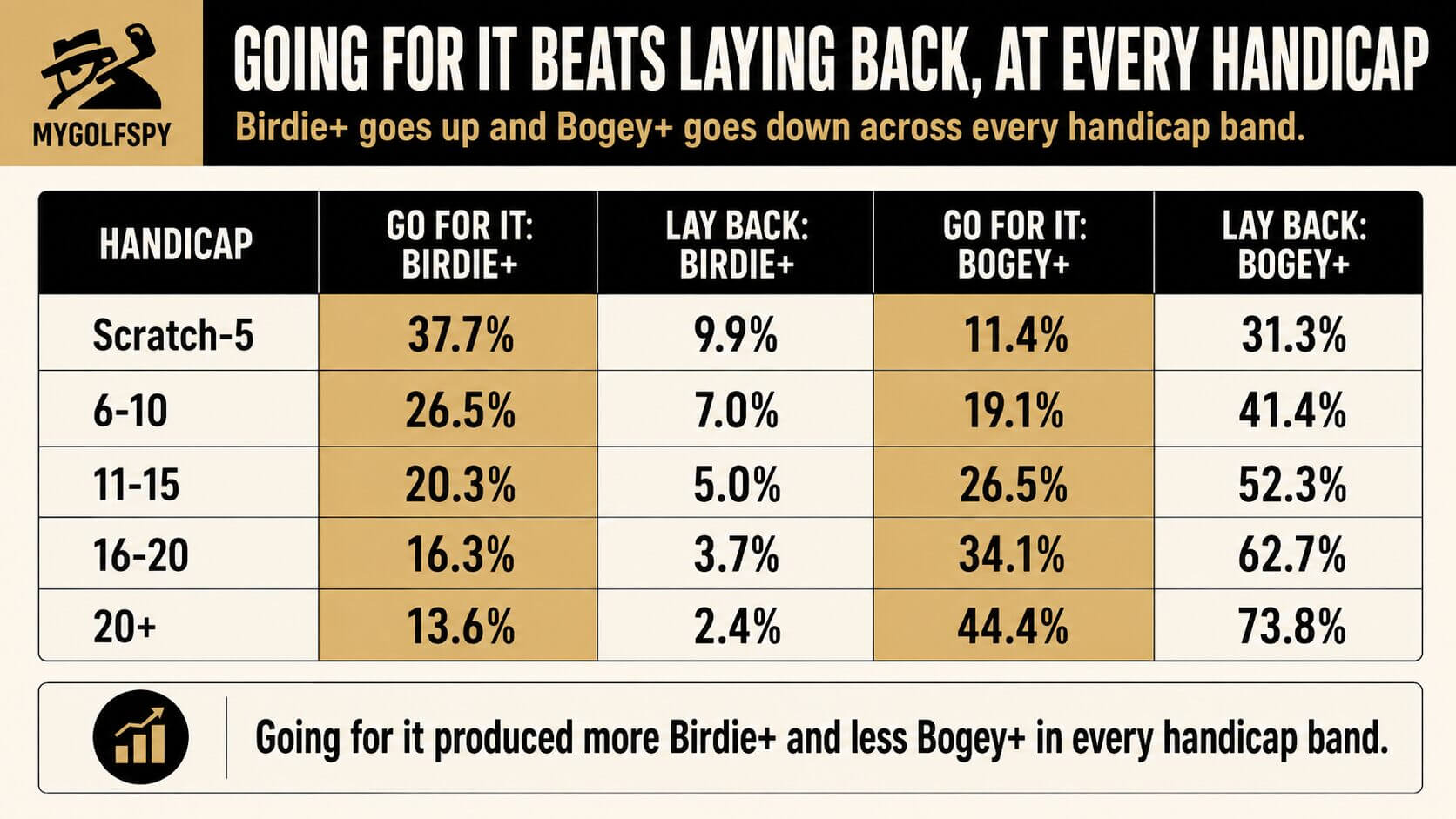
To me, the most interesting stat here is the 20-handicap row. Going for it more than doubled the birdie-or-better rate and cut the bogey-or-worse rate by nearly a third, compared to laying back. Every band shows the same pattern. Going for it doesn’t trade birdies for blow-ups. It improves both ends of the scorecard at once.
Par-5s are where strokes are sitting on the table
Zoom out for a second on why this matters.
Par-5s spread the field more than any other hole type on the course. A scratch golfer plays them in just +0.12 on average and makes birdie or better one out of every five times. A 20-plus handicapper plays the same hole type in +1.51, makes double bogey or worse almost half the time, and sees birdie or better less than one time in 30.
The good news for higher-handicap players is that this is not another swing flaw to fix. It’s simply a different decision about what club to put in your hands.
What should you do?
- Advance your second shot as far as the trouble in front of you allows, not to a number you like.
- Stop laying up to a distance. Lay up to a spot in the fairway.
- If you’re in the fairway with a real look, go for it. The data says both your birdie chances and your blow-up risk improve when you do, at every handicap level.
To find out how far you hit every club in your bag instead of guessing, you need to be tracking your own game. Arccos Air allows you to gather valuable information about your game without having to input every shot. Simply play your game and get insights so you can play smarter golf.
The post The Par-5 Lay-Up Debate Is Over. We Have The Data. appeared first on MyGolfSpy.
Article Link: https://mygolfspy.com/news-opinion/the-par-5-lay-up-debate-is-over-we-have-the-data/