
Ben Kohles leads the PGA Tour in Strokes Gained: Approach—and he has an intriguing setup.
He has 4- and 5-irons that are Titleist T250s, a model we put in our player’s distance test. From 6-iron through 9-iron, he plays the 620 CB, a cavity-back Titleist introduced way back in 2019.
That split is more interesting to me than seeing another Tour player with blades. Only five of the top 10 carry blades in at least part of their iron setup but the most revealing choice is often what they put in the bag above them. Said another way: it’s not just an automatic decision for pros to play blades.
As we did with the Tour’s best drivers, we looked at what the players use and where we have test data that can help you make sense of it.
How we selected the players
We used the same timing cutoff as our driver story, taking the top 10 in the Tour’s 2026 Strokes Gained: Approach-the-Green standings through the Butterfield Bermuda Championship two weeks ago.
The stat measures how many strokes a player gains or loses against the field on approach shots, per measured round. It includes shots played with wedges, hybrids and other clubs as well as irons, although irons are the most prominent factor here.
The equipment below comes from documented 2026 bags. Our test scores apply to the retail configurations we tested. In our 2026 iron testing, accuracy is based on Strokes Gained and accounts for half the overall score. Distance and forgiveness each account for a quarter while forgiveness measures how consistently an iron produces similar shots.
The irons used by the top 10
| Rank | Player | SG: Approach per round | Documented irons |
| 1 | Ben Kohles | +0.832 | Titleist T250 (4–5), 620 CB (6–9) |
| 2 | Si Woo Kim | +0.738 | Callaway X Forged (4), Apex MB (5–PW) |
| 3 | Scottie Scheffler | +0.673 | Srixon ZU85 (4), TaylorMade P7TW (5–PW) |
| 4 | Patrick Cantlay | +0.672 | Srixon ZXi5 (4), Titleist 718 AP2 (5–9) |
| 5 | Austin Smotherman | +0.669 | Titleist T100 (4–9) |
| 6 | Collin Morikawa | +0.664 | TaylorMade P-DHY (4), P7CB (5–6), P730 (7–PW) |
| 7 | Tom Kim | +0.653 | Titleist T200 utility (2), T100 (4–9) |
| 8 | Kurt Kitayama | +0.608 | Titleist T250 (3), TaylorMade P7CB (4), P7MB (5–PW) |
| 9 | Matt Fitzpatrick | +0.605 | PING i210 (3–4), S55 (5–PW), as listed at East Lake |
| 10 | Zac Blair | +0.592 | Titleist 620 MB (5–9) |
Ben Kohles makes room for two distance irons
Kohles’ setup pairs the T250 and 620 CB with Project X 6.0 shafts throughout. In our 2026 player’s distance test, the T250 scored 8.8 overall, 9.2 for distance, 8.7 for accuracy and 8.6 for forgiveness. Distance was its strongest category. The 620 CB was not in our 2026 test field.
The T250’s distance is part of the appeal but the important number in a fitting is the gap between that 5-iron and the 6-iron it sits next to. If you’re mixing two heads, hit them back-to-back. Look at your typical carry and the flight on a slight miss. A few extra yards are useful if they give you a shot you can reliably trust.
Picked for you, based on this story
 Instruction
Hit Irons Like Collin Morikawa
Morikawa ranks fifth in SG: Approach and credits a bowed lead wrist most amateurs can't replicate.
Read story →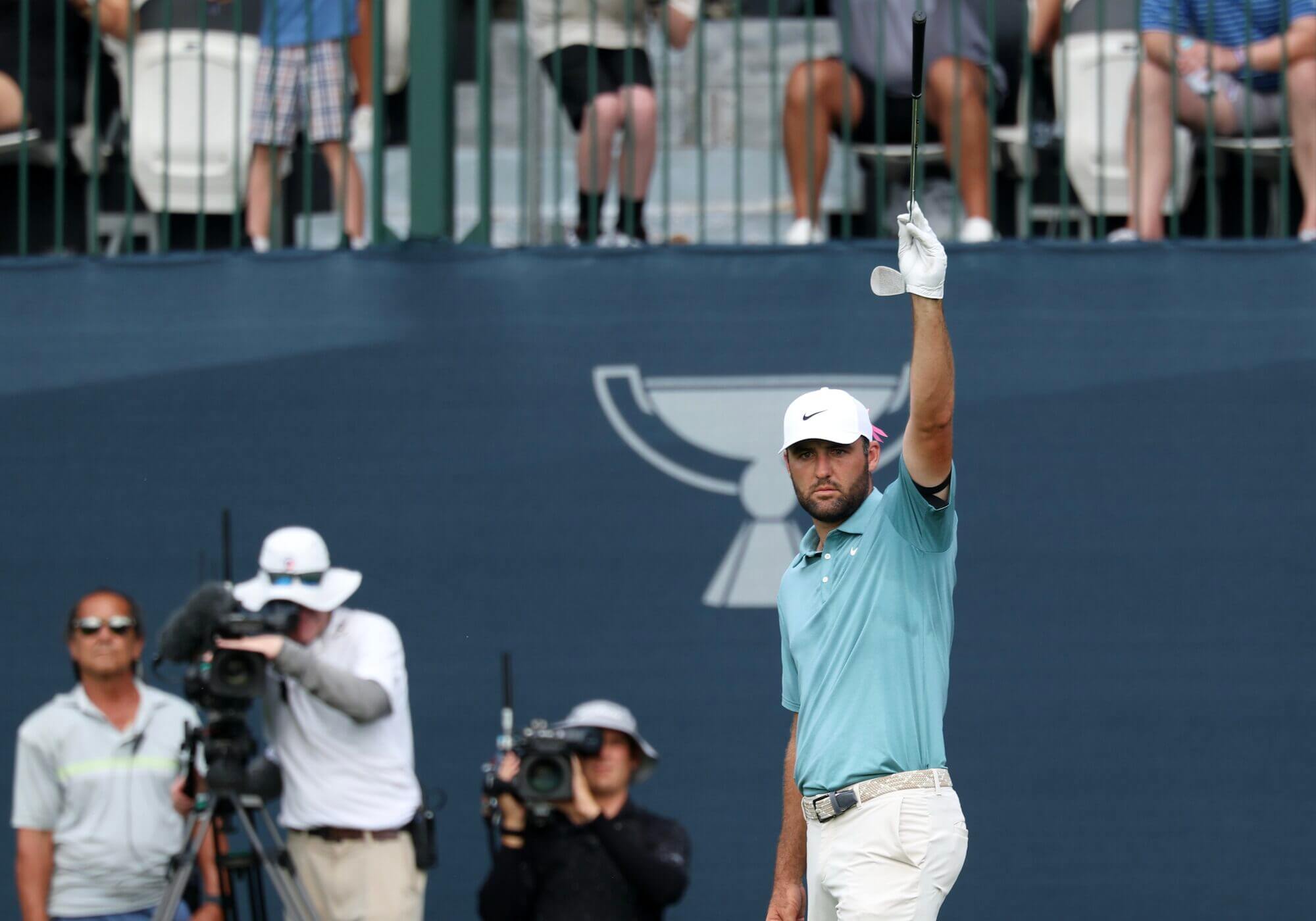 News & Opinion
What Irons Is Scottie Scheffler Playing?
Scheffler averages 23 feet, 6 inches from 150 to 175 yards, ranking second on Tour from that range.
Read story →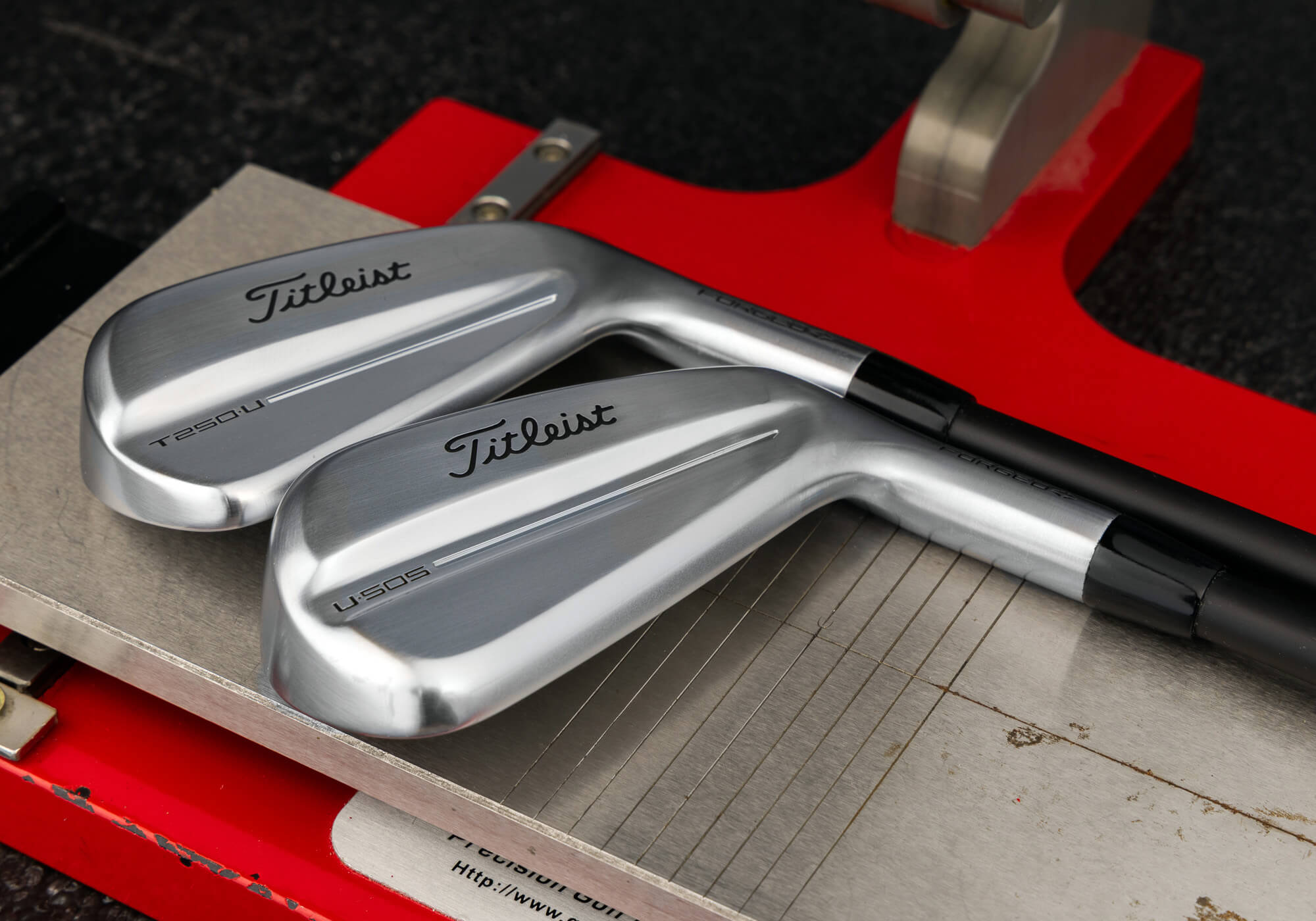 News & Opinion
Titleist T250 U and U505 Utility Irons
Kohles plays T250s in his long irons. Here is what Titleist just added above that model.
Read story →Collin Morikawa and Kurt Kitayama have same cavity-back, different cutoff
Morikawa uses a P-DHY utility in the 4-iron slot, P7CBs in the 5 and 6 and P730 blades from 7-iron down. Kitayama moves into P7MB blades at the 5-iron. His lone P7CB is a 4-iron and he has a T250 3-iron.
The P7CB scored 8.8 overall, 9.1 for accuracy, 9.1 for forgiveness and 7.7 for distance in our 2025 player’s iron test. For a golfer trying to get more predictable results out of a compact mid-iron, that accuracy and forgiveness pairing is a better reason to try it than how far it goes on a center strike.
Morikawa’s P-DHY has a more mixed report card. It finished fifth for forgiveness but 14th overall and 15th for accuracy in our 2024 driving iron test. That’s a useful example of how a model can deliver on one part of the job and still leave room for a better fit.
Austin Smotherman and Tom Kim: The T100 deserves a closer look
Smotherman won in Bermuda with T100s from 4-iron through 9-iron on KBS Tour 125 S+ shafts. Kim’s set covers the same range with Project X 6.0 shafts and he won the Scottish Open with a T200 utility 2-iron in the bag.
The retail 2025-generation T100 scored 8.1 overall, 7.6 for accuracy, 9.1 for forgiveness and 8.1 for distance in our 2026 player’s iron test. The T150, our overall winner, matched its 9.1 for forgiveness and scored 8.6 for accuracy and 9.7 for distance. The distinction matters if you’re shopping for a compact Titleist iron. Both were consistent in our test and the T150 gained ground on the shots that counted most toward the overall score. Here is a more detailed breakdown of how the T100 compares to the T150.
The retail T200 utility also has a test result worth noting. It finished second overall and second for accuracy in our 2024 driving iron test. That’s a reason to try the model if you need a utility iron. Kim’s 2-iron build and its role in his bag are definitely a separate fitting question.
Patrick Cantlay and Matt Fitzpatrick make a case for an older set
Cantlay’s Presidents Cup bag had a Srixon ZXi5 4-iron above his Titleist 718 AP2s. There’s actual test history for both. The AP2 placed sixth overall in our 2018 player’s iron test. The ZXi5 finished second for forgiveness in our 2025 player’s distance test. It’s worth noting those were separate tests with different fields and scoring systems.
Fitzpatrick’s PING S55s are even older. His Tour Championship setup paired them with i210 long irons, another model that predates the current PING lineup. We included the i210 in our 2019 player’s iron test where it finished 10th out of 18 entries. The S55 was outside our 2026 field so there’s no current score to put next to it.
For anyone thinking about replacing an older set they already hit well, bring your own 7-iron to the fitting. It’s the comparison that can tell you whether you’re getting tighter carry numbers or just a newer club.
Si Woo Kim, Scottie Scheffler and Zac Blair are the blade gang
Si Woo Kim carries an X Forged 4-iron and Apex MBs from 5-iron through pitching wedge. Scheffler makes the switch at the same spot, going from a Srixon ZU85 utility 4-iron to his P7TW blades. Blair’s 620 MBs go from 5-iron through 9-iron with a Vokey handling the pitching wedge slot.
Those three blade heads were outside our 2026 player’s iron test. We did test Scheffler’s ZU85 model in our 2018 utility iron test, where more than half the testers rated it among their favorites (that was tester feedback on the utility, separate from the measured results).
The bag detail that matters here is how Scheffler and Kim each chose a different head for the first club above their blades.
What should you take from these bags?
If you already like your short irons, start with the longest iron you struggle to hit high enough to hold a green. Compare it with a cavity-back, a utility or a hybrid that fills the same carry gap.
Watch what happens when you catch one a groove low. Does it still get over the front bunker? Does it come down steeply enough to stay on the green?
Kohles, Morikawa and Kitayama draw the line in different places. The useful part of copying their approach is deciding where that line belongs in your own set.
Top Photo Caption: Ben Kohles hits an approach shot at the Biltmore Championship. (GETTY IMAGES)
The post The PGA Tour’s 10 Best Iron Players: What Sets They Use And What Our Testing Tells Us appeared first on MyGolfSpy.
Article Link: https://mygolfspy.com/news-opinion/the-pga-tours-10-best-iron-players-what-sets-they-use-and-what-our-testing-tells-us/