
Background
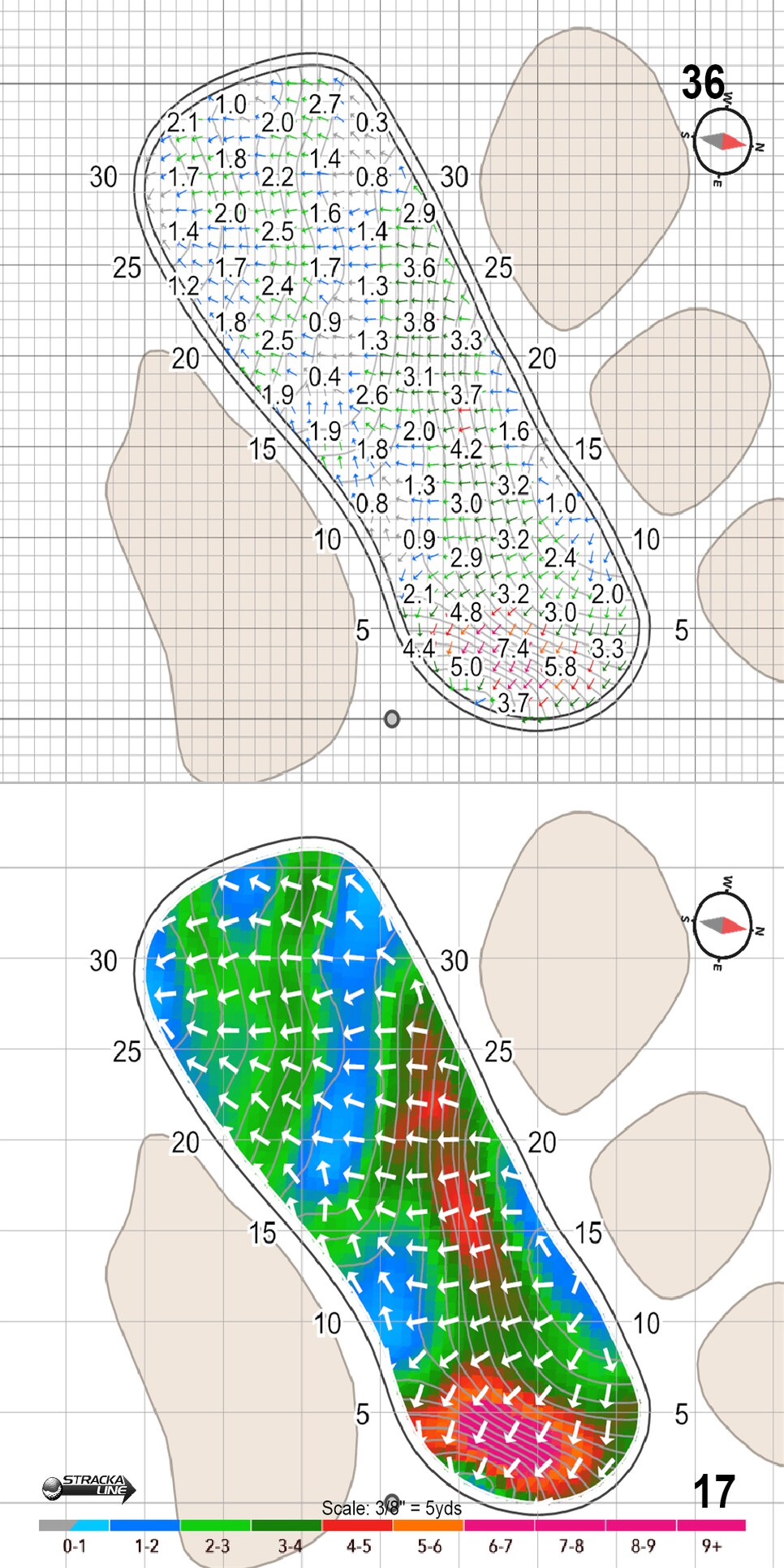
The par-3 17th at Waialae Country Club (members play it as the eighth) runs along Waialae Beach and, like all oceanside holes, is subject to the whims and fluctuations of the wind. This is Raynor’s original Redan, meaning the narrow green, flanked by bunkers short and behind, is angled from the tee with the back half of the putting surface running away from the player.
Why it matters
When the normal trade winds are at the players back the green is increasingly difficult to hit. Even with the tees occasionally moved up to 172 yards from the normal 192-yard markers, balls tend to land and run towards the back left of the green, often finishing in the rough. It’s critical for players to somehow find the green and make par since the next hole, the par-5 18th, is annually one of the easiest holes on tour and viewed as an invaluable chance to gain, rather than have to make up, strokes.
A closer look at the green complex
Stats
The 17th has played slightly over par each year since 2014 with a 3.058 stroke average. The green and bunkers were remodelled by Doak prior to the 2018 tournament to better represent Raynor’s original architecture, but the changes did not impact the challenge of hitting the Redan green in regulation (62 percent success prior to the restoration, versus 61 percent post-restoration). However, players who find the new greenside bunkers have saved par only 45 percent of the time in the past three years, down from a 52 percent save percentage from 2013 to 2017.
The post This graphic shows why Waialae’s 17th hole is one of the most under-appreciated par 3s on the PGA Tour appeared first on New Zealand Golf Digest.