
Hideki Matsuyama replaces his Cleveland RTX4 Forged wedges—a nearly eight-year-old model—every two months.
Cleveland has continued producing the model specifically for him, allowing him to preserve the design he trusts while regularly refreshing the hitting surface. And that distinction matters. Seeing an older wedge in a PGA Tour player’s bag doesn’t mean the physical club has survived thousands of practice shots. In fact, it virtually never does.
Many of us feel a tinge of guilt seeing pros replace their wedges more often than I replace my Brita filter. Meanwhile, I’ve kept the same wedges for several seasons now. Average Janes and Joes don’t typically have the bandwidth (budget) to replace our wedges so frequently.
But is that guilt meaningful? Every two months is unreasonable but should recreational golfers follow a more aggressive replacement schedule than we do?
The answer might surprise you.
How often do Tour players replace their wedges?
It’s worth starting out by saying that even Tour pros have replacement schedules that vary by player and by club, to say the least.
Adam Scott has described replacing all of his wedges four times per year, timed around the majors. He wants fresh grooves heading into those four events. So he sometimes goes just one month between replacements.
Jordan Spieth changes his 60-degree wedge every few tournaments with his other wedges lasting a couple of months. Given some of the increased demands on a 60-degree, it shows that replacing every wedge simultaneously isn’t necessarily the best approach.
Justin Thomas displays another route. He replaces approximately one pitching wedge per year, two gap wedges, three sand wedges and four (or more) lob wedges. Vokey rep Aaron Dill calls it the 1-2-3-4 method.
I just wanted to show how there is certainly no consensus among the best players in the world.
These golfers practice extensively including in bunkers where a wedge face can really take a beating. They also have equipment support readily available and don’t have to factor in how much a club costs.
Their replacement frequency reflects that workload and the control they demand.
But back to the question at hand: Does a pro golfer’s habits have any relationship to what a weekend hacker should be doing?
Picked for you, based on this story
 Testing & Data
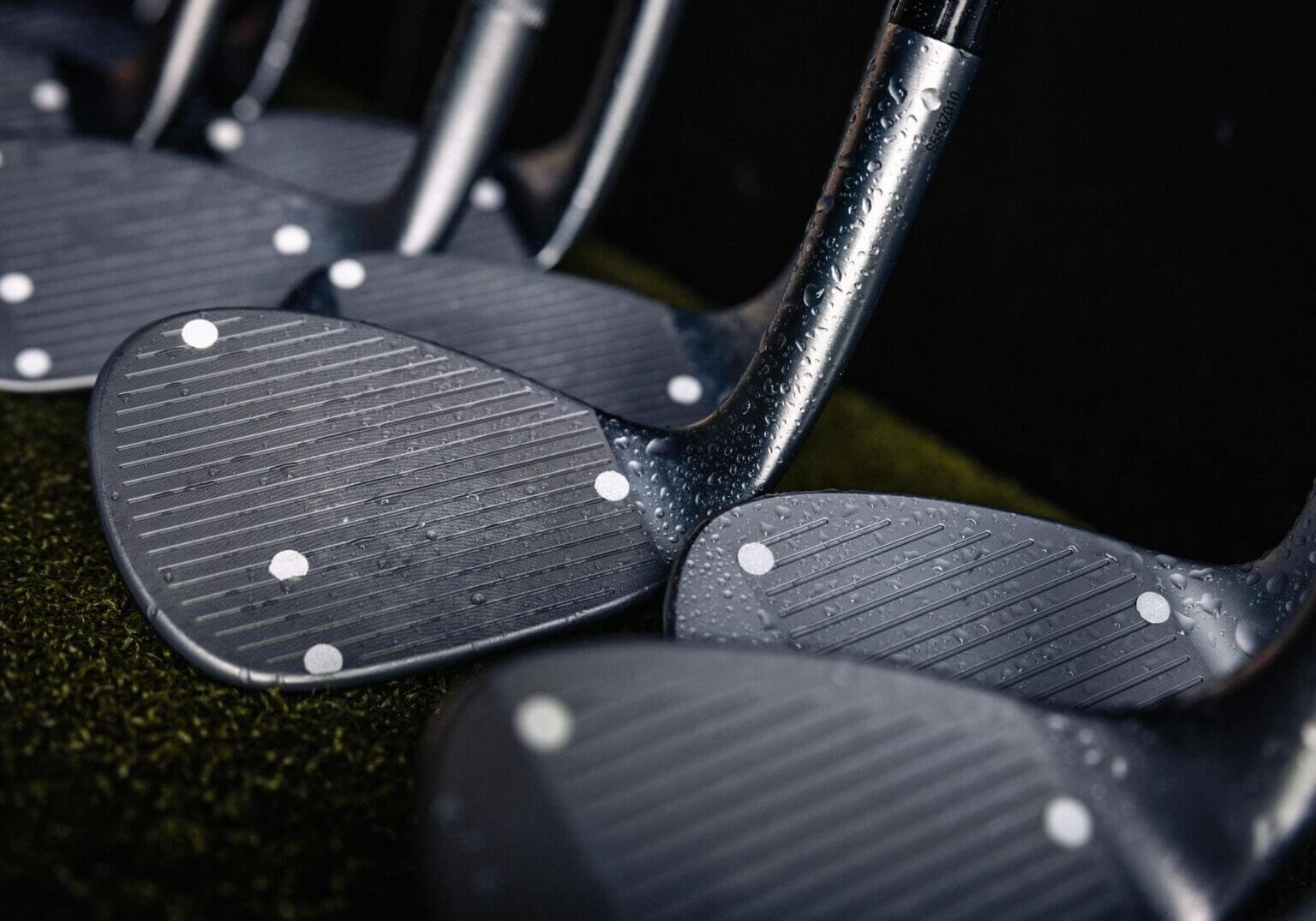
2026 Wet Wedge Spin Results
Dry spin barely separates wedges by 488 rpm. Add water and the gap explodes to over 3,700.
Read story → Buyer's Guide
Best Wedges of 2026
The Mizuno Pro T-3 swept every category in 2025. See what topped our 2026 test.
Read story →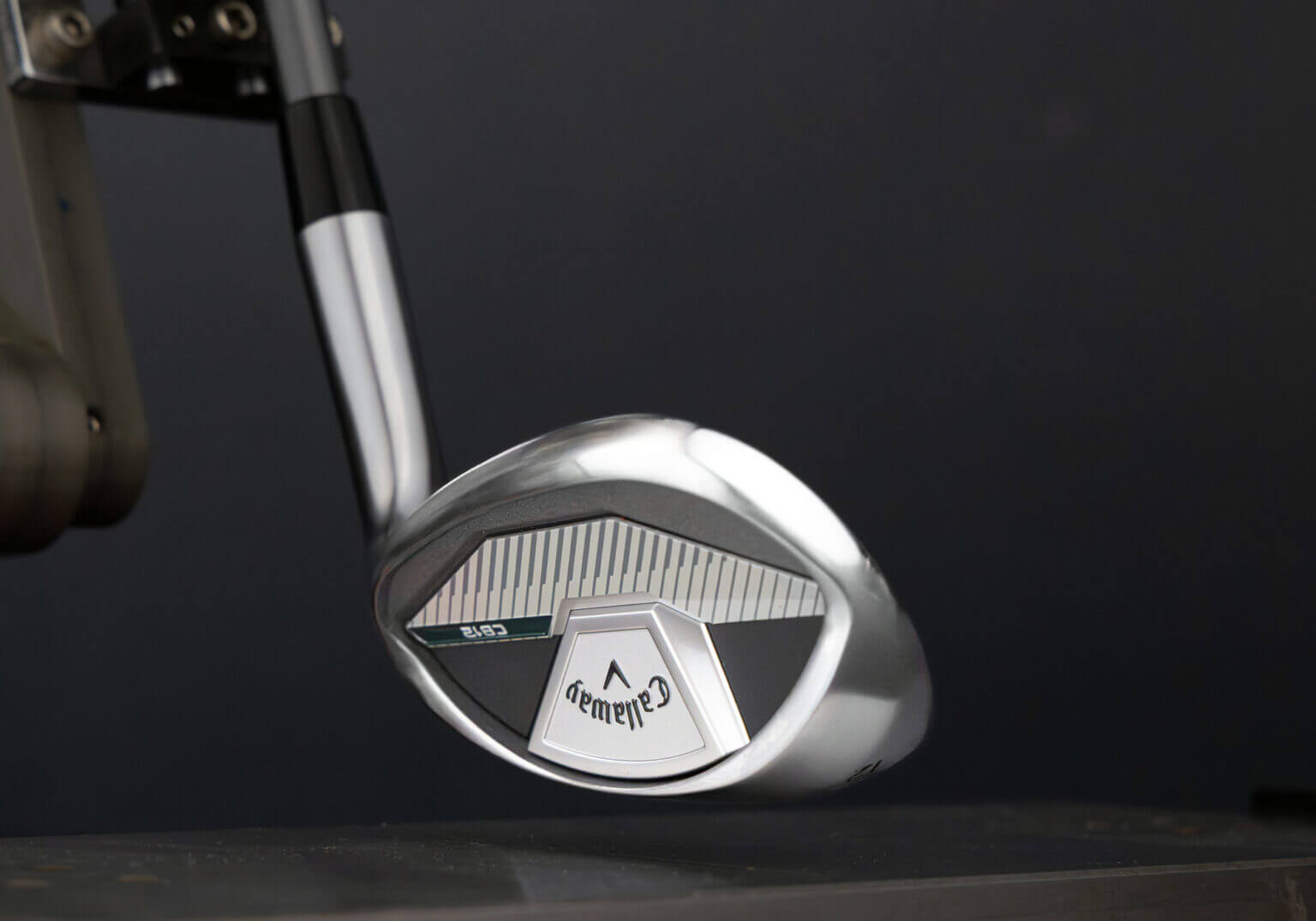 News & Opinion
The One Rule for Buying Used Clubs
Used wedges lost nearly half their spin after 75 rounds. Used might not cut it!
Read story →What our testing found
In our most recent groove-wear test, our Director of Testing Phillip Bishop collected baseline data with a new 56-degree Vokey SM10 and then repeated the measurements after 300 and 500 bunker shots.
Titleist supplied the wear simulation as it was decided that 500 bunker shots represented approximately 75 rounds. Performance measurements came from shots off grass toward a 50-yard target.
| Measurement | New wedge | After 500 bunker shots |
|---|---|---|
| Average backspin | 7,021 rpm | 3,737 rpm |
| Average launch angle | 27° | 35° |
| Carry-distance standard deviation | Just under 3 yards | Approximately 6 yards |
The worn wedge lost almost 47 percent of its average spin. Spin variability also increased substantially.
The takeaway here is that it’s not solely about stopping the ball. Many golfers associate wedge freshness with clipping a pitch shot and seeing the ball take two hops and magically come to rest. In reality, distance control and launch angle are even more important.
The worn wedge produced considerably less predictable results.
This was an accelerated wear test using one wedge rather than a universal prediction for every golfer’s 75th round. But obviously it demonstrates what substantial wear can do while leaving room for differences in practice habits, conditions and wedge construction.
Two big keys here? Understanding how much golf you play and monitoring your wedge’s performance.
Playing 20 rounds a year is a lot different than playing 100 rounds per year. Do you practice a lot or not at all? Do you notice any difference in the feel of a pitch shot?
Those answers contain a lot of information for what each golfer should do.
Can groove sharpening replace buying a wedge?
We get this question a lot so I wanted to address it.
Cleaning a wedge removes dirt and debris from existing grooves. You should do that before and after each shot or at least as often as reasonably possible (yes, it does make a difference).
Sharpening grooves removes metal to alter the groove edges or geometry. The process can’t put worn metal back into place and working inside the grooves does not recreate the original milling or texture across the entire face.
What I’m saying is that sharpening is a repair attempt with a different scope from replacement. In our groove-sharpening testing, it was determined that the process is unreliable. Sometimes sharpened wedges produce more spin, sometimes less.
A new wedge provides fresh grooves and face texture plus an unworn sole and leading edge. It also creates an opportunity to check your loft, bounce and grind.
There is a rules consideration, too. Equipment standards restrict groove dimensions and edge sharpness. Cutting grooves wider, deeper or sharper can make a previously conforming wedge nonconforming.
Sharper is not automatically better or permissible. It might help … but it might also leave you worse off than before.
For a heavily worn scoring club, replacement offers a far more predictable starting point than a handheld tool.
When should you replace yours?
So what is the final consensus here?
Treat rounds played as a prompt to inspect your wedges, rather than an automatic expiration date.
This is more like checking your car’s oil than it is checking the milk in your fridge. When you hit a certain mileage, it’s time to assess where you are at—but that doesn’t automatically mean you have to replace your wedges.
Titleist recommends evaluating groove performance around 75 rounds and checking physical condition earlier. Your practice sessions count toward wear, too. As I mentioned, repeated bunker shots and sandy lies can accelerate deterioration.
If you suspect a problem, compare your current wedge with a fresh one of similar specs using the same ball and comparable shots. Look at launch, spin, carry consistency and rollout. If you have historic wedge performance data, that will make this comparison even easier.
Start with your most-used wedge. You may need a new sand or lob wedge while your gap wedge still performs well. What do you use most around the green? Are you a one-tool player who always reaches for a 56-degree? Do you play a wide variety of shots? That is all part of the equation.
And it’s worth remembering that fresh grooves don’t require purchasing the latest release. An unused previous-generation wedge can refresh the hitting surface without paying flagship prices as we see with Matsuyama using a wedge model that was introduced in 2018.
Tour players and our groove-wearing testing show why wedge condition deserves attention. Ultimately, your own workload and performance should determine when that attention turns into a purchase.
So, no, you don’t have to replace your wedges every couple of months.
The phrase “your mileage may vary” is the one to keep in mind.
Top Photo Caption: Hideki Matsuyama hits a wedge shot during the Arnold Palmer Invitational. (GETTY IMAGES/Brian Spurlock)
The post Tour Pros Frequently Replace Their Wedges. How Often Should You? appeared first on MyGolfSpy.
Article Link: https://mygolfspy.com/news-opinion/tour-pros-frequently-replace-their-wedges-how-often-should-you/