
The PGA Tour’s best drivers don’t all arrive at the same equipment choice. When you look at this list, there isn’t one obvious blueprint to copy.
That doesn’t mean we can’t learn something from the results.
As we did with the wedges used by the Tour’s best short-game players, we looked inside their bags and then checked the results against what our testing says. The interesting part is where those two sets of evidence meet—and where they don’t.
How we selected the players
We used the top 10 in the Tour’s 2026 Strokes Gained: Off-the-Tee standings through the Butterfield Bermuda Championship.
The statistic evaluates tee-shot performance on par-4s and par-5s. It rewards the combination of distance and position, making it more useful here than a list based on driving distance alone. Notably, it also includes shots played with clubs other than driver.
Our 2026 Most Wanted driver test evaluated 42 models across distance, accuracy and forgiveness. Forgiveness measures consistency through carry-distance and ball-speed variation and shot dispersion.
Results below describe tested retail configurations, not an evaluation of each player’s individual build.
The drivers used by the top 10
| Rank | Player | SG: Off-the-Tee per round | Documented driver |
| 1 | Neal Shipley | +0.771 | PING G440 LST, 9° set to 7.6° |
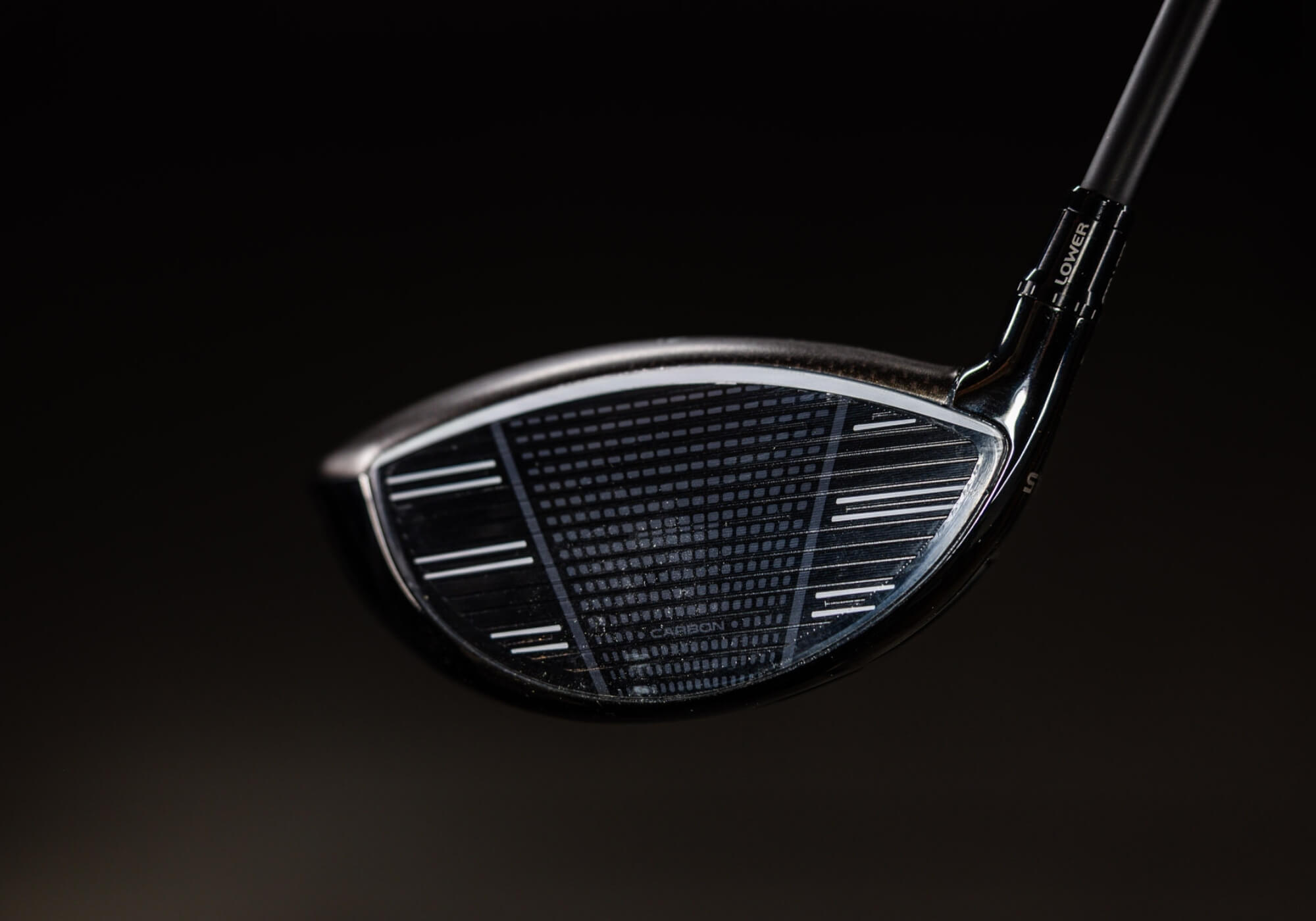
| 2 | Rory McIlroy | +0.737 | TaylorMade Qi4D, 9° set to 7.75° |
| 3 | Michael Brennan | +0.695 | Titleist GT3, 8°, C3 setting |
| 4 | Keith Mitchell | +0.646 | TaylorMade Qi4D LS, 9.5° |
| 5 | Doug Ghim | +0.643 | Titleist GTS2, 10°, C1 setting |
| 6 | Scottie Scheffler | +0.610 | TaylorMade Qi4D, 8° set to 7.8° |
| 7 | Kristoffer Ventura | +0.605 | Titleist GT2, 9° |
| 8 | Gary Woodland | +0.590 | COBRA OPTM Max-K, 9° set to 7.8° |
| 9 | Jesper Svensson | +0.573 | Titleist GTS4, 9°, D3 setting |
| 10 | Chris Gotterup | +0.570 | PING G440 LST, 7.5° |
Neal Shipley and Chris Gotterup: The G440 LST has two representatives
The leader in this group uses a PING G440 LST and so does the player in 10th.
Shipley’s setup lists a nine-degree head adjusted to 7.6 degrees with a Fujikura Ventus TR Black 7X shaft. Gotterup’s Tour Championship listing paired the G440 LST with a Project X HZRDUS Smoke Grey 6.5 TX 70.
The shared head doesn’t mean they are playing the same driver build.
In our 2026 test, the retail G440 LST scored 8.8 overall, 9.0 for distance, 8.4 for accuracy and 9.1 for forgiveness. However, in our high swing speed results, it scored 9.2 overall and 9.6 for accuracy.
That gives faster swingers a more encouraging accuracy result than the full-field score alone suggests.
For mid-speed golfers, the G440 LST scored 8.2 overall with 7.8 accuracy. Below 90 mph, it scored 8.2 with 7.3 accuracy despite 9.1 forgiveness. That makes its high-speed accuracy result a poor basis for recommending it to every golfer. Slower swingers should pay particular attention to direction during a fitting.
It’s a useful fitting candidate but Shipley’s adjusted loft is a specification to understand before copying. A low-spin model at less than eight degrees is a very particular starting point that most amateurs won’t be able to copy effectively.
Picked for you, based on this story
 Testing & Data
Who Shouldn't Buy the Qi4D
At high swing speeds, the Qi4D ranks 28th out of 42 drivers on playable rate.
Read story → Buyer's Guide
PING G440 LST vs. Titleist GT2
Two drivers used by this list's top 3 go head-to-head, and one wins every speed tier.
Read story → Testing & Data
Best and Worst 2026 Driver Feedback
One driver scored 9.3 for accuracy yet tester after tester rejected it for the same reason.
Read story →Rory McIlroy and Scottie Scheffler: The standard Qi4D belongs in the conversation
McIlroy and Scheffler’s driver is a standard TaylorMade Qi4D, not the LS.
McIlroy’s setup has two four-gram weights in front and two 11-gram weights in back. As we’ve discussed previously, he dislikes spin dropping below his preferred window. His fitting priority includes controlling low-spin misses rather than simply producing the lowest possible launch monitor number.
The retail Qi4D won our 2026 driver test with a 9.2 overall score. It scored 9.3 for distance, 9.2 for accuracy and 9.1 for forgiveness.
As detailed in our TaylorMade testing recap, that meant sixth for distance and fourth for both accuracy and forgiveness.
The Qi4D’s case is especially strong at 90–105 mph: 9.3 overall and 9.7 accuracy. Below 90 mph, it scored 8.8 overall, 9.1 distance and 8.4 accuracy. That suggests a different priority for the slower swinger. You should check whether the driver’s distance potential comes with the directional control you need.
The appeal is balance. Golfers looking at McIlroy and Scheffler’s choice should consider that broader performance picture.
Keith Mitchell: The Qi4D LS offers a different balance
Now to the other side of the equation.
Mitchell plays a TaylorMade Qi4D LS with a Project X Titan Yellow 6X shaft, providing a useful contrast with McIlroy and Scheffler.
The LS model had a 9.7 high-speed distance score and 294.04-yard average total distance, second in that testing group. Forgiveness, at 8.7, was its weakest high-speed category.
The distance result is an argument for trying it. The forgiveness result is a reason to keep watching the misses during that fitting.
At mid speeds, the Qi4D LS scored 8.9 overall, 9.3 forgiveness and 8.4 accuracy. Below 90 mph, it scored 8.5 overall, behind the standard Qi4D’s 8.8. These results suggest starting the slower swinger’s comparison with the standard model and then checking whether LS improves their actual shots.
Someone comparing the two Qi4D heads should evaluate the useful shots and repeatable trajectories each produces across a session. The longest swing is only one part of that comparison.
Gary Woodland: A Max-K driver can work at Tour speed
Woodland has a COBRA OPTM Max-K with a nine-degree head adjusted to 7.8 degrees and a Fujikura Ventus Black VeloCore+ 8X shaft.
His choice once again challenges the assumption that a powerful player should automatically move toward the lowest-spin head in a lineup.
Most importantly, the retail OPTM Max-K was our most accurate driver for high swing speeds.
It ranked fourth for straight-shot percentage and third for playable-shot percentage while finishing inside the top six for distance and forgiveness.
Its high-speed scores were 9.4 overall, 9.3 for distance, 9.8 for accuracy and 9.1 for forgiveness.
The Max-K scored 8.3 overall at mid speeds and 8.6 at low speeds where accuracy and forgiveness both scored 8.8. Those are less commanding results than its high-speed showing. The “Max” name alone doesn’t establish that this will be the strongest choice for a slower swinger.
Michael Brennan: An older GT3 still has a strong testing case
Brennan’s October setup features an eight-degree Titleist GT3 in the C3 setting with a Project X HZRDUS Silver TX 70g shaft.
The GT3 has a compelling result in our high-speed testing as it finished third overall and first for the distance category.
The GT3 scores for that high-speed category were an 9.3 overall, 9.8 for distance, 8.7 for accuracy and 9.3 for forgiveness. Distance was its clearest strength.
The GT3’s mid-speed scores were 8.5 overall, 9.3 distance and 7.7 accuracy. At low speeds, it scored 8.6 overall with distance, accuracy and forgiveness clustered between 8.4 and 8.7. For those golfers, the testing case is less compelling than its high-speed distance result might imply.
Brennan’s use is interesting because there is already a newer Titleist generation available. The GT3’s testing performance gives golfers a reason to investigate it beyond the fact that a successful Tour player still carries one.
That’s particularly relevant if you find an older head at an attractive price. Its successor’s existence doesn’t change the shots the GT3 produced in testing.
Kristoffer Ventura: The GT2 shows why the speed breakdown matters
Ventura has a nine-degree Titleist GT2 with a Mitsubishi Diamana WB 73 TX shaft.
The GT2 offers a useful testing lesson. Our review of discounted drivers highlights its mid-speed performance: 10th among 42 models with 253.64 yards of total distance and a 9.3 forgiveness score. Below 90 mph, the GT2 scored 8.6 overall and 9.2 distance, but only 8.0 forgiveness. That gives slower golfers a distance-led reason to try it, while checking whether its consistency meets their needs.
Our high-speed breakdown was less flattering: 7.9 overall and 6.7 for accuracy.
A successful professional can find a configuration that works even when a model doesn’t lead a particular test group. Equally, one professional’s success doesn’t make that group result irrelevant to a retail buyer.
This is where Tour usage becomes a starting point for a fitting, rather than a substitute for one.
Doug Ghim and Jesper Svensson: Gaming the GTS drivers
Ghim has a 10-degree Titleist GTS2 in the C1 setting. Svensson has a nine-degree GTS4 in D3.
What’s the difference between the GT and GTS? You can learn more here. The GTS2 adds interchangeable front and back weights to change its launch, spin and stability profile. GTS4 offers the lowest-spin configuration in the lineup with its standard forward weighting.
Titleist also increased the GTS4 to 460cc, a change from previous “4” models. Its position within the range doesn’t mean it shares every design characteristic of its predecessors.
The GTS drivers weren’t included in our 2026 test.
What should you take from these bags?
There is no single driver category that belongs to the Tour’s best off-the-tee players.
More usefully, our testing gives you different reasons to investigate the models represented here.
There is more balanced performance from the Qi4D, high-speed distance from the GT3 and Qi4D LS, and high-speed accuracy from the OPTM Max-K and G440 LST.
Those are reasons to build a shortlist. The final choice still depends on the launch, spin, distance and dispersion you produce with the fitted club.
A professional’s driver can be an interesting place to start. The next step is finding out what it does for you.
Top Photo Caption: Neal Shipley, top Tour driver, hits a tee shot. (GETTY IMAGES)
The post Tour’s 10 Best Off-The-Tee Players: What Drivers They Use And What Our Testing Tells Us appeared first on MyGolfSpy.
Article Link: https://mygolfspy.com/news-opinion/tours-10-best-off-the-tee-players-what-drivers-they-use-and-what-our-testing-tells-us/