
SOUTHAMPTON, NEW YORK — Great Peconic Bay woke up angry.
In its rancour, it unleashed a barrage of sea fog that swallowed Shinnecock Hills Golf Club as its breakfast. As I mentioned yesterday, for as much as we try to resist, we’re often reminded that we can’t tame what is untamable. Nature will have its say.
Despite their hands-off approach to nature as it pertained to course setup, the USGA did their best to resist the effects of Great Peconic this morning but had no choice other than to relent and suspend play, and the argument can be made that they waited too long to do so.
The fog that enveloped the course should not be described as anything other than hostile. This was a barrage in every sense of the word. That’s made exceptionally clear by the fact that play was suspended for over two hours. Such an opening feels like an omen because this was meant to be the U.S. Open’s fate at Shinnecock.
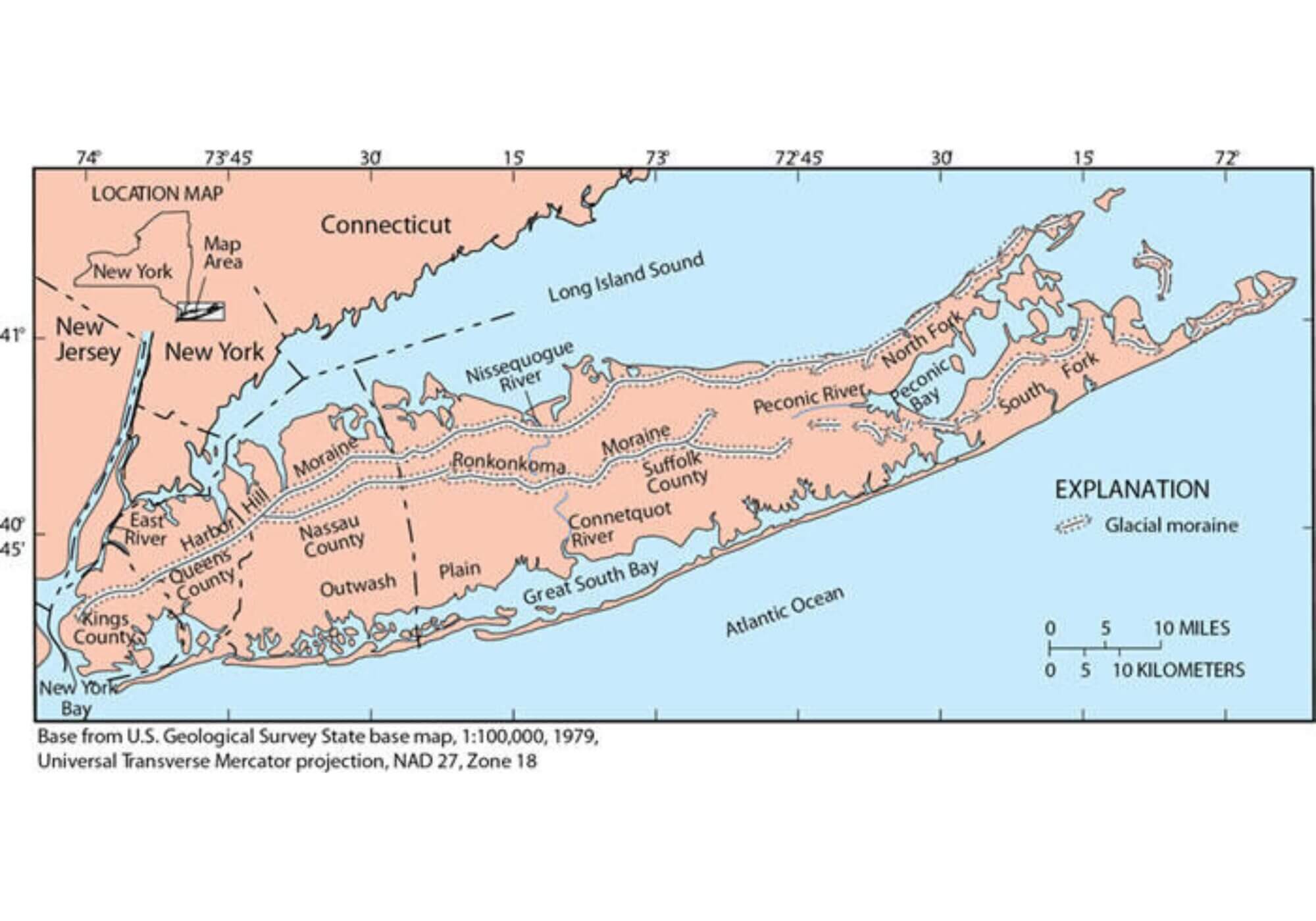 Long Island’s geography tells the story. Shinnecock Hills sits squarely within the island’s “lobster claw,” exposed to the whims of Great Peconic Bay and the Atlantic Ocean alike.
From a visual perspective, if you look at Long Island on a map, it very closely resembles a lobster’s pincer claw. If you’re unfamiliar with lobster anatomy, the pincer is the smaller, narrower of the lobster’s two claws. Its purpose is to rip and tear apart whatever it decides to eat. Shinnecock’s location on Long Island sits right in the middle of the “lobster claw,” meaning that its only possible destiny is to be torn apart and swallowed whole.
This tournament was destined to be very messy.
The fog suspended play for over two hours and then, right on cue, came the winds. As so often happens, worse begets worse.
So, while the USGA didn’t want to see players struggle too much, the elements clearly felt differently. Throughout the morning and afternoon, gusts reached up to 30 mph, and with them came the version of Shinnecock that we anticipated all along because, at its core, Shinnecock is what it is: a landscape golf course. William Flynn understood this and left any and all who might dare play Shinnecock to the elements.
If Thursday proved anything, it’s that the USGA got this setup right. Some will be upset at the number of red figures on the leaderboard, but ramping conditions up rather than scrambling to recover a course was always the plan.
In conversations with a number of players and their representation during the morning round, they clearly alluded to the notion that the USGA really couldn’t have pushed the course too much more without it becoming unplayable. Throughout the day, the wider fairways and softer greens looked essential in ensuring that there wasn’t a repeat of Oakmont last year, where Sunday conditions made the course an absolute slopfest (and not in a good way).
The main takeaway, however, is rather simple: despite the fog delay and blustering winds, in the words of MyGolfSpy Senior Editor, Sean Fairholm, Shinnecock played “tough but fair.
On one hand, the front-nine par 3s played exceptionally difficult. No. 2 was the sixth-hardest hole on day one (3.30 stroke average) and No. 7, the treacherous redan, was the third-most difficult (3.48). There were several instances, particularly at No. 7, where tee shots were callously swatted out of the sky.
On the other hand, Keith Mitchell’s roller-coaster round, where he carded a 6-over 41 on the front nine and a 6-under 29 on the back nine, was emblematic of Shinnecock’s duplicity. Opportunities clearly exist, and so does disaster. We usually see good rounds go south, not vice versa.
Speaking of compelling stories, we need to talk about Scottie Scheffler. The effects of Great Peconic contributed to yet another slow opening-round start, a trend we’ve observed almost all season long. Scheffler finished his opening round at 2-over 74 and, at one point, was 4-over on the day. Scheffler’s sluggish starts have clearly been a source of frustration and, through yet another spirited post-round exchange with his long-time coach Randy Smith, we’re seeing those frustrations boiling over.
Another developing storyline is how players are choosing to attack the greens. As I mentioned yesterday, the ghost of Martin Kaymer’s 2014 performance at Pinehurst is present at Shinnecock. Adam Scott, Jon Rahm and several others have repeatedly elected to putt from off the greens in the windy conditions.
With a number of players still on the course and having to complete their round Friday morning, the leaderboard so far is bunched with the exception of Wyndham Clark at 6-under, four strokes ahead of seven players at 2-under (Rahm and Matt Fitzpatrick are the headliners in that group). Clark, the 2023 U.S. Open champion, had been languishing in the wilderness until a recent victory at the Byron Nelson, followed by two strong starts at the Memorial and Canadian Open. He’s hot right now, but there is a lot of golf left to play.
With little separation among players, one thing is crystal clear: the main foe to conquer isn’t Shinnecock. It’s Great Peconic Bay—and the words of Shakespeare once again become eerily prophetic.
“When the battle’s lost and won…
Fair is foul, and foul is fair:
Hover through the fog and filthy air.”
The post USGA Spot On With Shinnecock Setup During Blustery Opening Day appeared first on MyGolfSpy.
Article Link: https://mygolfspy.com/news-opinion/usga-spot-on-with-shinnecock-setup-during-blustery-opening-day/