
Ask 10 golfers how to fix a bad putting stroke and you’ll get 10 different answers. Change the putter, narrow your stance, stop taking it so far inside on the way back, switch your hands, maybe even check what your dominant eye is doing. Most of the time, you’re tweaking something small. The yips are different because small tweaks usually don’t touch it. Mark Calcavecchia, Chris DiMarco and Bernhard Langer all ended up changing how they held the putter to keep the yips away.
What are the yips in golf?
The yips are when a short putt falls apart before the ball even moves. You’ve made that three-footer a thousand times and then your hands jab, twitch or freeze as you start the putter back. It tends to show up on the putts you’re supposed to make.
Most of the time, it’s the right hand (for a right-handed player). It gets too active, takes over the stroke and jerks the putter through impact. That’s why the claw grip has become the go-to fix: it neutralizes the right hand by preventing the wrist from hinging so you push the ball with your arms and shoulders instead of hitting it with your hands.
These golfers struggled. Why?
Chris DiMarco was so shaken at one point in his career that he reportedly told the friend who showed him the claw grip he couldn’t make a putt from six inches. He nearly quit before he found the grip. The claw turns the right hand upside down on the club which he has said takes the right hand and wrist out of the stroke and puts the shoulders in charge.
Mark Calcavecchia has admitted to many cases of the yips, once using seven putting grips in a single round. He went to a long putter, then tossed it in a lake, before taking the claw from DiMarco in 2000. He calls his version the “Reverse DiMarco” and says it keeps his right hand from yipping and lets his left hand control the stroke. Years later, he put it more bluntly: his right hand twitched when the pressure was on so he stuck with the claw.
Bernhard Langer has fought the yips several times. He missed an infamous six-footer at the 1991 Ryder Cup. One of his solutions was pressing the putter against his left forearm and dropping his shoulders to take the wrists out of play. His right hand couldn’t take over and his left wrist couldn’t break down.
These grips look nothing alike but all three got the overactive hand out of the way and kept the yips from destroying their rounds.
Picked for you, based on this story
 Review
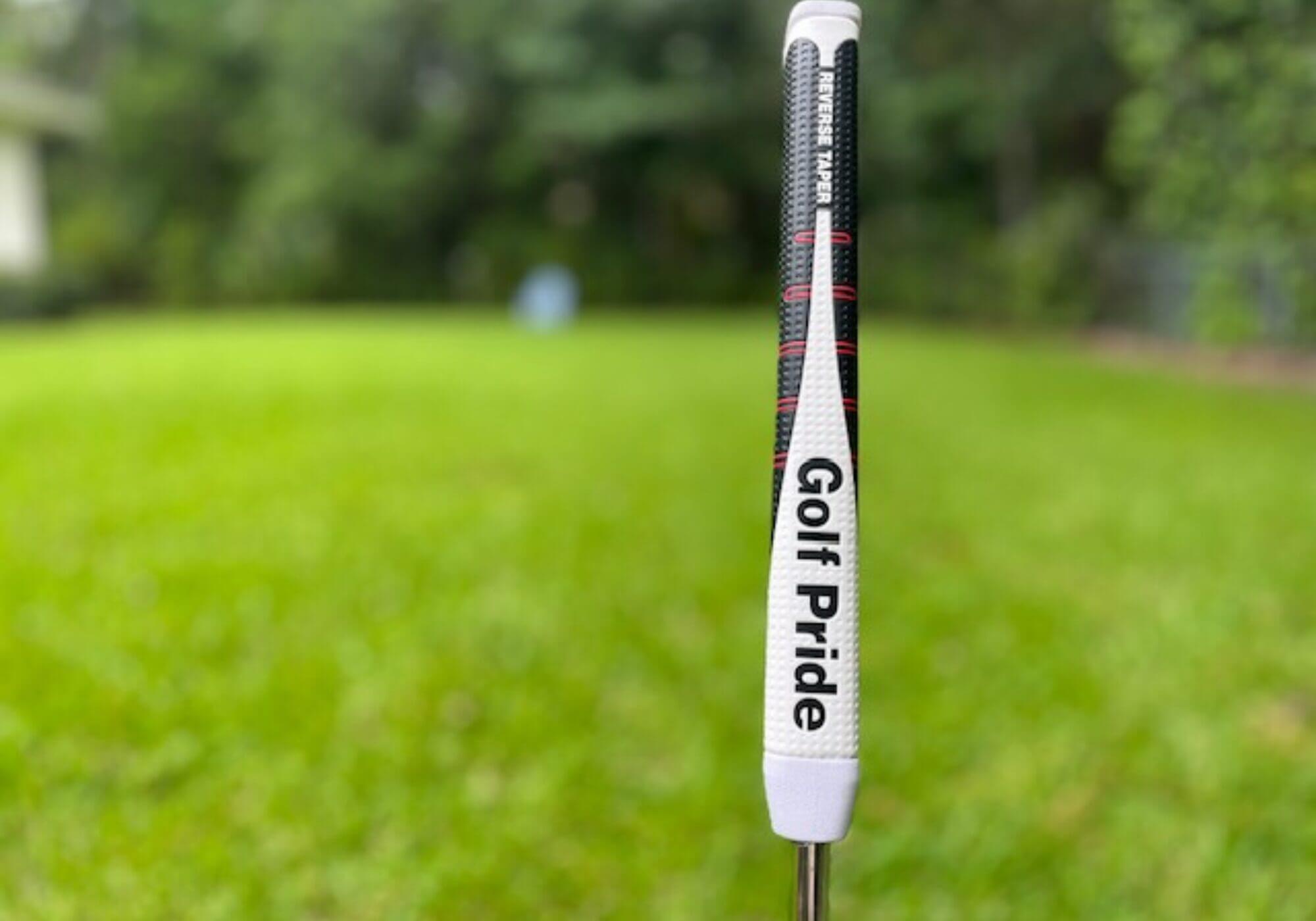
This Putter Grip Flips The Script
It gets thicker where every other grip gets thinner. Does that quiet the trail hand?
Read story → Testing & Data
MGS Labs: The Putter Grip
The SuperStroke Slim led all grips tested, draining 86% of putts made.
Read story → Instruction
Why You Miss Breaking Putts Low
Most golfers need to add 30 percent more break to their reads, not subtract.
Read story →What Mayo Clinic found
Researchers have studied the yips in golf, too. Mayo Clinic describes the yips as tremor, freezing or involuntary jerking of the hands, especially on short putts, and says it adds nearly five strokes to an affected golfer’s round. They see it as a continuum with nerves and choking at one end and a neurological condition called dystonia at the other. In one study, fewer than 20 percent of the golfers likely had dystonia, and for the rest, the neurologist’s advice was to work with a pro.
How to keep the yips away
You don’t have to wait for it to get bad.
- Act early. If your right hand is getting yippy or too active, the claw grip or something that minimizes the right hand (right-handed player), is worth a look. Expect it to feel awkward at first and plan to put in the practice before you judge it.
- Keep your grip light. With the claw, right-hand pressure is usually extremely light. Too much grip pressure in putting causes issues.
- Use it where you need it. You don’t have to claw every putt. Phil Mickelson has said the claw is a better grip for short putts. Scottie Scheffler used it routinely inside 15 feet and kept his conventional grip for longer putts. Neither has framed it as a yips fix. They treat it as a short-putt tool and it’s perfectly acceptable for amateurs to try.
The post What Are The Yips? Why Calcavecchia, DiMarco and Langer Changed How They Held The Putter appeared first on MyGolfSpy.