
Limerick’s Adare Manor will be the focus of one of golf’s greatest spectacles next September when it hosts the Ryder Cup for only the second time in Ireland.
There is little doubt the event on JP McManus’s parkland masterpiece marks a major milestone in Ireland’s sporting history and it also places the Munster counties of Limerick and Clare firmly in the golfing spotlight.
Perfectly positioned in the heart of the Mid-West region and just 25 minutes from Shannon International Airport, Limerick offers quick and scenic access to several world-renowned golfing destinations.
Next door in Clare, are two of Ireland’s top-rated links courses, Lahinch and Trump International Doonbeg, the latter host to this year’s Irish Open in September when Grand Slam hero Rory McIlroy will be defending his national title.
But away from those trophy courses, the region has long been a hidden gem with several challenging and affordable parkland tracks. And with a seven-club regional golf pass about to be launched, it’s the ideal time to pack your bags for the Emerald Isle.
Limerick has six other golf courses and last month, as part of a group press trip, I had the pleasure of playing two of these, Ballyneety GC and Limerick GC, along with the highly-rated Dromoland Castle GC in Clare.
Written by Patrick Mooney
After a 70-minute early morning Aer Lingus flight from Heathrow, we arrived in Shannon airport in Clare and headed to Dromoland Castle in glorious sunshine – no waterproofs needed.
Dromoland Castle is just 12 km over the Shannon and one of Ireland’s leading parkland courses. It hosted the women’s Irish Open in 2022 and 2023.
The par-72 Championship course is set on the magnificent 450-acre estate of Dromoland Castle and combines gentle hills, ancient trees and unexpected water hazards. It also offers several risk-and-reward holes, especially over water.
The course was completely revamped and redesigned in 2003 by architects Ron Kirby and JB Carr, at a cost of over 5 million euros, with a further 3 million euros spent over the past three years.
The golf club has been in existence since 1962 with players walking the pristine fairways for over 60 years navigating the tree-lined landscape that drains into the Dromoland Lough with the magnificent castle as a backdrop. Dromoland Castle is also a five-star hotel – one of Ireland’s finest castle hotels – and can trace its ownership back through history to Gaelic Irish families of royal heritage.
The opening hole plays uphill and, surprisingly has no bunkers, but the fairway slopes sharply to the right and the large hill-top green is receptive to run-up or high-lofted shots. The par-3 seventh is a scenic downhill gem – water to the left, a large green-side bunker to the right and a sloping green, all with with the majestic castle towering in the distance.
The short par-4 ninth is Dromoland’s Belfry No 10 equivalent. You are faced with two options – as a two-shotter down the left which leaves a sharp dog-leg second hit over a large pond. Or, take the Seve gamble – a 300-yard carry over water to a small but holding green.
More water comes into play as you head into the back nine with a short but intimidating par-4 – and look out for the Dromoland Ducks crossing the road to the lake’s edge!
The par-5 11th is a real risk-and-reward decision. Bite off too much carry over a marshy area will see you reloading but bravery is rewarded with much shorter second and third shots to a green with even more water at the back.
The final three holes – known as Kirby’s Corner – again all feature water hazards and none more so than the majestic home hole with the Castle catching your eye with water in front and to the right.
The recent investment has seen the creation of a new 18th fairway that offers golfers a choice – and- challenge tee shot – bale out to the left and protect your score or nibble off more water and perhaps par or better is a realistic target.
From the large sycamore tree, players have100 yards left to a contoured green, protected by two well-placed bunkers on the left and, of course water on the right. A par here is well-earned and well-remembered over a pint or two in the club’s cosy 19th hole – the Fig Tree bar restaurant.
Dromoland has, as you would expect, superb practice facilities. The club’s Academy, includes the latest in Trackman technology. And the clubhouse and pro shop have both been recently renovated to an excellent standard.
Limerick GC was our next stop on day two and is just minutes from the city centre. It is one of Ireland’s oldest clubs, being founded in 1891, the same year as the Golfing Union of Ireland. The course and clubhouse are located on the original site of Roxboro Castle and grounds in the suburb of Ballyclough.
Limerick is a mature, tree-lined par-72 course with a number of holes designed by Alister McKenzie, architect of Lahinch and most notably Augusta National, and some other holes crafted by John D Harris.
The course record is held by one Tiger Woods, who shot 64 in winning the JB McManus Pro-AM Tournament 26 years ago.
But for us mere mortals, this classic parkland course offers a fighting chance to enjoy a rewarding round. There’s a mix of demanding holes, strategically-placed bunkers and water hazards, but interspersed with good birdie chances, notably on the par-4 10th and the even shorter par-4 15th. The long par-5 eighth is an outstanding hole, with a stream meandering all the way towards a severely sloping green. The uphill par-4 18th hole provides a fitting finish in front of the recently refurbished clubhouse.
Limerick offers good practice facilities, including a driving range, short-game area, putting greens. Whether you’re a seasoned golfer seeking a challenging round or a casual visitor looking to enjoy a good value for money, Limerick ticks all the boxes.
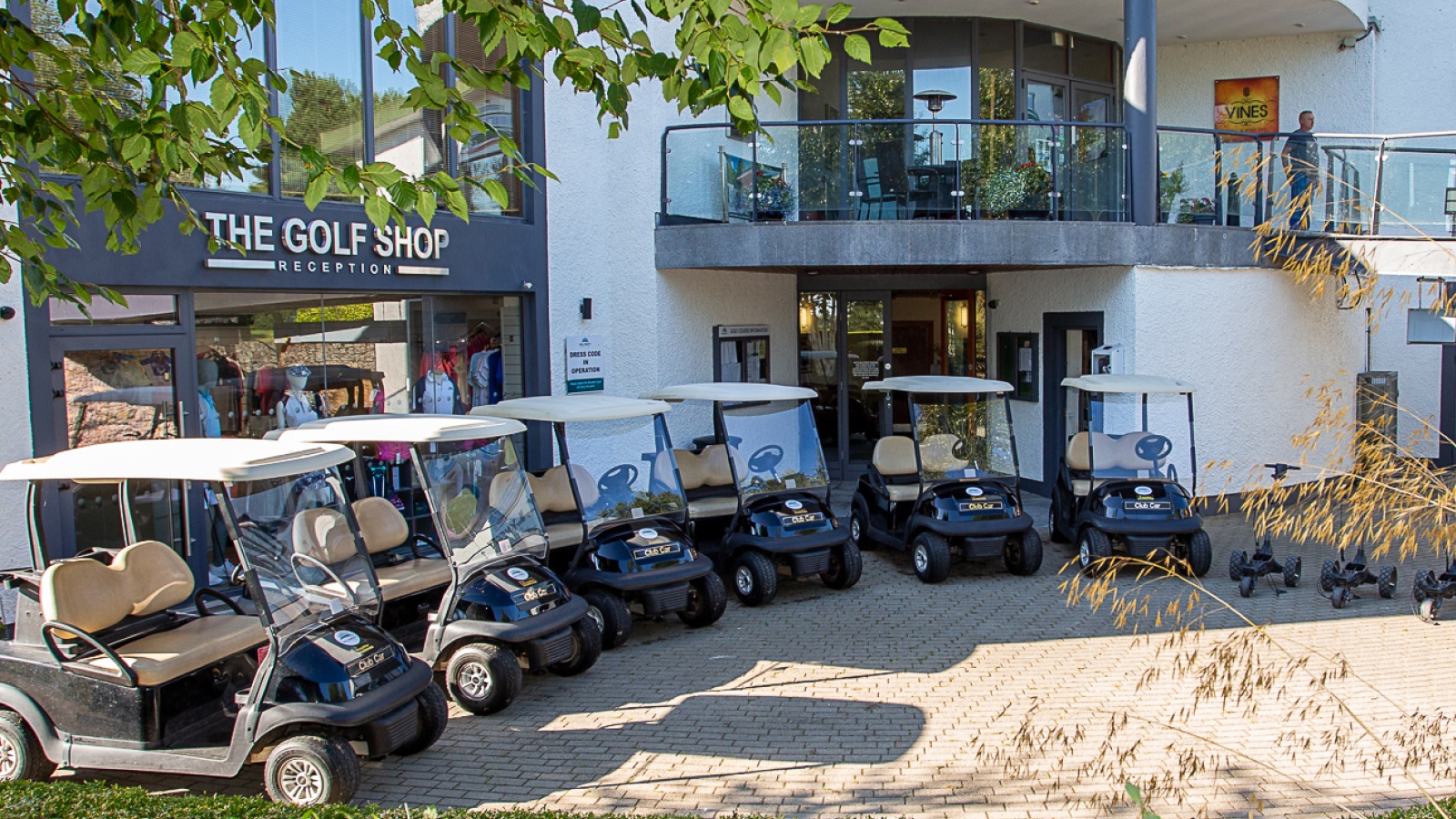
Ballyneety was our final day destination, and like Adare Manor, is also gearing up for the Ryder Cup next year – they host the Junior version in the same week.
The par-71 Championship course, co-designed by Irish Ryder Cup vice-captain Des Smyth and Irish amateur international Declan Branigan, opened in 1994. It features a scenic layout, set on 183 acres of rolling Irish countryside on the historical Croker Estate.
The course has sand-based greens and tees built to USPGA standards. After the completion of extensive bunker and drainage programmes last year, the focus is now firmly on extending the length of the course to 7,000 yards with new tees being built on seven holes to test the very best junior golfers on both sides of the Atlantic. Renovations to the locker rooms and clubhouse facilities will also be completed in time for the start of 2027.
The course sets out with a brisk par-4 towards the village of Ballyneety before dramatically changing direction into the countryside. The track then rises on the fourth and fifth holes to offer stunning views of Limerick city, the Clare hills and the Shannon estuary.
The back nine provides a contrasting route with water coming into play on six holes, notably the par-4 12th and par-3 13th, before the par-4 18th sweeps back up to the impressive clubhouse.
After golf, the Vines Grill and Wine Bar/Restaurant, located in an unusual glass enclosed clubhouse, offers panoramic views of the home hole.
The McSweeney Golf Academy provides a full range of services, including a state-of-the-art covered Trackman Range with 15 bays and is situated next to the clubhouse. There are also 16 outdoor bays and two swing studios for those looking to fine tune their swing.
Limerick city is the perfect base for your golfing adventures – It straddles the River Shannon – the longest in the British Isles – with the historic core of the city located on King’s Island. The city is at the head of the Shannon Estuary, where the river widens and flows into the Atlantic Ocean.
Limerick is sometimes known as The Treaty City, after the Treaty of Limerick which ended the Williamite War in Ireland in the 17th Century. Hurling and rugby are the region’s two most popular sports – the hurlers recently won four-in-a-row All Ireland titles while Munster Rugby legend Paul O’Connell’s towering line-out bronze statue dominates the entrance to Shannon airport.
Limerick, which has a population of over 102,000, is also a cultural and historical hub – from the commanding 13th century King John’s Castle, to the collections of the Hunt Museum, which house one of Ireland’s greatest private art and antiquities collections.
You’ll never go thirsty in Limerick either – pubs galore and the two we visited, The Locke Bar and The Old Quarter Bar/Restaurant, both provide a tasty choice of locally-sourced meals.
No visit to the city would be complete without a stroll to the Treaty City Brewery, located in the heart of the medieval quarter. The Brewery crafts exceptional beers that celebrate local flavours and traditions. Visitors can experience the brewing process first-hand, enjoy tastings, and explore the history behind each pint. The artisan craft brewery emerged in 2014 from a love of craft beer intertwined with Limerick’s historical significance.
The Limerick Strand Hotel is an ideal and affordable base for all of the surrounding golf clubs. It has 184 guest rooms, centrally located, with great views of the mighty Shannon and within walking distance of Arthur’s Quay Park and The Treaty Stone monument. Many of Limerick attractions are easily walkable from the hotel.
Shannon airport, meanwhile is just 20km west of the city and has direct flights from all major UK airports.
So, whether you are teeing off for the first time or chasing your lowest scorecard, Limerick’s Ryder Cup region invites you to play, stay, explore – and possibly be inspired in the footsteps of Rory and Tiger.
Useful websites:
Tourism Ireland
Dromoland GC
Limerick GC
Ballyneety GC
The Limerick Strand hotel
The Treaty City Brewery
The Locke Bar
The Old Quarter Bar/Restaurant
The post Why Limerick’s Ryder Cup region should be every golfer’s next trip appeared first on Golf365.
Article Link: Best golf courses in Limerick and Clare ahead of the Ryder Cup